Pages

Tuesday, January 31, 2023

Adverse Childhood Experiences and Psychiatric Disorders


In my last post, I mentioned that the American Psychiatric Association rejected the diagnosis of Developmental Trauma Disorder in 2011, and refused to acknowledge that “…childhood adverse experiences lead to substantial developmental disruptions” and added that this idea is “more clinical intuition than research-based fact.”

In fact, there have been numerous studies showing a correlation between ACEs and a wide variety of clinical conditions. Below are brief descriptions of the results of four studies, recently published, addressing this contention. One is a review and meta-analysis, which is a research process used to systematically synthesize or merge the findings of, in this case, 39 (!) single, independent studies, using statistical methods to calculate an overall or 'absolute' effect.

Of course, the studies do only show correlations, which means that they do not “prove” that ACE’s actually cause psychiatric disorders or even symptoms. But the correlations are as good as any in the psychiatric research literature, which is pretty much minimal in findings that prove actual causation for almost every psychiatric disorder.


Adverse Childhood Experiences Among Adults With Eating Disorders: Comparison To A Nationally Representative Sample And Identification Of Trauma

The primary objectives of the current study were: (1) to examine and compare ACEs between two samples: treatment-seeking adults, and a nationally representative sample of adults, (2) to characterize ACEs items and total scores across demographic and diagnostic information in adults seeking treatment for an ED, (3) to statistically classify ACEs profiles using latent class analysis, and (4) to examine associations between ACEs profiles and diagnosis.  Results: Patients with EDs had significantly higher ACEs scores than the nationally representative sample. Within patients with EDs, four latent classes of ACEs item endorsement were identified. Patients with other specified feeding or eating disorder (OSFED) and binge eating disorder (BED) were more likely to fall into the "Household ACEs" and "Abuse ACEs" groups, respectively, compared to anorexia nervosa-restricting subtype (AN-R). Conclusion: Patients with EDs reported more ACEs than the nationally representative sample, across all ED diagnoses.

“Adverse childhood experiences among adults with eating disorders: comparison to a nationally representative sample and identification of trauma profiles.” Rienecke, Johnson et.al. Journal of Eating Disorders , volume 10, Article number: 72 (2022). 


Considerable Mental Health Burden Associated With Childhood Trauma

Trauma is associated with increased odds of anxiety disorders and any psychiatric disorder at age 6 years. There is a considerable mental health burden in association with childhood trauma. 

 “The association between childhood trauma and psychiatric disorders in low-income and middle-income Countries." Alckmin-Carvalho et. al., The Lancet Psychiatry, Oct. 31, 2022.


Association of Neural Connectome With Early Experiences of Abuse in Adults

In this cohort study of 768 participants, individuals with abuse experienced during childhood (but not adolescence) demonstrated an altered connectome [connections between brain neurons] of greater functional connectivity [changes in usual and not pathological connections in various brain areas] associated with somatomotor and dorsal-ventral attention brain networks, irrespective of current diagnosis or symptom state. These findings suggest that a history of child abuse is associated with altered functioning of systems responsible for perceptual processing and attention, and these findings were found in the presence of many different psychiatric conditions.

"Association of Neural Connectome With Early Experiences of Abuse in Adults." Korgaonkar et. al., JAMA Network Open. 2023;6.


A  Systematic Review and Meta-Analysis of the Relationship Between Childhood Adversity and Adult Psychiatric Disorder.

A review and analysis of 39 different studies suggests that childhood and adolescence is an important time for risk for later mental illness, and an important period in which to focus intervention strategies for those known to have been exposed to adversity, particularly multiple adversities. There was some evidence of a dose-response relationship with those exposed to multiple forms of maltreatment having more two and a half times odds of developing a mental disorder. 

“A revised and extended systematic review and meta-analysis of the relationship between childhood adversity and adult psychiatric disorder  [Review]." McKay et. al., Journal of Psychiatric Research, 156 (2022).


Thursday, January 5, 2023

Book Review: The Body Keeps the Score by Bissel Van Der Kolk


As I stated in my Review of Nadine Harris’s The Deepest Well, every mental health professional should know that adverse (traumatic) childhood experiences (ACE’s) - especially with parents who are abusive, neglectful, are perpetrators or victims of domestic violence, have multiple partners, or have substance abuse issues - are a major risk factor for children developing many different psychiatric disorders, as well as being a risk factor for a variety of physical illnesses. Yet therapists and psychiatrists often ignore this issue in favor of theories about some sort of genetically-caused, pre-existing brain disorder.


In this fascinating book, the author also makes the case for the importance of ACE’s, especially in the case of pediatric psychiatric conditions, by examining the physiological effects of trauma on brain development. There is an extensive literature on this, although most of it neglects the fact that a continued relationship with an abusive or formerly abusive parent is usually continuing in some form throughout much of these patients’ adult life. 


In any event, the author points out that organized psychiatry in 2011 refused to acknowledge that “…childhood adverse experiences lead to substantial developmental disruptions” and added that the idea that it is is “more clinical intuition than research-based fact.” They then added, “There is no known evidence of developmental disruptions that were preceded in time in a causal fashion by any type of trauma syndrome.” (From the American Psychiatric Association rejection of a Developmental Trauma Disorder diagnosis, as quoted in the book).


That last part is misleading if not an outright lie. We don’t have high caliber causal evidence on the causes of just about any diagnosis in the DSM. Van Der Kolk has a list of references from an extensive literature on the enduring negative effects of early maltreatment. ACE’s are a major contributor to a variety of psychiatric symptoms that are part and parcel of the genesis of many different psychiatric disorders. Especially the childhood ones like ADHD, conduct disorder, and oppositional defiant disorder, as well as many of the mood and anxiety disorders.


This blindness by the psychiatric community has led to what is called “malignant polypharmacy”  – the tendency of some psychiatrists and psychiatric nurse practitioners to confuse symptoms that appear in different forms within a variety of different psychiatric diagnosis as instead being co-morbid (co-occurring) conditions. When I was in practice, I would find new patients who were on several different psych medications – sometimes including both uppers and downers simultaneously – because new drugs were added whenever the practitioner noticed additional, seemingly untreated symptoms. 


Clinicians had misinterpreted these symptoms as being due to their being indicative of other psychiatric disorders that were not being addressed by the existing drug regimen. As the author points out, what was really not being addressed is the underlying issue – the history of abuse.


As mentioned, and as with the Deepest Well, this book unfortunately ignores the question of whether brain changes caused by ACE’s are at least partially reversible - were it not for continuing reinforcement of the trauma throughout the lives of the subjects of this literature. This question lurks in many of the book’s case examples and within the literature that the author quotes. 


For example, he talks about a case where a woman continued to blame herself for her father molesting her despite her rational mind knowing full well that this was nonsense. He describes traumatized firefighters who were “desperately trying to protect the system.” As part of a suggestion for criteria for a proposed diagnosis of developmental trauma disorder, he included,  “Intense preoccupation with the safety of the caretaker or other loved ones.” He even describes himself as mistakenly thinking that his own parents no longer had a major influence on him!


In the numerous, highly interesting case examples, Van Der Kolk omits mention of whether or not the patient still maintained contact with abusive parents. The closest he comes is a statement on page 210 about a perpetrator "hopefully" not still being around to hurt a traumatized individual.


Nonetheless, this well-written and almost entertaining book is a good introduction to the consequences of ACE’s on psychological and brain development, as well as introducing some possible therapeutic ways to treat traumatized patients. Van der Kolk is a master story teller.

Tuesday, December 13, 2022

Accidental Overdose - or Suicide?


There has been a lot of news recently about the significant increase lately in the number of drug overdoses resulting in fatalities. Most of these overdoses are labeled “accidental,” and surely many of them are. Of course, if drugs have been secretly laced by dealers with something dangerous like fentanyl, and the addict is unaware of that, the overdose can indeed be accidental. Although not necessarily even in that case, because news about the fact that dealers are lacing other drugs with this one has been widely reported in the press, and many addicts know other addicts.


I suspect that a considerable portion of these “accidental” overdoses are actually suicides, either through specific intent at that particular moment, or through strong chronic suicidal intent leading to carelessness that will certainly cause death, but at some unpredictable time.


There is no way to know for certain, obviously, but I would like to discuss the deaths of two celebrities to illustrate my thesis here: actor Phillip Seymour Hoffman and Americana singer-songwriter Townes van Zant.


Van Zandt wrote numerous songs, such as "Pancho and Lefty", "For the Sake of the Song", "Tecumseh Valley", "Rex's Blues", and "To Live Is to Fly", that are widely considered masterpieces of American songwriting.  


Van Zandt died on New Year's Day 1997 from cardiac arrythmia caused by health problems stemming from years of substance abuse.  In 1994, he was admitted to the hospital to detox, when a doctor told Jeanene Van Zandt that trying to detox Townes again could potentially kill him. He grew increasingly frail during the mid-1990s, with friends noting that he seemed to have "withered.”


The evidence for my viewpoint comes in the shape of the lyrics of a song he wrote called “Waiting Around to Die.” I suspect that this is exactly what he was doing.


The lyrics:

Now I'm out of prison
I got me a friend at last
He don't drink or steal or cheat or lie
His name's Codine
He's the nicest thing I've seen
Together we're gonna wait around and die


 Hoffman told friends he feared he would die of a heroin overdose weeks before his body was found on the floor of his Manhattan bathroom with a needle sticking out of his left arm. The star, who was found with 70 bags of heroin and 20 used needles in his home, returned to AA in December after relapsing into three-day binges. When asked how serious his addiction was, he replied: “If I don't stop now, I know I'm going to die.” And die he did. On 2/2/14, he was found dead in his New York apartment with a needle in his arm. The New York City Chief Medical Examiner said that he died of an accidental overdose of drugs, but one has to wonder how an “accident” can be predicted with such precision.


Thursday, November 17, 2022

Time to Get a Second Opinion?


If a mental health provider has you on a whole lot of different psych meds on the basis of a cursory diagnostic interview without much follow up and almost no attention to what is going on in your life currently, it is time to see somebody else.


In the July issue of Clinical Psychiatry News, Nicolas Badre and David Lehman discuss what is known as “malignant polypharmacy” –  the tendency of some psychiatrists and psychiatric nurse practitioners to confuse symptoms that appear in different forms with a variety of different psychiatric diagnosis. 


They then make multiple diagnoses – many of which are not really separate conditions co-occurring with a primary diagnoses – and prescribe a variety of medications. Many of these are not only not indicated but may interfere with each other or produce unnecessary side effects. This diagnostic and treatment stew also creates a great deal of confusion for the patient about exactly what they are being treated for.


An example they give is a patient who comes to a new doc having been diagnosed with bipolar II (a b.s. diagnosis to begin with), high anxiety, split personality, post-traumatic stress, insomnia, attention deficit and depression.” The medication list of such a patient may include a stimulant and a tranquilizer (uppers and downers and bears, oh my!), a mood stabilizer, two antidepressants, and a low dose antipsychotic!


Overprescribing of dangerous meds is another problem. The Wall Street Journal exposed abuse of Adderall prescriptions by telehealth organizations. One story (8/19/22) was about a man with substance abuse who was given an Adderall prescription after a “30 minute consult” with a Nurse Practitioner who’s specialty was family medicine with no psych training. 


Reports show the company sometimes prescribed after just a 10 min consults, giving 90 day scripts with limited or no follow up. The NP was making 20k per month. Patients were charged $79 to subscribe. Some of these “providers” were given $10 per script per month with some having over 2,000 of them filled per month.


In adolescents, overprescribing has become pandemic. The New York Times (8/27/22) reported on the common medical practice of “the simultaneous use of multiple heavy-duty psychiatric” medications among adolescents. “Such medications are too readily doled out, often as an easy alternative to therapy that families cannot afford or find, or aren’t interested in.” 


The medicines, “generally intended for short-term use, are sometimes prescribed for years, even though they can have severe side effects,” and a number of psychiatric medications “commonly prescribed to adolescents are not approved for people under 18.”


While of course, as the authors of the Clinical Psych article point out, there is in psychiatry a high rate of co-occurring conditions, a lack of treatment specificity, and poor understanding of causes. However, a complete work up includes the doctor looking at all of the patients’ symptoms, biological factors, psychological factors, and social factors, as well as the course of the patient’s illness. 


Are the symptoms present all the time, or do they come and go depending on environmental factors? If the latter, what factors are we speaking of? Does one diagnosis preclude another, like bipolar and unipolar depression? Is there a family history of certain disorders?


Did your clinician even ask about any of this? Like I said, if not, time to find a new one.


Thursday, November 10, 2022

Tuesday, October 25, 2022

Who Influences Teens More: Peers or Family?


Harvard psychologist Howard Gardner states in his book Changing Minds that by about age 10 a child’s peers rather than parents assume primary importance in the child’s decisions about what to do, especially in the United States. They are, he says, inclined to imitate those peers. This has become almost conventional wisdom in a lot of psychology schools. 

Well of course peers do have a significant influence on kids, especially teenagers, but the question of who has more influence on them is quite a bit more complicated. The most obvious complication is that in the United States of recent years, there are a lot of different peer groups from which to pick. So what determines if a kid wants to be, say, a Goth or a jock? Even back when I went to high school back in the mid sixties in Southern California, there were surfers, greasers, jocks, “brains,” “soches,” guys in rock bands who wanted to grow long hair like the Beatles but were told by the boy’s vice principal to cut it, theater people, churchy people, and a lot of kids who didn’t fit any of classifications or straddled two or three of them.

With which peers adolescents choose to associate is not an accident of fate or necessarily the inclination of the developing child’s true-self tendencies. If their parents were pretty good about letting them learn to lead their own lives and develop their own opinions, then which peers they hung out with was most likely a result of their own developing self-actualization. But in more dysfunctional families, the kids’ behavior, as I have repeatedly discussed in this blog, is designed to stabilize unstable parents and maintain family homeostasis. If this is the case, the parents’ seeming needs steer kids in certain directions regarding their peers. For example, it may determine which kids turn into bullies and which turn into the bully’s victims.

This sort of question has been relevant in psychiatry also. In the past, parents would allow their acting-out teens to be placed in psychiatric hospitals, where shrewd but unethical hospital administrators and psychiatrists blamed the adolescent’s emotional problems and misbehavior – or even their suicide attempts - on cultural phenomena such as heavy metal music. This way, the parents would not feel that they were being scrutinized or blamed, and would gladly pay up.  Some hospitalized kids were kept there for months until their insurance ran out and then summarily discharged. Peer pressure was another scapegoat offered up by hospitals to these parents.

Gardner also mentions how American children even by pre-adolescence have “evolved strong preferences” that may not align with those of their kin and/or ethnic group, and can often state their opinions strongly and stand their ground in disputes. Again, I can’t argue that this doesn’t happen, but IMO this is way over-generalized. They may do that with certain opinions and planned activities, but not dare to question others. Opinions and plans are hardly an all-or-nothing phenomenon when it comes to potentially challenging family homeostasis. If an opinion is expressed and in response Mom sticks her head in the oven while other family members massively invalidate the person expressing the opinion, children standing their ground is almost never the result. And families are all completely different from one another when it comes to which shared internal conflicts are present over certain things, how severe those conflicts may be, or how many of them exist.

Tuesday, October 4, 2022

Book Review: Building a Life Worth Living: A Memoir by Marsha Linehan


The predominant and most widely-used school of thought in use for the psychotherapy of borderline personality disorder (BPD) is called dialectical behavior therapy (DBT). Marsha Linehan, a psychologist at the University of Washington, was the person who came up with the theory and treatment ideas. The treatment paradigm has been shown in studies to be somewhat effective in reducing some symptoms of the disorder, but mostly ineffective in helping patients solve their problems with love and work.

She believes that a combination of a genetic propensity to be over-reactive combines with a so-called “invalidating environment” to produce the disorder. Studies  that attempt  to identify genetic propensities tend to have a major flaws in distinguishing normal neural plasticity in response to the environment from purely genetic effects, although the combination of a baby that tends towards being reactive and a parent with attachment issues would be problematic – an example of gene-environment interaction rather than just genetics.

The invalidating environment is clearly that in the patient’s family of origin, although this is seldom spelled out in the DBT literature.

Interestingly, in 2011. Linehan, in a story in the New York Times, “…admits that when she was younger, she "attacked herself habitually, burning her wrists with cigarettes, slashing her arms, her legs, her midsection, using any sharp object she could get her hands on." She added, “I felt totally empty, like the Tin Man."  Self injurious behavior and feeling empty are two of the hallmark symptoms of BPD.  Did she have the disorder?  According to the article at least, BPD is a diagnosis "that she would have given her young self."

So I was intrigued when she recently published her memoir. I was particularly interested in hearing about her family of origin and hints of any shared psychodynamic conflicts they may have had, a phenomenon that she appears to be clueless about with her patients. I had wondered why, if she came from such a family, she rarely wrote about how to address invalidating family members, as opposed to merely teaching patients “radical acceptance” of their parents’ ongoing behavior so they react much less.

So if she herself had BPD, and if an invalidating environment is one of two main causes of the disorder as she theorizes, I've long wondered how come she does not address this very much in her treatment plan. She says she sometimes does family therapy, but mentions it only briefly and without any details both in her memoir and her primary book about DBT.

While I cannot be certain of anything about her family based just on what she chooses to reveal in her memoir, the family’s conflicts over gender roles – particularly career aspirations for women – and religion just seem to jump off the page of her memoir. So the following forms the basis for my speculations.

She herself draws the parallel between her mother’s experiences growing up and her own conflicts with her mother. The mother’s parents were described as having lost their fortune and died young. The mother then took a job to support her two younger brothers but later moved in with a maternal aunt, who drilled into her head that she was to be a social butterfly and attract a successful businessman for a mate. Which she did. Yet she never seemed particularly enamored with her husband.

In particular, her aunt told her she had to lose weight to be more attractive. She did that. She never again had a paying job, but was extremely active doing charity work and also painting. Her art was admired and was hung up prominently in their house, but Marsha only found out that she was the artist much later. I guess traditional women could work as long as they didn’t get paid and thereby threaten their husband’s traditional image. Mom did all this work despite having six young children.

The author writes that marriage and children were most important for mother as they generally were for her generation where she grew up. But were they really, or was she just following her family’s rules?

When Marsha was a teen Mom tried compulsively to get Marsha to do the same thing her aunt made her do - unsuccessfully. Marsh was compared negatively with her younger sister who followed the supposed family philosophy re marriage and work. In particular, Mom constantly nagged Marsha about losing weight. Marsha was the only child in the family with a weight problem, so perhaps that wasn’t “genetic.” Marsha writes that the thing she wanted to do more than anything was to gain her Mom’s approval, but somehow she couldn’t manage to do this one simple thing - that her Mother had been able to do - in order to get it.

Marsha writes clearly that she knew that Mom’s relationship with her great aunt was the reason her Mom was so critical of her, but she seems to not understand exactly what made her family act out this issue in the first place nor exactly how it might be transmitted from a previous generation to her. Again, her solution in DBT seems to be “radical acceptance” – you just use mindfulness to accept this reality without trying to change anything, and to stay calm.

If she were my patient, I would start to explore the possibility that she actually was doing what her mother seemed to need her to do - in effect acting out her mother’s repressed ambition, so clear in her non-family activities – so mother could experience her success vicariously. And then trying without success to put up with her Mom constantly invalidating it. Meanwhile, sister Aline was acting out the other side of conflict and appeared to be Mom’s favorite. Mom even told Aline to stay away from Marsha. Aline late apologized to Marsha for this but only after Mom had passed away.

When it comes to religion, Marsha’s description of her behavior seems even more conflicted. She was a practicing Roman Catholic throughout her life, and says that her mother “gave” that to her. However, in the book she frequently criticizes the church for such things as its rampant sexism and for the belief of the Pope’s infallibility. She disputes the circular argument heard by many fellow parishioners that God is real because it says so in the Bible. She later started to mix Catholic ideas about God with Zen Buddhist ideas about the ultimate oneness of everything in the universe in ways which are basically incomprehensible.

Further evidence of conflicts over beliefs and how they may have played into her issues regarding marriage: she couldn’t marry the guy who she most loved because he wanted to enter the priesthood. Even though he didn’t and eventually married. She wouldn’t marry her next boyfriend because he was an atheist. Going from one extreme to another and ending up in the same place - single - is a hallmark of an intrapsychic conflict.

Mixed messages from parents conflicted over the role of being parents is in my theory the hallmark of families with BPD members, and this one seems to qualify. Her mother having six children and no apparent career might be evidence for such a conflict. Dr. Linehan was hospitalized with self cutting and suicide threats for over two years just weeks before finishing high school. 

Thursday, September 8, 2022

Problematic Parenting or Problematic Genes?


In an article in the Atlantic magazine, author and data scientist Seth Stephens-Davidowitz opines that in determining how parents affect their children in the long run, almost none of the decisions they make matter nearly as much as they think they do. He of course emphasizes their DNA and uses twin studies in discussing the nature-nurture debate, something I have covered extensively in my blogs.

He trots out the kind of story you often hear in these debates of two twin who were raised separately from the age of four weeks. They reunited at age 39 and found that they were each six feet tall and weighed 180 pounds; bit their nails and had tension headaches; owned a dog named Toy when they were kids; went on family vacations at the same beach in Florida; had worked part-time in law enforcement; and liked Miller Lite beer and Salem cigarettes. There was one notable difference: Jim Lewis named his firstborn James Alan, while Jim Springer named his James Allan. 

These are some very superficial similarities. Many involve things like their physical appearance, which is of course dictated by their genes. Tastes in food, assuming that they do not involve a false self, are also somewhat determined by genes.  The author also seems to assume this what these twins named their children was somehow coded in their DNA. I wonder how many hundreds of other twin pairs like this gave their children completely different names. Or where one bit their nails and the other did not.

A study suggests that such things as teaching kids cognitively-demanding games, such as chess, doesn’t make them smarter in the long term. A meta-analysis of bilingualism found that it has only small effects on a child’s cognitive performance.

The author does emphasize the importance of “the village” or neighborhood in which a child grows up in determining things like schooling and career opportunities, because they provide role models as well as money. Of course the village is divided into cliques with differing values, and to which people one chooses to associate may involve the influence of one's parents, but no matter. When it comes to parenting, he tells us the data shows that moms and dads should put more thought into the neighbors they surround their children with—and lighten up about everything else.

It’s hard to argue with these ideas, and a lot of parents do indeed need to lighten up and let their kids learn about themselves and the world. The problem here is that the author is completely ignoring a most important issue: interpersonal relationships and the rules by which people operate in their social context. In particular social roles, both functional and dysfunctional, and one’s freedom to self actualize versus having to behave in ways that stabilize family functioning. 

Children learn predictive models that determine who they drawn to and how to respond to them in various situations. Most of that becomes subconscious and automatic. Personality disorders and family dysfunction come from those. And the author doesn’t even mention adverse childhood experiences. My readers will know what I’m talking about here.

That’s a pretty big omission.


Tuesday, August 16, 2022

New Study Questions History of Childhood Trauma in Borderline Personality Disorder


Despite protestations in some quarters that it’s just a brain disorder and that’s all, almost all studies of subjects of borderline personality disorder (BPD) show a significant percentage of them were found to have a history of child abuse, including physical, sexual, and psychological. Since research subjects may not all be truthful about matters like that, the percentage is probably higher than those reported. Frank abuse is of not seen in all cases, of course. 


In getting to the bottom of the family dynamics of my psychotherapy patients over the last 40 year, I discovered that some of their parents are instead hyper-involved yet resentful helicopter parents who try to protect their children from any and all problems – which invalidates their children's ability to take care of anything on their own. Parents invalidating their kids’ thoughts and feelings, posited as one of the causes of the disorder by Marsha Linehan’s DBT – the predominant psychotherapy paradigm for the disorder – is an almost universal feature of BPD families.


A good meta-analysis (studies that combine the results of several study to add strength to the conclusions of any one study) that corroborates theoretical proposals that exposure to adverse life experiences is associated with BPD is “Childhood adversity and borderline personality disorder: a meta-analysis” by Porter et. al. in Acta Psychiatrica Scandinavia (2019).


A new study, however, seems to show that this is not the case (“Childhood trauma and borderline personality disorder traits: A discordant twin study” by Skaug, et al., Journal of Psychopathology and Clinical Science, (2019). But it has some of the same logical flaws I’ve documented in a previous post. It was a study of “discordant” twins (where one is healthier than the other) and was based on their self report using a structured interview called the Childhood Trauma Interview. Small but statistically significant associations between childhood trauma (CT) and BPD traits were initially found in the total sample. However, after controlling for “shared environmental” and genetic factors in the discordant twin pairs, the analyses showed little to no evidence for causal effects of CT on BPD traits. The authors concluded that the associations between CT and BPD traits stem from common genetic influences.


The elephant in the room here is the definition of “shared environment.” The assumption here is that both twins grew up in the same environment, which further presumes that their parents treated both of them the same. As anyone with a sibling or more than one child knows, this is nonsense. Differences in the way the parents treat the two children might even be exacerbated by the fact that one twin is healthier than the other, which could mean they had different parental responses to them at least some of the time. If you assume the shared environment is the same with parents treating both kids the same, of course genetic differences will stand out more. The study also ignores the fact that self reports about childhood abuse are often dishonest in order to go along with family rules about hiding such things from outsiders, so that its data in all likelihood also underestimates the prevalence of adverse childhood experiences, thereby minimizing any differences in the way each twin was treated.

Thursday, July 21, 2022

Contact with Toxic Parents: Ambivalence Reigns


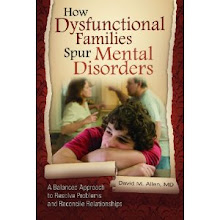
There are a plethora of self-help books out, including the one I wrote (pictured above), advising adult children of toxic parents on what to do. Some recommend cutting them off, some recommend keeping them at a distance, some recommend trying to set better boundaries, some talk about whether reconciliation is possible or not, and a few of them say it depends on the nature of the problems.

My own view, as most of my readers know, is to solve the problem of ongoing toxic parental behavior by researching the family history to identify shared internal conflicts, the reasons for them, and the effect of ambivalent double messages throughout at least three generations on everyone involved. Then, the object is to confront the issue head on by developing various strategies to empathically get past parents’ formidable defenses and come to some mutual understanding of why everyone is so miserable and what can be done to stop repetitive dysfunctional interactions. The goal is not reconciliation  per se but problem solving. Reconciliation and forgiveness is, however, however, a typical byproduct.

The psychotherapy research literature has had very little to say about this. It does come up in opinion pieces in such magazines as Psychology Today or The Psychotherapy Networker.

I think this whole question is a much bigger issue than it appears to be, and is a major cause of self-destructive or self defeating behavior, anxiety and unhappiness. How do I know? Well, a few years ago I started reading newspaper advice columns on the internet from four different advisors: Carolyn Hax, Amy Dickerson, Annie Lane, and Dear Abby. In order to maintain their readership, these columnists have to identify which letters are going to lead to a lot of public interest. If subjects pop up a lot, one might conclude that the problems discussed are very common.

And letters about this issue are exceeding common. People are constantly asking how to solve ongoing behavior from parents that is driving them crazy, whether they should reconcile with parents that have been already been cut off, whether to cut off toxic parents, guilt over a decision already made regarding a cut off, how to set boundaries, whether to reveal a history of child abuse to siblings and children, and how to stand up to parents without being disowned. My count of letters like this in the four columns was 28 in 2021 and 12 through April of this year. And I’m not even counting all the letters from parents who have been cut off by their children for “mysterious” reasons as I described in two previous posts.

Some writers are writing to justify their decisions on this matter, but their ambivalence about whatever decision they have made is just blaring. If they think their decision was so good, why are they writing about it? Some even want to warn people to watch out for therapists who recommend reconciliation, shouting the benefits of cut-offs from the rooftops. Do they think every situation is the same? And why do they feel the need to shout this out by writing to an advice columnist.

As I have said many times, cutting off an abusive parent is better than continued abuse, but those are not the only two options. My book discusses the third option for cases that do not involve significant physical or sexual abuse, and my psychotherapy model is for therapists to help all kinds of cases no matter how severe. The methods are not quick fixes, and the therapy is long term and often either not paid for by insurance or just flat out unavailable, since this therapy model has unfortunately not caught on. So the best solution can be very out of reach.

However, the danger of ongoing cut offs AND continuing abuse and toxicity is that the interpersonal and intrapsychic (in the mind) issues are not resolved but continuously reinforced by ANY family contact and consequently are seldom sufficiently repaired. Not to mention that the risks of passing them on to your own kids is quite high. 

The high degree of ambivalence about making or having made these decisions regarding ongoing contact shows how important family really is to just about everyone