Pages

Showing posts with label How Dysfunctional Families Spur Mental Disorders. Show all posts

Tuesday, October 16, 2012

Psychotherapy Outcome Research and Treatment for Borderline Personality Disorder, Part II


At the end of Part I of this post of September 12, 2012, I mentioned that doing psychotherapy outcome studies is diabolically difficult, and promised to discuss the reasons why in this post. In fact, because of the literally infinite numbers of uncontrolled variables in studies of human beings both individually and in relationship to other human beings, psychotherapy outcome research can never be the only standard by which the "science" of human behavior-change technology should be measured.  In fact, it's not even the gold standard.  

In order to better understand ourselves and what leads us to change our behavior, we must use ALL available sources of information. We have to look at the widespread clinical experience of psychotherapists who use a variety of techniques and theories with a variety of clinical populations. We have to look for potential biases in both clinical studies and within an individual therapist's anecdotes and the conclusions that we draw from them. In forming conclusions about both anecdotal and controlled-trials data, we have to look at a wide variety of possible explanations, as well as for any information and experiences that would seem to contradict those explanations.

We also have to look at the experience of marketers who have been able to induce a large numbers of people to buy a product or vote for a politician (many of whose very powerful techniques have been discussed in previous posts on this blog). We have to look at the social psychology literature, which shows that people behave very differently when interacting with different groups of people and with different individuals than they might do in a therapist's office. 

We have to look at historical and sociological trends. We have to look at new knowledge from the neurosciences that might account for findings that are difficult to explain or reconcile with other beliefs.  We must look at evolutionary biology. We must examine our own beliefs for logical inconsistencies. We have to be honest about thinking about ourselves what makes us tick personally.

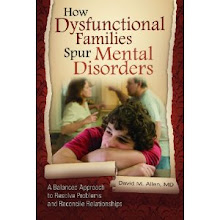
What follows is a list of some of the difficulties psychotherapy outcome researchers encounter, as well as the reasons they may overstate their results.  A fuller discussion of each of them can be found in my book, How Dysfunctional Families Spur Mental Disorders.

1.  The Problem of the “False Self”

People do not act the same way in all social contexts.  They do not act or speak the same way around a boss that they do when they are alone with a lover. A man’s behavior in a strip club is very different than his behavior when he is playing with his children. We have different “faces” or masks which we apply to ourselves in different environments.  Not infrequently, these masks are meant to manipulate others to get them to do what we want them to do. 

I never cease to be amazed at how mental health professionals and researchers seem to believe that they really know what is going on in a patient’s or a research subject’s life based solely on the self report of the patient, or solely on the reports of the patient’s intimates, or even on the reports of people like teachers who observe the behavior of children in only one context that includes thirty other distracting students. If these professionals were asked if they believe that people often act differently in public than they do behind closed doors, they would of course say yes, but they seem to develop amnesia for this fact in discussions and in studies. 

A patient’s family members may be just as motivated to give a distorted view of a patient as is a patient.  Parents, for example, may prefer to believe that their child has some sort of mental defect, so as not to experience as much of their own covert guilt about their parenting skills. Conversely, some may actually prefer to blame the child’s behavior completely on themselves, in order to let their “perfect” child off the hook. Most mental health practitioners do not make home visits to watch patients and family members interact in their natural environment. Even if they did, unless they had a camera operating twenty four hours a day as in the movie The Truman Show, they could still be easily deceived.

2.       Double Blinding

When it comes to psychotherapy treatment outcome studies, we cannot do double blind placebo controlled comparisons of two different types of psychotherapy treatments. This is true because, in a sense, the therapist – or more correctly the relationship between the patient and the therapist – is the treatment. If the study were to meet the criteria for being double blind, that would mean that the therapists who administer the treatment would have to not know what they were doing. 

Of course, they cannot administer psychotherapy without being aware of what techniques they are using. If they could, that would mean that they were incompetent.  Not a fair test of a treatment!  The fact that the therapy relationship is one of the basic aspects of the treatment also makes placebo or “sham” treatments difficult, because any relationship has some effect on an individual. Does this mean we should give up on evaluating psychotherapy treatment scientifically and rely exclusively on clinical anecdotes?  Of course not.  Studies are still important.  We just have to understand their limitations.  

3.       Randomized Clinical Psychotherapy Trials 

One strategy used in therapy studies is to compare the outcomes of two different, presumably active types of psychotherapy treatment techniques with each other, rather than with placebo, on similar groups of patients, without the benefit of double blinding.   These studies are referred to as randomized clinical trials, or RCT’s. 

A large number of different schools of psychotherapy have different approaches to the understanding of and methodology for changing a patient’s repetitive dysfunctional habits.  Most of these therapy schools were designed by charismatic and creative individuals who based their ideas on clinical anecdotes. These innovators are highly invested emotionally in their own personal theories, and want them to look good in comparative psychotherapy outcome studies.

This leads to a so-called allegiance effect in RCT’s. The preferred psychotherapy school of the researcher is likely to be delivered more enthusiastically and with more rigor to subjects in the study than is the competing therapy treatment. One survey study examined 29 RCT outcome studies that compared one type of therapy to another and found a correlation of .85 between researchers’ therapy allegiance and outcome. That is, the researcher’s preferred treatment came out ahead 85% of the time. Just as in sponsored drug studies, this number is too way high to discount the presence of a significant bias in the studies.

When differences are found between two therapies, they are often statistically but not clinically significant. They show that one therapy is slightly more advantageous than the other, but that the actual improvement of the subjects was so minimal as to be inconsequential. 

When both groups of therapists who are providing the treatment in the study are equally committed to the paradigms they are delivering, comparative psychotherapy outcome studies almost always result in a tie. In psychotherapy research circles, it is known as the “dodo bird verdict.”  This refers to a character from Alice in Wonderland, the dodo bird, who in one passage said “Everybody has won, and all must have prizes.”

4.       Treatment as Usual 

Lately, many researchers engaged in psychotherapy RCT’s have employed a control group called treatment as usual (TAU), which really stacks the deck in favor of their pet psychotherapy school. Lining up practitioners of a different school from the researcher’s to act as therapists for a comparison group is often difficult.  Additionally, if the researcher were able to do so, the study might not show his or her therapy to be superior to another type. For these reasons, the use of TAU control groups has become almost epidemic in psychotherapy RCT’s. 

Subjects randomly assigned to the TAU condition, which serves as a comparison group to the group of subjects receiving the researcher’s therapy model, are simply released back into the community to get whatever other treatments are already out there. Some may see practitioners from other therapy schools, some may get medications, some may get both, and many others may get neither.  Both the TAU group and the experimental group are followed up at equal time intervals and given all the same outcome measures.  The psychotherapy methodology that serves as the investigated treatment always seems to beat TAU.

The reader should understand that within any widely-practiced therapy model, both good therapists and bad therapists can be found, just as practicing physicians can be either good or bad psychopharmacologists. For the subjects in the TAU condition who receive treatment, the results of the good clinicians in the community are probably cancelled out by those of the bad ones. TAU subjects may also be seen less frequently. Some, as I mentioned, are getting no treatment at all. Meanwhile, the experimenter’s group is usually getting a lot more individualized attention by therapists who are highly committed to the particular treatment model. These factors may be the real reasons their patients do better than those receiving TAU. 

The experimenter’s therapy is provided by uniformly well-trained and enthusiastic therapists under very well controlled conditions. The psychotherapy that is provided is applied with rigor and consistency, and is scrutinized by other observers through the use of videotapes of the sessions. Therapists who make errors are supervised almost immediately.  On top of this, research therapists often have caseloads that are very much smaller than those of folks out in practice, allowing them to spend more time deciding how to approach the clinical issues they face.  I cannot recall a single instance of a study in which TAU beat another therapy delivered in such a manner. If it did, I would have to wonder how the experimenter could have possibly accomplished such an unlikely feat.

5.       The Choice of Outcome Measures 

Another huge controversy in psychotherapy RCT’s is the question of which outcome measures should be used, because the different psychotherapy schools target different aspects of the patient's problems. What should we measure, exactly?  Symptom relief?  Whether or not the patient continues to meet criteria for a specific DSM disorder?  Whether they stop engaging in chronic repetitive dysfunctional behavior?  Whether they experience fewer conflicted emotions?  Whether they have improved and more satisfying relationships? Whether they can hold a good job?

In their November 1995 issue, Consumer Reports published a large survey on the public’s experience with psychotherapy. In response to the survey, satisfaction with their experience was reported widely by those who had been in therapy. Furthermore, longer term therapy was rated higher than therapy limited in duration by managed care, and satisfaction with psychotherapy was rated about equally by those who had therapy alone and those who were given a combination of therapy and medication.

In surveys of this sort, the question of selection bias arises - whether or not the sample of people polled is representative of the general therapy population. The respondents in this case were almost all middle class and educated, so we have to limit our conclusions to that population rather than the population of the United States as a whole.  Nonetheless, the study was the most extensive study of its type on record. Should opinions expressed by patients evaluating psychotherapy outcomes for themselves count as science?  Many in the field would say no.  

But one must consider, however, that psychotherapy target's a patient’s subjective sense of personal well being. That is, we want to know whether patients feel better mentally about their lives. By this measure, assuming that the survey respondents were being somewhat honest with their answers, we would have to say it should count.  A paradox about the “science” of psychotherapy is that we are attempting to be objective about subjectivity, two concepts which are usually defined as antonyms.

6.       Funding Issues

Another big issue for the field concerns which psychotherapy treatment outcome research studies get funded.  If a scientist cannot get money for a project, it will rarely get off the ground, because these types of studies are very expensive to mount. Most successful psychotherapy RCT’s have employed CBT because of the predominance of this model in professional psychology training programs, and because most CBT treatments aim primarily for symptom reduction, which is relatively easy to measure, rather than personality change, which is not. 

7.       Problems with Generalizability of Study Results

Another big problem with all psychotherapy RCT’s is that most studies require that the subject population be homogeneous, meaning that the subjects in the study must be very similar in the nature of the disorder they exhibit, and in how severe it is. This requirement means that patients who have more than one DSM disorder or psychological problem are often excluded from studies.  In contrast, most patients seen in practice, at least by psychiatrists, have more than one disorder (co-morbidity). This fact alone limits what is termed the generalizability of the study’s finding. We do not know from a study using patients who have only one disorder if the treatment employed in the study would work as well with patients who have multiple problems.

Because studies need subjects who will stick with the treatment until the end of the research project, some subjects who have certain characteristics that are common in clinical practice tend to be excluded. This problem further limits the generalizability of the study.  For instance, most studies of treatments for depression exclude patients who are suicidal!  Another problem with RCT’s is that many subjects drop out of a study or are removed from a study as it proceeds because they do not completely cooperate with the treatment in some way. CBT studies, as do many others, tend to have a fairly high dropout rate. The subjects who end up completing the study are usually the most motivated to change, and would therefore be expected to do better than those who lack this motivation. This all makes the treatment method look much better than it would be if it were employed in a typical clinical practice setting. 

8.       Treatment Manuals

Another big issue in psychotherapy outcome studies is that, in comparing different treatments for different behavioral problems, researchers need to have some way of knowing that all the therapists employed in the study are doing mostly the same things. In early psychotherapy studies, the methods section of a journal report might say that such and such number of patients was “given psychoanalytic therapy,” with no description of what the therapists actually did. This was clearly unacceptable.

The solution to this problem that has been employed most frequently is the use of treatment manuals, as well as manuals that measure the study therapists’ competence in and their adherence to the treatment paradigm.  Treatment and adherence manuals specify exactly what the therapist should be doing under a variety of circumstances. Tapes of psychotherapy sessions of patients in the studies are reviewed to make sure that the therapists are employing the same interventions. A “rater” will count the times the therapist did the right thing and the times the therapist strayed from the procedures specified in the manual. This process assures that all patients are getting approximately the same treatment. 

Unfortunately, a good therapist has to be flexible and employ a variety of different strategies in ways that are tailored to the proclivities and sensitivities of the patient in front of them. Generic interventions may not only fail to work, they may backfire and make matters worse. Verbal interventions must often be phrased differently to different patients in order to reduce the patient’s defensiveness. Treatment and adherence manuals take away a lot of this flexibility, so that the therapy as performed in an RCT is not always similar to the way that clinicians out in the field practice it. Creating treatment manuals can itself be a daunting task. I heard a respected researcher tell a group of other researchers that his team was having trouble designing such a manual because the founder of the treatment they wanted to study was observed to perform psychotherapy completely differently than his own wife, who supposedly was a practitioner of the same model of therapy.

Tuesday, September 18, 2012

Psychotherapy Outcome Research and Treatment for Borderline Personality Disorder, Part I


The purveyors of Cognitive-behavioral psychotherapy (CBT), one of the large number of “schools” of thought in the fields of psychology and psychiatry, like to tout their randomized controlled outcome studies (RCT’s) as proof that theirs is the most “evidenced based” type of psychotherapy. When it comes to the psychotherapy of borderline personality disorder (BPD), which provides a microcosm for almost every type imaginable of behavioral/relationship issues that are confronted by psychotherapists, two of the most studied paradigms are actually related more to what many psychologists consider to be the opposite type of psychotherapy: humanistic/psychodynamic psychotherapy.  Those models are called transference-focused psychotherapy, TFP, and mentalization-based treatment, MBT.  

A third “empirically validated treatment” called schema-focused therapy (SFT), while based initially on some CBT concepts, takes quite a detour from those and employs techniques adapted from a number of alternate psychotherapy schools.

Actually, the one type of RCT-studied therapy for BPD that is most associated with CBT, dialectical behavior therapy (DBT), also borrows considerably from other schools of thought.  Not only that, but it really has been shown to be effective only for a couple of BPD symptoms, most notably self-injurious behavior (SIB) such as self-cutting.

John F. Clarkin is a highly respect psychotherapy researcher who has perhaps the most experience of anyone in the field.  He recently published an article in the Journal of Personality Disorders (Vol, 26 (1), Feb. 2012, pp. 43-62) entitled, “An Integrated Approach to Psychotherapy Techniques for Patients with Personality Disorder.  In it, he makes what I consider several extremely important and crucial points in the debate about the various treatment ideologies.

John Clarkin, Ph.D.


First, he points out, the empirically "validated" models often focus only on symptoms and not on the more important and enduring aspects of personality. In fact, in longitudinal studies of affected individuals, the personality disorder criteria and symptoms change over time, often all by themselves, while their interpersonal dysfunction does not change very much at all.  This implies that that, while symptom reduction is important, it is the interpersonal issues that should be the major long term focus in therapy. The heart of the matter in personality disorders is the patient’s conception of self and others.  The ultimate goal of treatment should be interpersonal functioning that allow for pleasure, interdependence, and intimacy in relationships.

Second, the literature on outcome studies is based on average scores on symptom-based outcome measures. This covers up the obvious fact that in any treatment, some patients change and some do not.  This is further complicated by the issues of “comorbidity.”  Patients with BPD, for instance, often meet criteria for one or more additional personality disorders, not to mention additional psychiatric disorders. And even within the definition of a single personality disorder, many different combinations of traits are possible to arrive at the diagnosis. Much more so than in any other field of medicine, patients with personality disorders are highly unique. Therefore, no one treatment can or will work for everyone.

Third, as Clarkin states, “A close examination of the treatment manuals…suggests that each manual contains some strategies that are unique and essential to the treatment, and some that are common (sometimes with different jargon) with other approaches."

A fourth important point he makes is that all of these therapies consist of multiple interventions, and the studies do not show which ones are important and which ones are not, or even more importantly, which ones may even be counterproductive: “…most probably contain low doses of effective practices, ancillary but important aspects that make delivery of the treatment more palatable, superstitious behaviors (those we think that matter but do not), and factors that impede or fail to optimize therapeutic change.”

A fifth point he makes that I would like to mention is that it is the delivery of the techniques that is often more important than the techniques themselves.  Techniques can be done skillfully, “…or in an abrasive, authoritarian, or uninterested aloof way.  There is plenty of research data that suggests that the skill of the therapist can be, in many instances, far more important to good results that an individual techniques."  Clarkin adds, “The therapist is not a technique-dispensing machine. Many of the techniques are applied common sense, and could be read out of a book."

Last, let us not forget that the receptivity of the patient is another major factor in whether or not therapy is successful.  If patient factors are not taken into account, the effectiveness of any technique “approaches zero.”  Furthermore, despite the rejection of the concept of transference by CBT therapists, “Some patients with severe needs for attachment with no relationships outsider of treatment may become intensely attached to and preoccupied with the therapist in ways that are detrimental to growth.”

In short, it makes a lot more sense to integrate the various techniques across treatment strategies from the treatment manuals in a way that tailors them to the particular patient in front of the therapist.  Throughout treatment, individual decisions must be made, which takes a skillfull therapist indeed. 

Of the four treatment paradigms that have been subjected to RCT’s, in my opinion schema focused therapy does the best job. Of course, the concepts of "mental schemas" and “mentalization” share much in common. (I will not be defining them in this post).  

My own model, unified therapy, has not been subjected to an outcome study. I applied for an “exploratory” grant to get some initial (pilot) data and was of course turned down by the National Institute of Mental Health. That may or may not have something to do with the fact that the only family-systems-oriented reviewer on my NIMH review committee was replaced at the last minute by DBT founder Marsha Linehan. Someone on the panel accused me of not being “mindful” enough.  I wonder who that might have been?
  
But maybe I’m just being paranoid. As Nassir Ghaemi says, the NIMH's "...limited funding is sparingly distributed: the highly conservative, non-risk-taking nature of NIH peer review is well-known." The study most likely to be accepted by the NIMH is one that has either already been done, or whose outcome is not really in doubt.

To be fair, doing meaningful psychotherapy outcome studies is diabolically difficult. In my book, How Dysfunctional Families Spur Mental Disorders, I went into great detail about a lot of the reasons for this. I’ll summarize what I said in part II of this post.

Tuesday, May 29, 2012

The Terrible Twos... And Threes...In Perpetuity

But if you try some time, you just might find, you get what you need

John Rosemond, the least favorite parenting authority of the ADHD/Pediatric Bipolar apologist crowd, wrote a wickedly excellent newspaper column that appeared in my local paper on May 3 of this year.  I hope he does not mind if I quote from it liberally.

Somebody wrote to him inquiring about a four year old who continued to throw temper tantrums when he could not have or do something he wanted.  The writer thought that four years old seemed a bit old for this type of behavior, which is referred to in the vernacular as the “terrible two’s.”  As in: two years olds.

John Rosemond


Dr. Rosemond noted that until recently, such temper tantrums were rare after a toddler’s third birthday.  Only during the last two generations has that changed.  He defines the “terrible two’s syndrome” quite clearly and concisely: tantrums, belligerent defiance, persistent impulsivity, and separation anxiety.

Sounds a lot like the new bulls**t diagnosis for children that was proposed for the upcoming edition of the psychiatric profession’s diagnostic manual, the DSM-5, called temper dysregulation disorder.  (I think the proposal has been dropped, but it may have just been renamed.  We’ll see).

Rosemond blames the recent prolongation of toddlerhood on parents who keep their kids at the center of their attention “in perpetuity,” and on the parents' enabling behavior.  He defines the latter as “doing for children what they are capable of doing for themselves, however imperfectly.” As a further result of these changes in parenting philosophy, American society is now saddled with “large numbers of perpetually dependent children” who “don’t cope well with the realities of life."

Central to these realities is neglect of what Dr. Rosemond cleverly refers to as the “Mick Jagger Principle:” You can’t always get what you want.

Another very important point that he makes in his column is that the enabling parents are actually victims themselves.  He states that there is tremendous peer pressure on parents to “enter into co-dependent relationships with their kids, and be constantly stressed, anxious, and guilt-ridden as a consequence.” I wrote extensively about the explosion of parental guilt and the peer pressure that reinforces it in my book, How Dysfunctional Families Spur Mental Disorder. But I have also experienced the peer pressure first hand.

When one of my children was in college, she decided to take advantage of a “study abroad” program offered by the college, and spent a semester in Australia. In those days, internet connections were not up to what they are now, and overseas telephone calls were still relatively expensive.  


There was something around called a “phone card.”  This pre-paid card allowed the person who bought it a certain limited number of minutes to spend talking on the phone.  We gave our daughter one card for each month she was to be in Australia.

Of course, she used up the first card in less than two weeks, and was then upset that she could not call us.  She was, no surprise, experiencing a bit of loneliness. 

Well, when we mentioned this turn of events to a couple of our friends, they pounced on us with surprising ferocity.  What was the matter with us?  Why did we not just give her another card?  We could afford it.  Our daughter was lonely, and how could we just let her suffer like that.  We were just terrible!  Neglecting our parental duties! 


Listening to them, you would have thought we had just hired Ivan the Terrible to travel to Australia and impale her.

Gee, loneliness.  How awful!  How unendurable!  A bit shell shocked, we nonetheless stood our ground.  The ability to delay gratification is a very useful skill to develop, and we wanted our daughter to be able to learn to do just that.

I remember when I first went off to college.  There were some days when I was very lonely – even somewhat depressed.

I was barely 17, away from my family for the first time, and 400 miles away from my high school sweetheart as well.  I was also in a very strange and unsettling (but fascinating) new world:  Berkeley, 1966-1967, at the height of the Haight-Ashbury hippie days, before the hippies had been discovered by the media.  


Furthermore, almost all of the college girls I had contact with were older than me. (In those days, not only were cougars unheard of, but most girls would not date a guy so much as one day younger than them.) And girls were outnumbered almost two to one by the boys.  


And in those days, we didn’t call home at all, because long distance calls were expensive.  We actually wrote letters.  Snail mail.  Getting replies took days or longer.

Well, I somehow survived.  And I wouldn’t trade that year for anything.  Watching the Grateful Dead for free in Golden Gate Park before they had recorded their first record.  Watching Jim Morrison invent diving into the crowd from the stage at a Doors concert.  Dancing to the Jefferson Airplane, live, at the Fillmore Auditorium.  And we had to hitchhike across the Bay Bridge to get there because none of us had a car.  My parents would never have let me do that back at home.  Priceless.

Wednesday, November 16, 2011

The Last Time Biological Psychiatry Over-Reached


There once was another time in recent history when purely genetic explanations for complex human behavior were in vogue just as they are today. You’ve no doubt heard about how two identical twins raised apart were both alcoholics, preferred the color red, and were married to women named Flo.

In reality, most human behavior is learned. For God’s sake, we don’t even instinctually know how to have sex - unless someone tells us or we figure it out by trial and error. (Just the urge is instinctual). Luckily, most of us eventually figure it out.


The following is an excerpt from a chapter called The Brainlessness-Mindlessness Pedulum from my book, How Dysfunctional Families Spur Mental Disorders:

Eugenics

The biological underpinnings of many mental phenomena clearly have their origin in genetics.  Although they are hardly the only determinants of brain functioning, our genes set the parameters by which the structure and abilities of the human brain develop and change over the lifespan.  The subtleties of how the brain functions and what behavioral attributes have genetic components are only now beginning to become clear, but despite the lack of knowledge in earlier times, an interest in the inheritance of mental characteristics was certainly understandable.  

In the 1880’s, a cousin of Charles Darwin named Francis Galton began to think about the relationship between Mendelian genetics and the theory of natural selection in evolution.  The idea that the forces of nature seem to favor the strongest and most adaptive creatures led him to formulate a social philosophy that he called eugenics.  He believed that the human race could be improved through the selection by society of which individuals would be allowed or not be allowed to have children, based on what he believed to be their biologically inherited characteristics. 

The list of presumed inherited characteristics was, even by the loose standards of some of today’s “biological” psychiatrists, absurdly broad. Characteristics thought by many of the followers of eugenics to be genetically transmitted included such traits as sexual promiscuity and even poverty.

Eugenics quickly found many prominent believers, particularly in Germany and in the United States.  Among them were Luther Burbank, Alexander Graham Bell, feminist icon Margaret Sanger, the Carnegie Institute, and the Ford and Rockefeller Foundations.  The philosophy gradually expanded from an emphasis on selective breeding or positive eugenics to the idea that “inferior” members of our species should be forcibly sterilized so that they would never be able to pass down their supposedly bad characteristics.  This was termed negative eugenics.  Some people who believed in the idea that forced sterilization was a moral endeavor eventually jumped to the idea that inferior peoples should be exterminated.

In the United States, the influx of large numbers of European immigrants led to fears that such people might be of inferior stock, and might therefore “pollute” or “contaminate” the gene pool.  Eugenics gave voice and legitimacy to these fears, so it was appealing to a large segment of the American population. In 1910, a man named Harry H. Laughlin established an organization called the Eugenics Record Office (ERO), through which he lobbied politicians to help protect the purity of the human race through restrictions on immigration of peoples from Southern and Eastern Europe.  The peoples from these regions were thought to have “excessive insanity.”   The efforts of the organization led to the passage of the 1924 Johnson-Reed immigration bill which successfully limited the immigration of people from these areas, and completely excluded Asians from entering the States.

Harry Laughlin

The ERO also advocated forced sterilizations of certain segments of society.  It was supported financially by the Carnegie Institute, among others. The idea of forced sterilization of the mentally retarded had already gained acceptance by the time of the founding of the ERO, with the first state law requiring it having been passed in Indiana in 1907.   Eventually, thirty states passed similar laws, resulting in the forced sterilization of over 60,000 Americans.  The practice did not completely stop until approximately 1963.

Laughton was unhappy with the earliest versions of state laws mandating this practice and with their lax enforcement.  He also felt that forced sterilizations should be expanded from just for the “feebleminded” to include the insane, criminals, epileptics, alcoholics, and even the deaf and blind.  He apparently believed all of these characteristics were inherited through genetic mechanisms and that any chance of their being passed on to children had to be eliminated.  He drafted a model law in 1922 that became a template for some later state laws.

He was also influential in a case that came to the United States Supreme Court in which the constitutionality of the forced sterilization of the mentally retarded was upheld: the case of Buck versus Buck in 1927.  Carrie Buck was a woman who was branded as being mentally retarded after she became pregnant following a rape by the nephew of her foster parents.  She was very likely of normal intelligence, as was her daughter Vivian.  Nonetheless, no less a figure than Justice Oliver Wendell Holmes led the way in ruling in favor of the State of Virginia in the case, writing, “Three generations of imbeciles are enough.”

Carrie and Emma Buck
Adolph Hitler and his henchman found this ruling by an American court inspiring.  They loosely used Laughlin’s model law in drafting Germany’s own “Law for the Prevention of Genetically Diseased Offspring,” which went into effect in 1934.  In 1936, Laughlin was granted an honorary degree from the University of Heidelberg in Germany for his work on behalf of “racial cleansing.” 

In a sublime irony, Laughlin himself developed epilepsy in his later years.  Sufferers of this disorder were one of the groups of people he thought should be eliminated from the planet.

The mentally retarded, followed in quick succession by the mentally ill, were among the first victims of the Nazi death machine.  Forced sterilizations began in 1935, followed by the T-4 program for “euthanasia” of the mentally ill in 1939.  One of the architects of this death program was a psychiatrist, Ernst Rudin, as were several of the doctors directly involved in it.  The methods he helped devise for killing individuals with mental problems were later adapted for use in the large scale attempted extermination of those ethnic groups that the Nazis considered genetically inferior, such as the Jews and the Gypsies, as well as of certain individuals within their own ethnic group such as homosexuals.

Ernst Rudin
In the early days of the T-4 program, even small children were not spared.  At one point some families of children with mental problems, who were being told that their offspring had died peacefully of natural causes, became suspicious because they learned that so many of their children seemed to have all died on the same days.  In order to keep the program secret, the Nazis stopped killing the children directly in favor of just letting them starve to death so they would all die on different days.

Meanwhile, back in the United States, support for eugenics waned by the end of the 1930’s because of its association with the Nazis and also because the so-called science behind it was proving to be quite poor.  The Carnegie Institute withdrew its funding of the ERO in 1935 and it soon folded.  Some psychiatrists in the United States, however, apparently did not get the message. 

A psychiatrist named Foster Kennedy gave an address to the American Psychiatric Association’s annual meeting in 1941.  In it, he strongly advocated not only for the forcible sterilization of the mentally retarded, but for killing them, especially if they fell below a certain functional level.  Because he assumed that such individuals were in constant suffering and would be better off dead, he referred to this killing as euthanasia or mercy killing.  His address was published in the Journal of the American Psychiatric Association in July of 1942.  In the same issue an opposing viewpoint by another psychiatrist, Leo Kanner, was also published, along with an editorial.

Leo Kanner
While Kanner had no objection to sterilization, he did object to euthanasia.  He also questioned the validity of assuming that people of low IQ would necessarily beget children who were also mentally deficient, but did not spend any time exploring the ramifications that would ensue for his philosophy if this were indeed the case.  He believed that sterilization should be reserved only for those who could not perform useful work.  He feared that stopping more functional people of low intelligence from reproducing might lead to a labor shortage in unskilled occupations which would adversely affect the functioning of society. 

Of note is the fact that by July of 1942, psychiatrists were already aware of what was going on in Germany.  Kanner noted, “If [journalist and historian] William Shirer’s report is true – and there are reasons to believe that it is true – in Nazi Germany the Gestapo is now systematically bumping off the mentally deficient people of the Reich…” (p.21).

Wednesday, October 5, 2011

Some Suggestions for Avoiding Bad Psychiatrists


"Letters, we get letters
We get lots and lots of letters"


(Apologies to the producers of the old Perry Como TV Show, if any are still living.  Damn I'm old!)


A blog reader sent me a very interesting e-mail with some important questions about the treatment one psychiatrist was providing her daughter.   Maybe I should start a newspaper advice column.  Or maybe not.  Anyway, I'll try my hand at it this one time.

The behavior of the doctor that she describes, assuming that the description is accurate, seems to be typical of the way a lot of bad psychiatry is administered these days. I thought readers might appreciate some tips on how to avoid it.

You can find many additional tips on how to pick a psychiatrist or a psychotherapist who deals effectively with family dysfunction in Chapter Ten of my book, How Dysfunctional Families Spur Mental Disorders.

The names in the letter have been changed to protect the innocent - or in this case, the name of a doctor who is perhaps guilty:

Dear Dr. Allen,

I just recently ran across your blog and became distressed because I fear my daughter is a victim of the over diagnoses of bipolar II. I took her to Dr. XXX because she was nearly suicidal after her father threw her out of her apartment (which he owns) because of her drug and alcohol use. She had no money saved to get an apartment, she wrecked her car and had no vehicle to go back and forth to college and work, and she was on a downward spiral. I told my daughter that I would help her get on her feet financially if she saw a psychiatrist (fearing she was suicidal). She found Dr. XXX’s name in the yellow pages and off we went.

Within 10 minutes he had her diagnosed as BP II. Perhaps we were relieved that there was a medical explanation for her state or perhaps his insistence that “of course this is BP II; I am an expert in the field and should not be questioned” but we did not get a second opinion. After 11 months of ‘treatment’ she is still not ‘normal’ which he blames on her not being compliant in his instruction about when to take medication, eat, sleep, etc. She does not want to continue with the treatments as the drugs are messing her up with extreme tiredness, swelling up like a balloon on the face and extremities, hypothyroid, there are constant blood tests, and on and on.

Dr. XXX refuses to help her wean off the medications stating that he can not do that when he knows she needs the meds and he took an oath. Who can help or how can we proceed to get her safely weaned off the numerous drugs she is currently taking (Equatro, lithium, lyrica, synthroid, zyprexa) to see if now that she is no longer abusing drugs and alcohol, if she can function normally? Should we get a second opinion? What should we do? Please help!

Best regards,

Mrs. ZZZ


Hi Mrs. ZZZ,

Obviously I can not make a diagnosis of your daughter or fairly evaluate her treatment based on an e-mail, but I can make some generalizations that relate to some of what you said. The following should in no way be interpreted as medical advice, but of course that does not mean you need to discount what I say.

First of all, if any psychiatrist makes a diagnosis with certitude after just ten minutes, it is not only time to get a second opinion, but to completely ignore the first one.

If a doctor does not really address a patient’s or the family's concerns but instead just says, “Trust me, I am an expert,” ditto.

The medications you describe would be for bipolar I, not II, and fibromyalgia, which is a wastebasket diagnosis for pain we do not understand. Also, your list includes two mood stabilizers (lithium and carbamazepine [“Equatro” – a brand named drug when a much cheaper generic is available]), as well as an anti-psychotic.

Whenever I see patients on such a bizarre mix of medications, some of which are for symptoms such as psychosis which they do not in fact have, the odds are extremely good that the patient has been highly overmedicated and misdiagnosed, and the doctor has been just throwing meds at the patient willy-nilly to see what sticks.

Blaming the patient for a failure of medications, while possibly true if the patient is not taking them as prescribed, is usually counterproductive. If a patient is not compliant, maybe it is because the meds are creating more problems than they are solving.

A doctor can not make a legitimate diagnosis of a mood disorder if a patient has been using drugs throughout the entire period in which symptoms occur – because the effects of the drugs can and often do mimic the symptoms of a mood disorder.

If a patient with a diagnosis that has been made under the above circumstances needs to be weaned off meds, he or she may have to consult with several psychiatrists before being able to find one that is willing to help the patient do that. But it is definitely worth the effort.

Last, I think that bipolar II is not a legitimate diagnosis to begin with, but I am in a distinct minority of psychiatrists on that point. 

Sincerely,

David Allen

Let the buyer beware!


Friday, April 22, 2011

PsycCritiques Review of "How Dysfunctional Families Spur Mental Disorders"

My book was recently reviewed in the American Psychological Association's main book review journal, PsycCritiques.  The reviewer didn't like the book's title as he felt it did not accurately reflect the contents.  I hate coming up with titles for books! 

Anyway, the reviewer, family psychologist Dr. Scott K. Shimabukuro, liked what was inside the book.  The whole review is only available for a price, but here are some excerpts:

"It is not that this book does not discuss how family dysfunction relates to mental disorders, but rather that it also spends a considerable amount of time on other more distantly related topics such as Big Pharma propaganda or biased research and publications, Reaganomics and mental health, the nature versus nurture debate, managed care, neurology, evolutionary theory, what evidence-based treatments really are, how the women’s movement affected families, and differing schools of psychotherapy, along with the topic of families and their relationship to a family member with a disorder...

"...A moderately well-read professional in the field will be more than familiar with the majority of the material presented here but would certainly not have seen it within the covers of a single book. Lay readers will be glued to the pages as Allen takes them on a journey that spans the molecules of neurotransmitters to the belief system of eugenics in the United States and Germany. Somewhat reminiscent of books like Freakonomics that cover a wide range of topic areas that revolve loosely around a theme, Allen’s book uses family dysfunction as a vehicle on which many other interesting commentaries can ride. And this is where the book gets fun...

"...Allen never forgets that there is no simple answer, and therefore readers not comfortable with the gradations of gray will be unsatisfied. In the real world, biology changes the environment, and the environment changes biology; therefore, any simple biology-plus-environment arithmetic does not suffice—a fact that Allen does not forget. The book goes on to discuss the related issue of whom to blame, if anyone at all, when a family member has a mental disorder.

"...If, however, I consider it as an exposé of the field for general public consumption, I would highly recommend it. It pulls the curtain back from the world of psychotherapy, psychopharmacology, and more. It is an informative and entertaining collection of the many facets of the field. I know that from time to time, I will be pulling this book back off the shelf to peruse a favorite chapter or two."