Is Pediatric Bipolar Disorder (PBD) a
“culture-bound syndrome” of the USA?
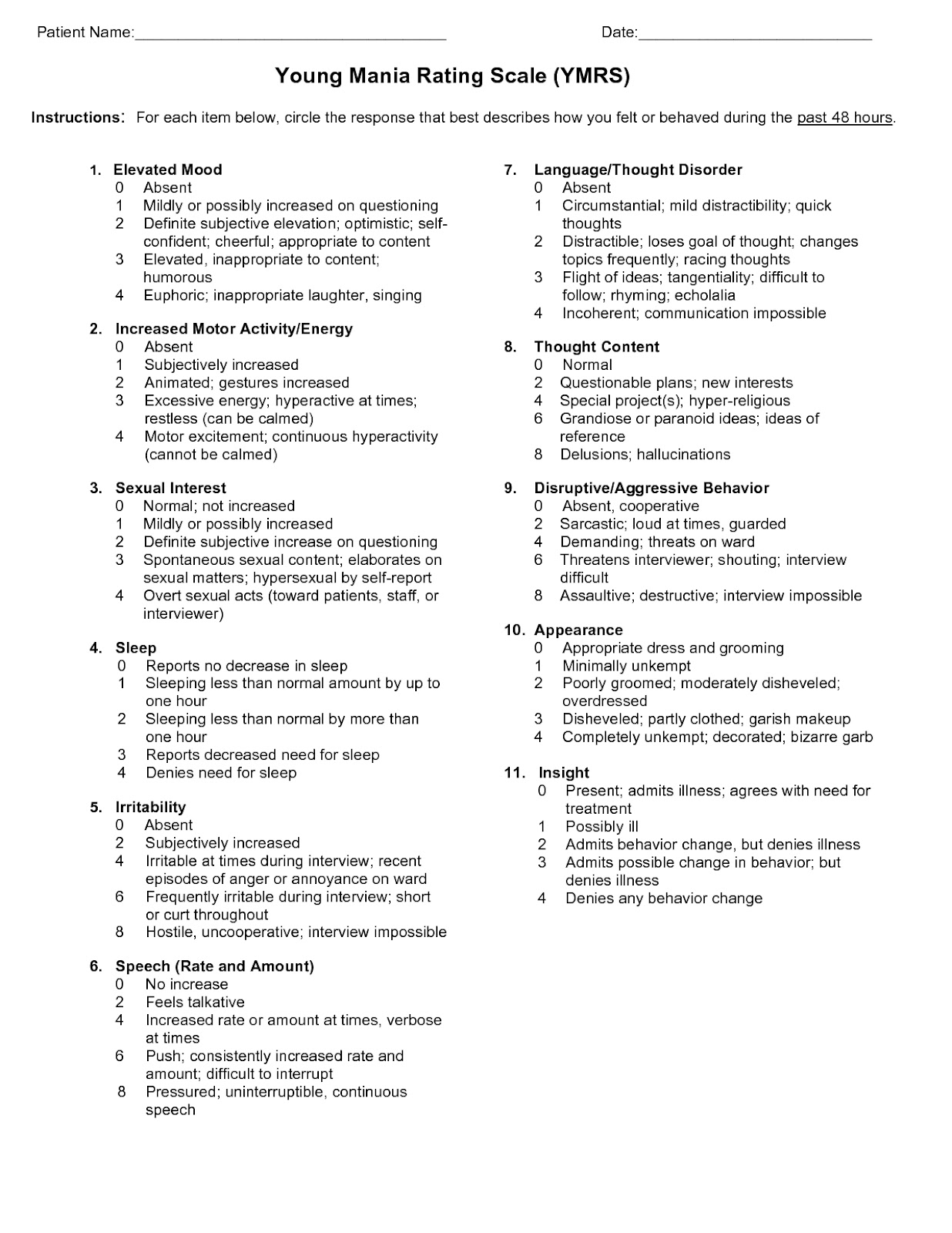
The following is a guest post from Dr. Peter Parry, an Australian psychiatrist and senior lecturer at the University of Queensland, who is a co-conspirator of mine in the fight against the pernicious practice of psychiatrists and pediatricians diagnosing acting-out children as having the major psychiatric disorder bipolar disorder (manic depressive illness).
A “culture-bound syndrome” [
http://rjg42.tripod.com/culturebound_syndromes.htm] in
psychiatry is used to describe psychiatric disorders that generally occur in
exotic indigenous communities and developing countries due to cultural
factors. Examples include “Koro” - a
disorder of group hypochondriasis that occurs in epidemics in parts of
south-east Asia where men start to believe that their penises are shrinking
into their abdomens; “Dhat” - a disorder in India associated with anxiety and
fatigue in men related to fear of losing too much semen; “Bebainan” - a
disorder where young women from Balinese nobility, who in everyday life must
behave with extreme politeness and be very demure, vent their anger in
seemingly irrational brief rage attacks.
The last of these can be seen to have a useful function for individuals
whose emotional lives are otherwise highly socially constrained.
This is not to say that there haven’t been a
few academic research centers who have investigated PBD in places like Spain,
Switzerland, the Netherlands, Brazil, India and Australia. These research centers have usually
collaborated with prominent American PBD research centers such as Prof
Biederman’s center at MGH-Harvard. In
clinical practice outside the USA there have been a few isolated pediatricians
and rarely child psychiatrists who have adopted the American clinical practice
of diagnosing PBD in pre-pubertal children.
But the vast majority of practicing clinicians and academics in child
psychiatry and pediatrics in Britain, Europe, Australia, New Zealand and to lesser
extent Canada have simply not accepted PBD as a valid diagnostic entity in
clinical practice.
Now it is true that bipolar disorder often
first manifests in adolescence and early manic or hypomanic symptoms can be
mistaken for extreme adolescent emotionality, risk-taking or substance
abuse. But until an unequivocal manic
episode erupts it is difficult to make the diagnosis. The “BCOS study” [
http://www.jad-journal.com/article/S0165-0327(07)00047-X/abstract] was a study of 240 adults mostly in their 40s with classical Bipolar-I or
Schizoaffective Disorder in Melbourne and Geelong in Australia. The BCOS study found that the diagnosis was
often made years late. The study asked
the adults when their symptoms first began.
The median age of onset for the first hypomanic/manic episode was 24.1
years old.
Yes bipolar disorder is a severe mental
disorder that needs to be detected earlier in life than it often is. But it is still a disorder that doesn’t
usually start until late adolescence or young adulthood.
Another study that asked middle aged adults
with bipolar-disorder when they thought their first symptoms of bipolar
disorder began was published in the British Journal of Psychiatry [
http://www.jad-journal.com/article/S0165-0327(07)00047-X/abstract]. The authors of this study were quite
favorably disposed towards PBD. The
remarkable aspect of the study is the discrepancy in recall of symptom onset
between the European subjects with adult bipolar disorder (Dutch and Germans)
and the American subjects.
Is there something about childhood in the USA
that brings on a severe psychotic mental disorder such as bipolar disorder so
much earlier than in other countries? Or
is there simply an over-diagnosis fad in operation, one that colors the memory
recall of childhood? Notably the
American adults in this study had features more suggestive of milder “bipolar”
and more personality and substance use problems than the Europeans who had more
classic euphoric manic symptoms.
A 20 year follow-up study [
http://www.jaacap.com/article/S0890-8567(09)64566-4/abstract] in New Zealand (NZ) was published in the
Journal
of the American Academy of Child & Adolescent Psychiatry in 1991
(before the creation of the PBD phenomenon).
It was based on all inpatient admissions to the child and adolescent
psychiatric ward for a catchment area of 1 million people. In those 20 years there were 59 children
under age of 18 who presented with a confirmed psychotic illness that included schizophrenia,
schizoaffective disorder or mania/bipolar disorder. Age of diagnosis was based on reports of
first symptoms, not date of admission to the inpatient unit. Of these 59 children and teenagers, only 3
were aged 12 or under at onset of symptoms.
One of these 3 children was reported to have had their first manic
episode at age 9, the youngest who later turned out to have schizophrenia was
aged 7 at onset of first symptoms.
The lead author of the study is now Emeritus Professor
of Child & Adolescent Psychiatry in Auckland, NZ, Prof John Werry. In a survey that I and colleagues organized of
Australian and New Zealand (ANZ) child psychiatrists [
http://onlinelibrary.wiley.com/doi/10.1111/j.1475-3588.2008.00505.x/abstract] on PBD that found high levels of skepticism
(including that only 3% thought that PBD was not over-diagnosed in the USA),
Prof Werry sent a hard hitting comment for public airing:
“I do not see any juvenile bipolar disorder below adolescence and I
think that the American view is mostly nonsense as do many of my American
colleagues.”
The second author of
the NZ study was one of his “American colleagues”, Dr Jon McClellan, a child
& adolescent psychiatrist who returned to the USA and is based in
Seattle. Dr McClellan was one of the
very few child psychiatrists to have a dissenting article [
http://www.jaacap.com/article/S0890-8567(09)61468-4/abstract] on PBD published in the
Journal of the
American Academy of Child & Adolescent Psychiatry. With regard to PBD his article concluded:
“the rate of
psychotropic agents being prescribed to preschoolers is skyrocketing…Labelling
tantrums as a major mental illness lacks face validity and undermines
credibility in our profession.”
What I found when attending the American
Academy of Child & Adolescent Academy (AACAP) meeting in Hawaii in 2009 is
that Werry, McClellan and Frances were spot on.
Many US child psychiatrists were very troubled by the PBD diagnostic
fad, the bad effects on the children and families of a spurious diagnosis and
wrong treatment, and the undermining of credibility in our profession. I received mainly supportive comments from my
US colleagues when I presented my poster of our Australian and New Zealand
survey showing high levels of skepticism about PBD in ANZ. These comments helped to explain what it was
about the culture of the USA that had spawned the PBD fad epidemic.
Firstly – the US health system is mainly a
private insurance system and much more fragmented than the universal health
cover that exists in nearly all other 30 developed nations in the OECD [
http://www.oecd.org/dataoecd/24/8/49084488.pdf]. US health insurers are more likely to
restrict reimbursements on the basis of diagnosis than health insurers in other
countries. Also pharmacotherapy is
favored over the psychotherapies.
At the Hawaii AACAP conference an American
child psychiatrist told me that if she is seeing a boy with emotional and
behavioral problems embedded in difficult family dynamics, with some insurers
she has to phone the insurer in the first session and is asked to give a
diagnosis. If she says she has no diagnosis at that early stage, the insurance
clerk says no reimbursement. If she says the diagnosis is a “parent-child
relational problem” (which is a non Axis I DSM diagnosis) she may also be told
no reimbursement. If she says it is an “adjustment disorder” (an Axis I DSM
diagnosis) then she may be allowed 1 or 2 sessions to fix the complex problems.
But if she says it is “bipolar disorder” then ongoing sessions are likely to be
reimbursed.
This is effectively diagnosis by medically untrained
health insurance clerk. It is also an
expensive system, the USA spends 17% of its GDP on health care whereas other
OECD nations spend between 8% and 11%. A
lot of money goes into paying medically untrained clerks and profits to
shareholders.
Secondly the pharmaceutical industry has
focused its influence on medical research and public opinion more in the USA
than elsewhere. The pharmaceutical
industry is globally the most profitable industry on the planet. In 2002 the 10 Pharma companies in the Fortune
500 had greater profits than the other 490 world’s biggest companies
combined. In 2008 they averaged 18%
profits whilst the rest averaged 0.9% profits in the global recession. Pharma spend 3 times as much on marketing to
the medical profession and (mainly in the USA) the public than they do on Research
and Development. The biggest market for
medications, particularly psychotropics, is the USA and direct to consumer
advertising (DTCA) is only legal in the USA and New Zealand (but NZ has a tiny
market). Thus the American public have
been flooded with advertising of psychotropic drugs and often ads about bipolar
disorder whereas the public in other nations have not (though the internet is
changing this).
Another US child psychiatrist colleague told me
at the ANZ child psychiatry conference in 2007 that in working as a locum in NZ
he had never had parents come to see him stating their child had “such and such
diagnosis” and demanding a related medication, rather they asked him what he
thought. Conversely parents invariably
were fixated on a diagnosis and drug or two when they came to consult him in
the USA. He had also trained at an
academic child psychiatric unit prominent in PBD research and was trained to
ask himself “is it bipolar?” and diagnosed half a dozen cases of PBD, yet in NZ
he’d never seen a case of PBD and had started to question his training.
A key researcher in neuroimaging children
diagnosed with PBD, Dr Mani Pavuluri, presented findings at the Hawaii AACAP
meeting. The research appeared to be of
high technical quality. The findings
(overactive right amygdale, underactive right frontal lobe) were identical to
findings in children who had suffered attachment trauma and abuse. I and others in the audience asked why not
call such children “affect dysregulated” rather than PBD. Dr Pavuluri agreed that would be a more
neutral term, but stated “if we don’t call them bipolar we don’t get funding
for our research”. Such a dependence on
a presumed result favored by funders reverses the scientific process.
Why this is so is a very interesting
question. Denial and repression of
trauma is a feature of humanity, be it at individual, family or societal
levels. Whether this is more the case in
the USA is unlikely but it is possible that American parents have been more
indoctrinated with the neurobiological paradigm for children’s behavioral
problems and this helps them avoid “parent blaming”. As an aside, I find it helpful to discuss
with parents how parenting in modern societies is incredibly difficult compared
to how parenting evolved in small hunter-gatherer ancestor tribes.
According to DSM-IV: “Not all (culture-bound
syndromes) are considered pathological in their society of origin, and may be
seen as "idioms of distress”, a way of communicating distress in a way
which is culturally understood and, to varying degrees, accepted.” Thus for a society that has been “educated”
to see mental, emotional and behavioral problems as based in neurochemistry
fixable with medications, where “parent blaming” is considered unsociable,
where health insurers value pharmacotherapy over more talking therapies and
insurance clerks request more serious diagnoses from clinicians before
reimbursing sessions, and where funding of research comes largely from
pharmaceutical companies – to diagnose the moodiness and rages of distressed
toddlers, preschoolers and older children as bipolar disorder has to varying
degrees become accepted.
The US is not alone to suffer from these
factors, but it seems to suffer more than other jurisdictions and hence PBD can
be seen as a culture bound syndrome of the USA.
That is not to say it couldn’t spread to other nations if the same predisposing
factors were to arise, and ADHD and Autistic Spectrum Disorders do to some
extent represent a similar phenomena outside the USA.