Pages

Showing posts with label symptom ratings measures. Show all posts

Tuesday, July 1, 2014

Electronic Medical Records and Symptom Rating Scales: "Solutions" Making Problems Even Worse


Sometimes an effort to solve a problem just creates different, and at times even more serious problems. Take the electronic medical record (EMR) for example. Please. (Apologies to Henny Youngman).

In a clinic I work at that uses an EMR, we are required to fill out a “treatment plan” on each patient. This is - for me at least - a waste of time since my initial psychiatric evaluation note contains all of the information contained in the treatment plan, as well as important contextual information about the patient that is not included in the plan.

The treatment plan is not only redundant, requiring me to enter information twice, but increases the number of notes in the medical record, making it more difficult for anyone reviewing the chart to find specific information they may need to as they attempt to properly care for a patient. 

Sometimes trying to find specific information in the record is like searching for the proverbial needle in a haystack. Since we aren’t given a lot of time to review charts before patients come into see us in the first place, this takes time away from the all-important face time with patients.

A narrative note is always better than a form with boxes, which often does not provide a “box” that adequately addresses an issue for a patient. But having reviewed the notes of other psychiatrists, I can see why some administrator felt that having a formal treatment plan in the EMR was a good idea. A lot of the information inherent in a good psychiatric evaluation was nowhere to be found in the notes from a good percentage of my fellow clinicians.

Not only that, but many of their follow-up progress notes did not mention what symptoms were being addressed by the doctor's treatment. Nor did they mention what symptoms, if any, had responded to any medications that were prescribed, let alone whether or not the symptoms had actually resolved.

The treatment plan template wisely asked for these target symptoms. Recently, however, the plan template was changed to include a question asking the clinician how symptom improvement was to be measured.

The answer should be, “by clinical evaluation.” And that is what I always write. However, I think the designers of the template are looking for some sort of psychological assessment device, as if that were more valid that a clinician’s evaluation. As I frequently rant about on this and other blogs, such measures are typically screening tests consisting of symptom checklists, and as such are NOT meant to be a measure of clinical progress, let alone of a definitive diagnosis.

The question a good psychopharmacologist asks, particularly with major mood disorders, is not only whether the symptoms the patient has have improved. It is whether the patients have returned to their “baseline,” the way their mood was before they developed an episode of, say, major depressive disorder.

The Hamilton Depression Scale (HAM-D) scale for rating depression is one of the most frequently used symptom checklists, both clinically and in research.

It was published fifty years ago Max Hamilton (1912–1988). Interestingly, Hamilton himself was forever pointing out that the HAM-D was not intended to be used to make the diagnosis of depression. It does not have either sensitivity or specificity—there is a great deal of overlap with symptoms of other diagnoses, particularly anxiety disorders. 

Yet somehow it became the gold standard for not only evaluating the efficacy of antidepressants, but for measuring symptom improvement clinically.

I would much rather the administrators of the clinic solved the problem of absurdly vague “progress notes” by spelling out the minimum information they need to contain, not by asking a stupid question on a treatment plan form.

Tuesday, August 7, 2012

The Big Lie and Pharmaceutical Marketing

Joseph Goebbels

The “big lie” is a propaganda technique in which a falsehood is repeated so often and in so many different ways that people come to believe that it is true.  The term is generally credited to master Nazi propagandist Joseph Goebbels.  According to Wikipedia, he wrote the following paragraph in an article dated 12 January 1941, 16 years after Hitler's first use of the phrase "big lie," titled "Aus Churchills Lügenfabrik" and translated "From Churchill’s Lie Factory." It was published in Die Zeit ohne Beispiel.

The essential English leadership secret does not depend on particular intelligence. Rather, it depends on a remarkably stupid thick-headedness. The English follow the principle that when one lies, one should lie big, and stick to it. They keep up their lies, even at the risk of looking ridiculous.

The technique has become commonplace in all sorts of marketing and is particularly rampant in Pharmaceutical Company marketing.  It is part and parcel of the process of turning facts that have never been established into established facts, as I wrote about in my post of January 31, 2012.

I of course need to make the following disclaimer for any reader who is logic-challenged:  Just because someone uses a propaganda technique invented by the Nazis does not make them a Nazi. I am not calling anyone in the pharmaceutical industry a Nazi, so don’t write me a letter.

I have already done several posts on how drug companies have turned irritability, temper tantrums, affective reactivity and other very normal behaviors and emotions in children into symptoms of mania (or ADHD, or both).  In this post I will add one more, to show how often this nonsense is repeated over and over again in poorly designed and misleading journal articles, complete with plausible deniability, and then reported uncritically in the medical press.

One way to propagate a lie about the effectiveness of pharmaceuticals is through the publication of studies in which subjects fill out self-report tests or are subjected to symptom rating scales based on their immediate presentation at the time they are seen. The results of symptom ratings scales are tabulated uncritically and produced in a journal article-  as if the results of the tests prove something.  I discussed some of the issues involved in symptom rating scales in my previous posts, Counting Symptoms That Don't Count, and A Stupid Study and an Even Stupider Headline.

A journal article called Age Group Differences in Bipolar Mania by Safer, Zito, and Safer was published online in the journal Comprehensive Psychiatry on June 12, 2012.  As reflected in the title of the journal article, the psychiatric press dutifully but incorrectly wrote that the conclusion of the article was that symptoms of bipolar are different in children and adolescents with mania than they are in adults.   

The study seemed to say that aggression, irritability and motor activity were more prominent symptoms in pre-teens than teens.  Adolescents had more aggression and irritability than adults, while adults showed more grandiosity and hypersexuality.  Proof positive that the symptoms said to be more common in teens and pre-teens were actually symptoms of bipolar disorder?  

If you only read the news reports or superficially glossed over the abstract of the actual article, you might think so.

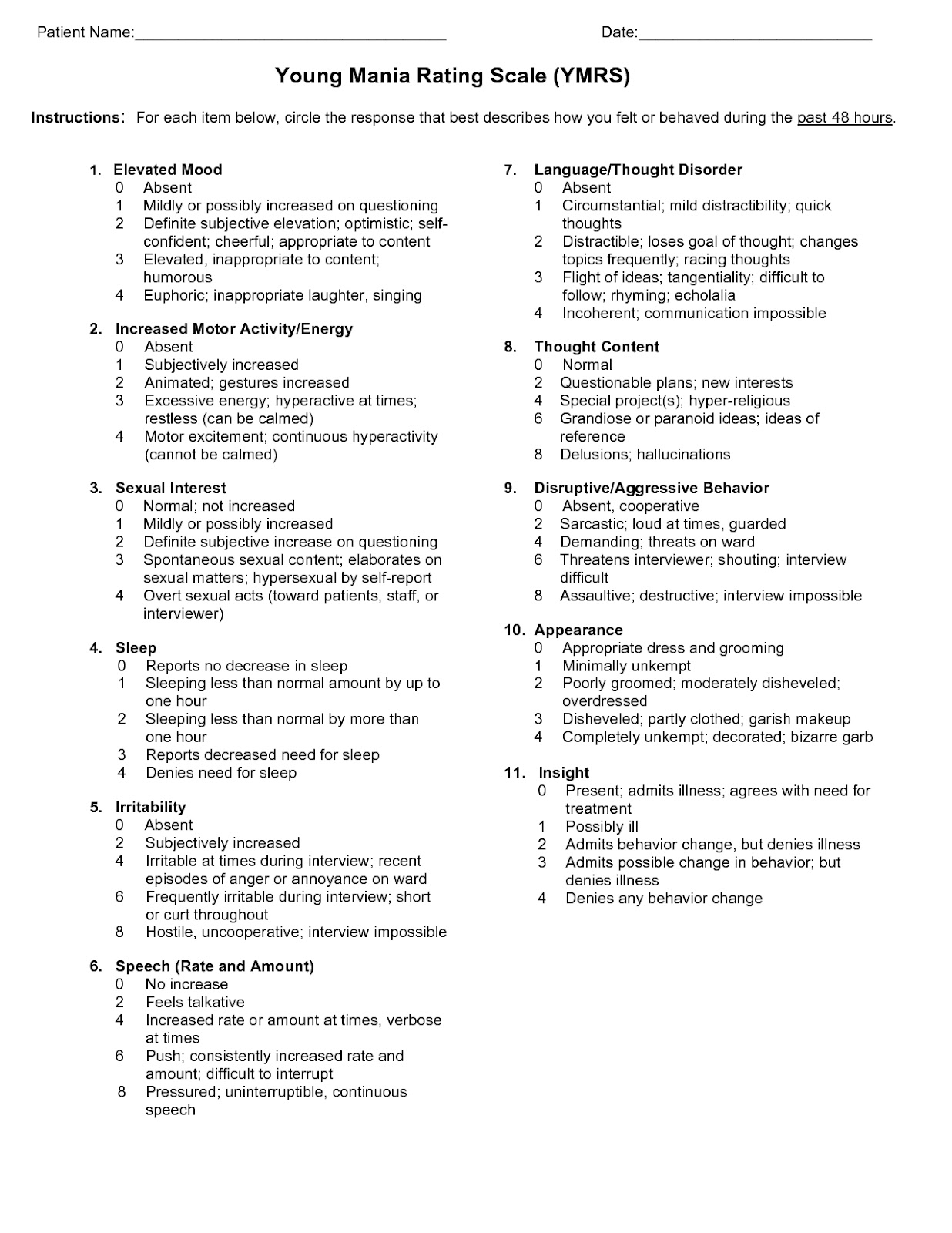
Yet in actuality this was yet another repetition of the same old big lie technique.  Looking at the abstract of the article more closely, the conclusion was a little different: that the results of a symptom rating instrument, the Young Rating Mania Scale (YMRS), showed this, not a complete and comprehensive diagnostic evaluation of the subjects in question: "In age-grouped YMRS item assessments of bipolar mania, anger dyscontrol was most prominent for youth, whereas disordered thought content was paramount for adults." 


Notice how the authors cannot be accused of lying, since this is in fact what their study actually showed.  The "take home message," however, is that this means that these symptoms are in fact valid symptoms of bipolar disorder in kids.


So let's take a closer look at the study and the YMRS.  The study was based on a review of the literature describing several other studies, and the other studies that were chosen for review were "... studies reporting age group differences in total YMRS scores that included individual baseline item scores."  So this study reviewed other studies that used what I will soon show is a highly suspect test. 


Symptom rating instruments like the YMRS are meant for two purposes: 


1. To be screen out patients who for sure do NOT have the diagnosis and make sure that anyone who might have the diagnosis is included for evaluation. In other words, the tests are designed to have a lot of false positives, that is, people who score positively on the test but do not in fact, have the disorder.


The authors of this review clearly know that the YMRS is a screening instrument:  "These outpatient studies required a minimum YMRS total baseline score of 20 for inclusion and achieved total baseline YMRS scores of 28 to 33 indicating at least moderate manic symptoms [20,22,23,25]. In these clinical trials sponsored by industry, trained raters did the YMRS item scoring at baseline. The subjects who met full research criteria for mania were subsequently randomized into placebo and medication treatment groups."


2.  To measure changes in symptoms over time in patients who have already been diagnosed correctly by other means. The other means that are used usually consist of research diagnostic clinical interviews, but we have no way of knowing how well the clinical interviews were done - particularly whether the duration and pervasiveness criteria of the symptoms were applied correctly, since this is frequently not done by drug company shills. 


But even using a symptom rating scale to measure changes in symptoms is frought with difficulty, particularly in the case of the YMRS, which completely ignores the issue of symptom pervasiveness and duration.


The problem with tests that ask patients to rate their own symptoms was described succinctly by one patient, who purportedly said about a psychiatrist who used a self report question as the entire basis for prescribing drugs, "The question is always the same. He asks me, ‘On a scale of 1 to 10, rate your mood.’ I answer, but you know, in 6 hours I might have a different answer.”   


Many of these rating scales uses what is called a Likert Scale.  Likert Scales generally ask a patient or a researcher to rate the severity of a given symptom on a 4 to 7 point scale.  A big issue with Likert Scales in self-report instruments is that when they ask whether a symptom is mild or severe is that they do not indicate the answer to the question, compared to what?  Compared to a patient with a clinical disorder, or compared to the symptoms as they have been experienced by the patients themselves?  When someone is very sad but has never been clinically depressed, he might rate the sadness as severe.  Having perhaps never seen another person with a severe clinical depression, he has no external reference point that would distinguish a normal mood from a highly abnormal mood.


Now for the YMRS. The YMRS asks a clinician to rate the patient's symptom based on what the patient looks like or says at the time of the interview. Let's look at item number 5 on the YMRS scale, irritibility.  The interviewer is asked to rate it on a 5 point scale based on observations during administration of the test.  0 = absent, 1 = subjectively increased, 2 = irritable at times dring the interview, or recent episodes of anger or annoyance on the ward, 3 = frequently irritable during the interview: short, curt throughout, and 4 = hostile, uncooperative, interview impossible.


Notice that there is no requirement than an effort be made to find out why the patient presents with irritability during the interview.  It just assumes that it is due to the underlying mania.  But how long has it been going on?  Just today?  How do we know the patient is not acting irritable because he had been having a really bad day, or because the interviewer was perceived as condescending? We don't.  


Or take item #6, rate and amount of speech.  Manic patients have what we called pressured speech - they talk and talk and no one can get a word in edgewise.  This is present regardless of external circumstances.  If a patient exhibits very fast speech in the YMRS interview, on the other hand, the symptom could conceivably be present because the patient is in a big hurry to leave on that particular day, but characterologically likes to make sure the doctor gets a very precise answer with all its myriad details to any question.  


Without this additional information, the answers to the questions are meaningless!  In children, aggression and irritability have hundreds of potential causes besides their supposedly being symptoms of bipolar disorder.


But the mantra that they are indeed symptoms of bipolar disorder in children is once again subtly repeated.  Over and over and over again: the big lie technique in operation.