https://www.youtube.com/channel/UCPjK28Du95eX2ZdWTT5_6TQ
Showing posts with label adult children. Show all posts
Showing posts with label adult children. Show all posts
Thursday, November 10, 2022


Thursday, July 21, 2022
Contact with Toxic Parents: Ambivalence Reigns

There are a plethora
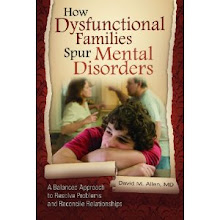
of self-help books out, including the one I wrote (pictured above), advising adult children of
toxic parents on what to do. Some recommend cutting them off, some recommend
keeping them at a distance, some recommend trying to set better boundaries, some
talk about whether reconciliation is possible or not, and a few of them say it
depends on the nature of the problems.
My own view, as most
of my readers know, is to solve the problem of ongoing toxic parental behavior
by researching the family history to identify shared internal conflicts, the
reasons for them, and the effect of ambivalent double messages throughout at
least three generations on everyone involved. Then, the object is to confront
the issue head on by developing various strategies to empathically get past
parents’ formidable defenses and come to some mutual understanding of why everyone
is so miserable and what can be done to stop repetitive dysfunctional
interactions. The goal is not reconciliation per se but problem solving. Reconciliation and
forgiveness is, however, however, a typical byproduct.
The psychotherapy research
literature has had very little to say about this. It does come up in opinion
pieces in such magazines as Psychology
Today or The Psychotherapy Networker.
I think this whole
question is a much bigger issue than it appears to be, and is a major cause of
self-destructive or self defeating behavior, anxiety and unhappiness. How do I
know? Well, a few years ago I started reading newspaper advice columns on the
internet from four different advisors: Carolyn Hax, Amy Dickerson, Annie Lane,
and Dear Abby. In order to maintain their readership, these columnists have to
identify which letters are going to lead to a lot of public interest. If
subjects pop up a lot, one might conclude that the problems discussed are very
common.
And letters about this
issue are exceeding common. People are constantly asking how to solve ongoing
behavior from parents that is driving them crazy, whether they should reconcile
with parents that have been already been cut off, whether to cut off toxic
parents, guilt over a decision already made regarding a cut off, how to set
boundaries, whether to reveal a history of child abuse to siblings and
children, and how to stand up to parents without being disowned. My count of
letters like this in the four columns was 28 in 2021 and 12 through April of
this year. And I’m not even counting all the letters from parents who have been
cut off by their children for “mysterious” reasons as I described in two previous posts.
Some writers are
writing to justify their decisions on this matter, but their ambivalence about
whatever decision they have made is just blaring. If they think their decision
was so good, why are they writing about it? Some even want to warn people to
watch out for therapists who recommend reconciliation, shouting the benefits of
cut-offs from the rooftops. Do they think every situation is the same? And why
do they feel the need to shout this out by writing to an advice columnist.
As I have said many
times, cutting off an abusive parent is better than continued abuse, but those
are not the only two options. My book discusses the third option for cases that
do not involve significant physical or sexual abuse, and my psychotherapy model
is for therapists to help all kinds of cases no matter how severe. The methods
are not quick fixes, and the therapy is long term and often either not paid for
by insurance or just flat out unavailable, since this therapy model has
unfortunately not caught on. So the best solution can be very out of reach.
However, the danger of ongoing cut offs AND continuing abuse and toxicity is that the interpersonal and intrapsychic (in the mind) issues are not resolved but continuously reinforced by ANY family contact and consequently are seldom sufficiently repaired. Not to mention that the risks of passing them on to your own kids is quite high.
The
high degree of ambivalence about making or having made these decisions regarding ongoing contact shows how important family really is to just about everyone
Tuesday, April 21, 2015
The Dysfunctional Family Role of the "Loser"

It seems like a lot more adults in the United
States are living with their parents than ever before. Some of this is completely reasonable and is in
no way indicative of significant family dysfunction, as economic conditions have led many twenty-somethings to require much more time to get their financial
ducks in a row so they can move out and be more independent.
In other cases, however, this phenomenon is due to significantly dysfunctional family dynamics. If the pattern continues into the
In other cases, however, this phenomenon is due to significantly dysfunctional family dynamics. If the pattern continues into the
In a
previous post,
I discussed some typical patterns that create this pattern, and
pointed out that the adult children remain enmeshed with their parents because, covertly, they are taking care of some of their parents' needs. They may be
mediating disputes between bickering parents who for whatever reason will not
get a divorce; they may be helping take care of sick, elderly, or just plain
lonely parents; they may be providing free cooking and housekeeping services
for families that for a variety of reasons are not being done by someone else.
Or in some cases, all of the above!

This is the shell game that I refer to as Who is Taking Care of Whom?
I have seen cases of such patterns that continue throughout the entire lifetime of the adult child. You can find many examples of a
sixty-something year old man or woman living with an eighty-something year old
mother or father. The adult child's siblings may all be independent, but the
"identified screw-up" seems to be the parent's favorite child.
Usually in these instances, the parent is
taking care of all of the adult child's financial needs, including for housing, food and
spending money, so said adult child does not have to work outside of the home. The reason they do not work, however, is actually because they
already have a full time job: taking care of their parents.
On the surface, it seems to all the world -
and even to many peripheral family members - that the adult child is using the
parent, and said adult child normally receives all
of the blame for the dysfunctional living arrangement. They are accused of
using the parents because of less than admirable motives. Many such folks readily accept this blame,
and in fact act in many ways to confirm everyone else's worst fears. They do
this to protect the image of their parents, and in the process sacrifice their
own reputation.
Another variety of this pattern is when the adult
child living with parents pretends to be a failure who always seems to need the help of their parents. That is the version of the shell game that is the subject of today's post. The adult child appears to be a big loser in both love and work.
So how does one go about becoming such a loser? Let me count the ways.
They may flunk
out of school for various and sundry reasons that are not actually the real reasons.
Alternatively, they may get a degree in something that qualifies them for a
profession that is rapidly disappearing from the current landscape, so they cannot get
a permanent job.
They may make impulsive decisions that get
them in trouble in way one or another, and subsequently lose any job they do manage to land. They may
even develop various medical or mental illnesses, some of which are real and
some of which are feigned and some of which are both, but all of which appear
to be far more disabling than these particular illnesses should ever be in real
life (the role of the defective). Drug or alcohol problems are common.
Some of these folks are massively obese.
They may get themselves fired from a whole series of
jobs, again for reasons which may appear legitimate but are masks for the real
motivation of the job loser. Or they might take a job knowing that the company they work
for is actually planning layoffs.
These people may also or instead play the role
of loser in their love lives. They may look like they are really trying to
meet romantic partners by going to singles events or signing up for dating
websites, but somehow very little comes of it. Or they choose partners - or a series of partners - who
are abusive, have drug or alcohol or commitment problems, or are in other ways
dysfunctional, so their parents have to come and rescue them from dangerous or
dead-end relationships. Sometimes repeatedly.
Because of these patterns, the parents - who are in reality highly dependent on Mr. or Ms. Loser - often criticize the poor judgment of their offspring unmercifully.
The more the parents criticize, the more the adult child continues making the same mistakes over and
over again. The parent then feels justified in continuing to make the criticisms. On the
rare occasions when the adult child expresses anger at the parent's constant
harping and verbal abuse, the parent can point to the child's irresponsible behavior as justification for it.
In a very real sense, the adult child is
purposely giving the parent this ammunition to use against him or her, although
they do not have to think about this consciously while doing so because their behavior
is habitual and automatic. This allows the parent to avoid feeling guilty for
both their criticisms and for the fact that they are contributing to their own
child's impairment. The parents, of course, act in this manner because they themselves are playing their own roles within the family.
Some are stuck in bad marriages because of
family/cultural/religious prohibitions regarding divorce. Some are females who are stuck in outdated
gender roles with a prohibition against women being independent. Some need their child to act out their own
repressed anger because they cannot do so themselves - often due to family rules prohibiting anyone from being
"selfish" enough to put their own needs above those of other family
members.

There is a very incisive and sophisticated comic
strip called Momma by Mell Lazarus that absolutely nails the family dynamics described above. A son named Francis is the
identified loser. He apparently does
have his own apartment, which of course Momma is paying for, but he is
constantly doing everything in his power to act out the various negative characterizations
of him that Momma compulsively throws his way.

It's kind of sad that a cartoonist understands this dynamic better than many therapists.
Monday, February 21, 2011
Guest Post: What Parents Can Do If They Do Not Like Their Child's Romantic Partner
The first guest post on my blog is contributed by Kitty Holman, a freelance writer, pursuing her online Journalism course. She loves to write on health, parenting, environment, and education-related topics. She regularly writes on the topics of nursing colleges. She welcomes your comments at: kitty.holman20@gmail.com. In this post she discusses how parents can respect their adult children's autonomy in a difficult situation.
How will you handle it? What do you take into consideration when deciding how to act regarding this new development? After all, you are the parent, and your parental instincts might tell you that this relationship is bad for your child, but you also have to respect your child's wishes, especially since he or she is a grown adult now, for if you overstep your bounds, you risk not only damaging your child's relationship with a potential partner, but also your relationship with your child.
Observe
Your first step, the first action you can take in this situation, is one of non-action. Simply observe. Do your best to observe your child in this new relationship. Watch how he or she interacts with the partner. Listen to how they speak to one another. Listen also to how your child speaks about this new partner. You want to gather as much information as possible before making any judgments.
Invite
Next, if you get a bad feeling about your child's partner, one thing you can do is invite everyone to hang out together. This way you can also interact with the partner on your own. Get a feel for how your child's partner treats you and your family. How they initially treat you will give you some insight into how they will treat you and your family later on, as well as how they treat your son or daughter. If this phase confirms your suspicions, then you'll want to take some action.
Talk
This is perhaps the trickiest part of the process, as how you approach your child about his or her partner will determine the tone of the rest of the discussion and perhaps the rest of the time your child is dating that person. Try to find a time to talk to your child about the relationship. Preface your remarks by saying that you only wish to offer your opinion and a little advice, and that you respect your child's decisions. If you can approach the situation gently, then you can save you and your child a lot of heartache later on. You have to trust your child at this point to understand your concern, but you have to also realize that your child is an adult who can make his or her own decisions. Think of yourself as an advisor at this point.
Intervene
However, should you find that your child is in danger, either mentally or physically, then you just might have to take steps to intervene on his or her behalf. This should be an action of last resort, as the consequences of your intervention can be drastic if you misjudge the situation. But, you are the parent, and ultimately, your experience in the world gives you the tools to be the most helpful, caring parent possible for your child. That's something that no professional can really lay claim too.
The question, then, is how exactly do you intervene? The simplest, perhaps less confrontational method would be to ask to speak with both your child and his or her romantic partner. This method requires that you take an extra step in your discussion. Simply giving advice is not an option. You might request that your child and partner go to family or relationship counseling; you could offer to help pay for it as encouragement. You could offer to even join them. However, if this intervention does not work, then you may need to seek help from the justice system. Unfortunately, you cannot take out a restraining order on a third party, so you will need to talk to your child about this option. Ultimately, if your child resists, your best bet is to encourage him or her to be careful in the relationship. Be as supportive as possible, but understand that your child is an adult who can act on his or her own.
What Parents Can Do If They Do Not Like Their Child's Romantic Partner
Sooner or later, parents have to face the prospect of their son or daughter's eventually entering a romantic relationship. Of course, each set of parents will have their own way of handling this process: at what point their children can start dating, whom they can date, what curfews they'll face, and so on. However, there will come a day when your child is on his or her own, dating and seeing other people, and there just might be that one romantic partner whom you absolutely cannot stand.
Observe
Your first step, the first action you can take in this situation, is one of non-action. Simply observe. Do your best to observe your child in this new relationship. Watch how he or she interacts with the partner. Listen to how they speak to one another. Listen also to how your child speaks about this new partner. You want to gather as much information as possible before making any judgments.
Invite
Next, if you get a bad feeling about your child's partner, one thing you can do is invite everyone to hang out together. This way you can also interact with the partner on your own. Get a feel for how your child's partner treats you and your family. How they initially treat you will give you some insight into how they will treat you and your family later on, as well as how they treat your son or daughter. If this phase confirms your suspicions, then you'll want to take some action.
Talk
This is perhaps the trickiest part of the process, as how you approach your child about his or her partner will determine the tone of the rest of the discussion and perhaps the rest of the time your child is dating that person. Try to find a time to talk to your child about the relationship. Preface your remarks by saying that you only wish to offer your opinion and a little advice, and that you respect your child's decisions. If you can approach the situation gently, then you can save you and your child a lot of heartache later on. You have to trust your child at this point to understand your concern, but you have to also realize that your child is an adult who can make his or her own decisions. Think of yourself as an advisor at this point.
Intervene
However, should you find that your child is in danger, either mentally or physically, then you just might have to take steps to intervene on his or her behalf. This should be an action of last resort, as the consequences of your intervention can be drastic if you misjudge the situation. But, you are the parent, and ultimately, your experience in the world gives you the tools to be the most helpful, caring parent possible for your child. That's something that no professional can really lay claim too.
The question, then, is how exactly do you intervene? The simplest, perhaps less confrontational method would be to ask to speak with both your child and his or her romantic partner. This method requires that you take an extra step in your discussion. Simply giving advice is not an option. You might request that your child and partner go to family or relationship counseling; you could offer to help pay for it as encouragement. You could offer to even join them. However, if this intervention does not work, then you may need to seek help from the justice system. Unfortunately, you cannot take out a restraining order on a third party, so you will need to talk to your child about this option. Ultimately, if your child resists, your best bet is to encourage him or her to be careful in the relationship. Be as supportive as possible, but understand that your child is an adult who can act on his or her own.
Subscribe to:
Posts (Atom)