Pages

Showing posts with label ambiguity. Show all posts

Tuesday, August 5, 2025

A Family Cut-off as a Gift of Love


In my second book for psychotherapists, Deciphering Motivation in Psychotherapy, I discussed how therapists can uncover the hidden motives for dysfunctional behavior patterns by looking critically at what patients say about them as well as by looking at how the patient behaves while saying it. Ambiguity is inherent in all languages; any sentence and most words can mean two or more different things. Sometimes they can mean seemingly opposite things. To get an idea of how this can mislead you, take a look at clues in crossword puzzles. In one New York Times Sunday crossword, the clue was “unlocked.” The answer was “bald.” With patients discussing family issues, I usually found that the seemingly less obvious answer to the question of what something means turns out to be the right one. Thinking about that possibility then shaped my further questions.

I came across a good example where such might be the case in a recent column by advice columnist Dear Abby.

DEAR ABBY: As a young mother, I endured a difficult marriage filled with domestic abuse. In the midst of that turmoil, I struggled to be the parent my children needed. They are adults now, and I find myself distanced from them. It pains me deeply to know they want nothing to do with me. I can't help but feel I ruined their lives, and the weight of that thought is unbearable. I miss them dearly and long for the chance to reconnect and heal our relationship. I'm at a crossroads and unsure of how to move forward and mend the bonds that have been strained. I deeply regret my past mistakes and want to make things right, but I'm uncertain where to start. Thank you for your guidance. -- LOST

DEAR LOST: … I wish you had mentioned why you think you "ruined your children's lives." Were you physically or emotionally abusive? Did you abandon them? If that's what happened, reach out. Apologize and offer to join them in family counseling if they are willing. It might be a healthy first step toward reconciliation.

Of course we have no way of knowing for certain the reasons behind the cutoff between the writer and her adult children just from this letter. Most people, if they had to guess, would guess that they are angry at her for not protecting them from their abusive father.  I’m sure those kids would be somewhat angry if that were the case, but if I had to guess, I would say that it is not the main reason for the cutoff.  I would suspect that instead there’s a little “pathological altruism” going on here.

Mom’s letter practically reeks with references to the mother’s guilt over her parenting failures (“I can't help but feel I ruined their lives, and the weight of that thought is unbearable”). Usually in cases like this, I would strongly suspect that the mother flagellates herself for her failings in front of them quite a bit whenever she sees them, just like she does in a letter that might be published. They may feel that Mom's misery is their fault. They may avoid seeing and communicating with her to avoid making her feel even worse than she already does. Staying away from her would then seemingly protect her from some of these “unbearable” guilt trip she puts herself through.  They might think they are doing her a favor with what is called “A gift of love.”

Unfortunately, the children avoiding her like this does her more harm than good. She’s already feeling a ton of guilt anyway, and now she’s now cut off from her children to boot! And as much as the kids dislike Mom,s overwhelming guilt, they really would like a better relationship with their mother. As a therapists, I worked with patients on strategies for empathically addressing such interactions and putting a stop to them.


Tuesday, May 10, 2022

Family Roles: A Form of Method Acting


When I was teaching psychotherapy techniques to psychiatry residents and psychology interns, one piece of advice I gave them ran counter to the advice most frequently given by other supervisors. I told them, when doing therapy with patients with personality disorders, to pay more attention to the words that the patient/client verbalizes than to their non-verbal expressions and body language. 


In general, body language is in fact usually more important than what a person says in determining how they really feel or what they really believe. This is true because, biologically, non-verbal communication evolved in our species long before language did, and became a more primal representation of what is going on inside of us.


So why do I give trainees the opposite advice? The fact that non-verbal behavior conveys more and more accurate information to another person than verbal behavior is precisely the point. People who have personality disorders are playing roles in their family. In a sense, they are acting! These people have developed a false self or persona that is one of the various roles I have described in prior posts – savior, avenger, go-between, spoiler, defective, loser, monster, covert caretaker, etc. In order to do this most effectively, one has to be a good actor, and therefore hide one’s true self – one’s actual beliefs and feelings which are not part of the act! Because role players have to be convincing, they are purposely giving off the wrong impression with their body language. How do they know to do that? Probably through trial and error.


Why do they become such good method actors? The simple explanation is that for them, playing the role as well as possible seems to be nearly a matter of life or death. Not playing the role leads to a form of existential terror called groundlessness. A person nonetheless does have the power to go ahead and exhibit their true selves in spite of this, but in dysfunctional families, doing so is terrifying. One of the things I learned in dealing with spoilers (borderline personality disorder) is that, whenever they feel that what they are doing is not working, that is when they start to self injure (cutting and burning themselves).


So what about their verbal behavior? Shouldn’t that also be misleading for the same reasons? Well yes it is. But there is a peculiarity of language that leads to my second piece of advice to beginning therapists: whenever patients say something that is a little ambiguous – when there is more than one way to interpret it – I tell them to at least think about the less obvious one. This is also the secret to solving the New York Times Sunday crossword puzzle, in which a lot of the clues can be interpreted in a bunch of different ways to throw solvers off.


For example, the mother of a nurse yelled at her, “I can’t believe you talk to doctors that way!” The nurse was far more outspoken than most people in her situation and often surprisingly got away with it. Of course, the nurse interpreted the mother’s remark as a criticism because of her tone of voice. But the words themselves contain no value judgment at all! I think the mother actually admired her daughter for being outspoken because she couldn’t be herself, but could not admit it. 


I also think the nurse knew that because she was in fact acting out successfully in that regard, and the mother was vicariously living through her. The reason the nurse got upset when Mom yelled at her was because the mother was now seemingly upset with her for doing the very thing that the mother seemed to want her to do in the first place. The ambiguity in the words Mom chose can give clues as to what Mom's real feelings are.


Tuesday, July 19, 2016

Ambiguous Language and Recognizing Emotional Conflicts in Others - Part II


The literary critic William Empson took Freud's idea of intrapsychic conflict as a springboard for appreciating the art of the poet, which in turn is a way of understanding the poet. Empson conceptualized intrapsychic conflict along psychoanalytic lines, but his ideas can just as well be relevant to a conflict between the individual's self and the family system to which that self belongs. In the book, Seven Types of Ambiguity, he listed different types of literary ambiguities which indicate increasing levels of confusion in the minds of the reader, the characters, and perhaps the author.

One of the reasons that literature excites us is because we identify with or contrast our feelings with the feelings of the characters as they encounter various predicaments. Those feelings are frequently not fixed, but mixed. Both we and they are plagued with doubts and contradictions. In much the same way, we can enter the internal world of others within our social system. In both cases, we are confronted with various degrees of ambivalence and confusion.

Empson's seven ways in which levels of "two-mindedness" are manifested in language are the subject of this post. Their presence can be used to alert a listener to the possibility that a motivational conflict is present in the speaker. Being able to spot this is key to understanding and then constructively discussing (metacommuncating about) repetitive dysfunctional family interactions. In general, the degree or level of the speaker's awareness of his or her ambivalence increases as we proceed down the list.

1. A statement's makes possible comparisons to several points of likeness or difference. This type of ambiguity turns on the fact that any idea or emotion causes a multitude of associations within the mind of the listener, and also because different people have different associations. A choir, for instance, can lead one person to recall positive images such as grand churches and angelic singing, while for another it summons negative images such as overbearing nuns in Catholic school or guilt-inducing sermons. This is precisely why people use metaphors and why metaphors make language so rich; a single word can stand for so much. A statement is ambiguous when the listener finds himself or herself wondering which of these many potential references and feeling states is in the mind of the author or speaker.

2. Two or more alternate meanings are fully resolved into one because to what a metaphor is really referring seems fairly clear. This device may or may not be ambiguous, depending on whether or not a question exists as to the actual meaning of the author.

 3. Two apparently unconnected ideas are suddenly connected. A good example of this type of ambiguity is the pun. An ambiguity arises whenever a question exists as to whether or not to connect the meanings, or about how to connect them. I remember an instance in high school in which I made a remark to a friend about another fellow student whom I disliked - which that guy overheard - about how he belonged to an anti-nuclear weapons organization. I mentioned that the fellow "was in SANE."
  
4. The speaker indirectly expresses mixed feelings or ambivalence without admitting to them, through the use of exaggeration. Confusion can be communicated, for instance, by provoking in the listener a sense of "methinks he doth protest too much." In other words, when individuals overstate their feelings, a listener may get the idea that they are covering up opposite feelings. The process involved can also be understood as a manifestation of a the defense mechanism known as reaction formation. Individuals may defend against an unacceptable idea by becoming obsessed with the opposite idea, or defend against an unacceptable impulse by compulsively acting in ways contrary to the impulse. A good example was the scandal that surrounded the television evangelist, Jimmy Swaggert. He had vociferously condemned from the pulpit all those who gave in to the "sins of the flesh." As it turned out, and as many of his critics had suspected all along, he had been giving in to the same temptations himself.

5. An individual communicates two ideas which may contradict one another in passing from one of them to the other, but does not address the question of their apparent inconsistency. The speaker either does not seem to be holding both ideas in mind simultaneously or never juxtaposes them, so that the issue of their possible mutual exclusiveness can arise for discussion and clarification. For example, a man may expound on his belief that the only road to satisfaction is hard work, and then go on to complain about how bummed out he feels at his own job. As a therapist, I often notice such possibly contradictory statements made literally weeks or even months apart. A therapist really has to pay attention and write good notes about sessions to pick up on this.

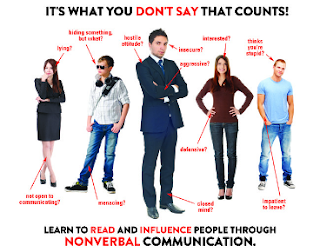
 6. The speaker says something in a way that actively signals to the listener that there should be some doubt as to what has been said. The speaker appears to have avoided making a commitment to an idea or expressing his or her true feelings. In this situation the speaker cannot be held accountable for holding any particular opinion. Damning with faint praise would be one example. When a basketball coach describes a player as "tenacious on defense, and always gives one hundred and ten percent," he is generally not describing one of his starters. A second example is the use of words like "strictly," "exactly," or "totally," as in, "she was not, strictly speaking, very intelligent!” A third way is through the use of nonverbal communication. A grin or a raised eyebrow will often negate the content of what is being said at the lexical level. In all of these cases, the listener is forced to guess what the speaker really means.


7. The last type of ambiguity is a full contradiction, in which the author or speaker obviously seeks to "have it both ways." In type seven, speakers make statements which indicate neuroticism or indecisiveness. They may go on and on ad nauseam describing the pros and cons of particular viewpoint or course of action without ever making a decision. They may obsessively waver back and forth on an issue. They may without warning plunge from the heights of ecstasy to the depths of despair, or from the idealization to the denigration of a person, thing, or concept.

Tuesday, July 5, 2016

Ambiguous Language and Recognizing Emotional Conflicts in Others - Part I


In my post of 12/2/14, intrapsychic conflict and dysfunctional family patternsI discussed what I believe to be the most important way to integrate three of the major schools of psychotherapy: psychodynamic, cognitive-behavioral, and family systems. To boil it down, conflicts that people experience over what to think and how to behave (intrapsychic conflicts) are triggered and reinforced, on a variable intermittent reinforcement schedule, by family members who are stuck with rules of behavior that are no longer adaptive because of changes in the ambient culture. In a sense, the whole family shares the intrapsychic conflict.
The family members in this situation give one another mixed or contradictory double messages about what behavior they expect from one another.
If you are stuck in this situation and are motivated to recognize the double messages and to try to discuss the conflicts in a meaningful way (metacommunication), how might you recognize when other family members are thusly conflicted? This post and the next will discuss how to do that. Specifically, I will show the intrinsic ambiguity that is a feature of all language is used by those conflicted to accomplish two goals:
1. Keeping their conflicted feelings, beliefs and motivations unclear to other people.

2. Keeping those things unclear to even themselves to avoid anxiety.

Linguists tell us that any sentence in any language can be interpreted at two different levels - which may then conflict. One level is the purely lexical or object level, that is, what the specific words actually mean. The other level is the meta level. This level concerns the relationship of the two conversants in which any statement is made. The context provided by the entire history of the relationship between the two conversants alters the meanings of the sentences.

If I say to a friend "I love ice cream" as we pass an ice cream parlor, I may not merely be conveying a message about my preferences in dairy products. I might also be suggesting, for example, that we stop and have an ice cream. The indirect nature of the request may, for example, indicate that I lack the power in the relationship to just demand that my friend go into the parlor with me. The power differential is part and parcel of the nature of the relationship between the two people.

 Whenever two people who have formed a relationship have a conversation, any statement made may refer to either the object or the meta level. The two levels may seem to be in harmony or they may contradict each other. Another way of looking at this phenomenon is that all statements may refer either to the feelings, thoughts, and intentions of the individual apart from the relationship context, or to the feelings, thoughts, and intentions within the relationship context.

When the listener does not know which of these descriptions best applies to a given statement, an ambiguity is created about the motives of the person making the statement. The statement, "I love ice cream," is an example of a statement in which the object and meta levels would not be contradictory in most social situations. It is totally consistent for me to both like ice cream no matter who I am with or even if I am alone and for me to want my friend to accompany me to an ice cream parlor right now. If, on the other hand, I make this statement as we pass an ice cream parlor while implying that I would rather be somewhere else, then the motivation behind my statement becomes ambiguous. And confusing.

Individuals will invariably react to such ambiguity, but they do not tend to think of the communication as ambiguous. For instance, if a widowed mother says to her son, "You don't care about me; you never want to come when I desperately need you," it is natural for him to assume that his mother wants him to change his behavior. He believes that she wants him to gladly come over whenever he is needed. 

It seems that he will continue to believe this, even if the requests for help are made with impossible frequency at times clearly inconvenient for him and without a shred of gratitude on his mother's part when he complies. He may continue to believe this, in fact, even if criticized every time he complies with his mother's request.
  
The son in this situation is in a rather strange bind. He is being criticized by his mother for attempting to please her. To add insult to injury, her requests are almost impossible to follow without a complete disregard for his own needs. Interestingly, most people in such a predicament do not come to the conclusion that the mother may not, in fact, really want the help she asks for, or, alternately, that she does not even know whether she wants it or not. The idea of an intrapsychic conflict being the cause of such behavior is not generally considered, even though it is the most common cause. 

The idea that the mother is knowingly pushing the helper away for some ulterior motive is one that just does not appear to most people to make any sense. However, this is precisely what is happening. This is the "net effect" for which the behavior was designed.

The ambiguity is Mom's motivation in this case suggests the possibility that his mother has a conflict within herself over her dependency needs. Perhaps she is not happy being looked after by her son, but might believe, for example, that being independent is not proper for a woman. No matter how the son behaves in regard to the issue, she becomes displeased. because his actions interfere with either her true desires for independence or the rules required by her gender role. He is in a "no-win" situation. However, her displeasure does not result directly from the son's behavior, but from her own internal conflicts.
  
With this in mind, let us look at the ambiguity of the "you don't care about me" part of her statement. It may refer not to the son's lack of concern for his mother per se, but to the motives behind his helping behavior. It could mean that she believes that the son's behavior is based on his own selfish wish to look after and dominate her, rather than on her desire to be looked after by him. He could be helping her because he likes being a kingpin, for instance - not because he cares about her.

Within the context of dysfunctional family relationships, it is often true that consideration of the seemingly less likely interpretation of a statement reveals the truth as to what is really going on!

In the next post, we will look in more detail about the semantics of intrapsychic conflict. 


Friday, August 7, 2015

Dr. Allen's Second Book Back in Print


My second book, Deciphering Motivation in Psychotherapy (which was originally going to be titled Ulterior Motives) is now available in paperback at a reasonable price on Amazon for the first time. It is actually my favorite of the ones I've written, but by far the least read.

It was out of print for a time, and then back out but at a ridiculous price. (A different publisher had bought out the original publisher, then re-published the book without even letting me know!)

It was meant for therapists but is written so lay people can understand it.

This book explains some basics about the theory behind Unified Therapy, including the core concept of dialectic causality.

The main topic is the use of language in dysfunctional family interactions, and how the true intentions and meanings of individuals who are being ambiguous or misleading can be discovered. If you want to see things that have been said to you repeatedly by difficult relatives in a whole new and surprising light, this is the book for you!