Pages

Showing posts with label lithium. Show all posts

Friday, November 20, 2020

Treatment of Bipolar Disorder Goes Psychotic


Ever since I did my psychiatric residency training way back in 1974-1977, bipolar disorder (then called manic-depressive illness) was the easiest of the major psychiatric disorders to treat medically. There was (and is) absolutely no evidence the craziness of the patient during a manic episode or a bipolar depressive episode is amenable to any psychotherapy technique, although therapy might be important when the patient is euthymic (that is, not in a manic or depressive episode – which is most of the time) to deal with the aftermath of their having been psychotic or for other co-morbid psychological problems. Euthymic bipolar patients can have co-occurring personality disorders and anxiety disorders and anything else just like anyone. Since, when euthymic, they are in fact just like everyone else.


If you want to see what a manic patient looks like, look at this video of Charlie Sheen (https://www.youtube.com/watch?v=pipTwjwrQYQ). He actually took a show on the road but had no act. Now, cocaine can mimic mania, but he’d taken cocaine before and he never acted like this. See videos of him when he was back to his usual self to see the difference. Sheen denies he was manic, but I’m not sure I believe that.


Anyway, about 80% of these patients could tolerate and were responsive to lithium for prevention of manic episodes. The longer they took it, the more likely it would be to also prevent depressive episodes as well. If the patient got depressed while taking lithium, antidepressants worked just great. Journal articles saying they do not were full of crap – the most important of these is discussed in this post.  Most of my patients on lithium were basically symptom free for decades, no matter if I saw them in a public clinic, an academic clinic, or a private practice environment.


When patients first got manic, we used antipsychotic medications to bring them down, usually in inpatient settings, because lithium takes a couple of weeks to kick in. Once lithium was on board, we discontinued the antipsychotic medication because they didn’t need it any more. The only other time we used antipsychotic medication in bipolar patients was during depressive episodes in which the patient also had delusions and hallucinations (psychotic depression). Again, the antipsychotic meds could often be discontinued after the episode was over.


When a patient couldn’t tolerate or was not responsive to lithium, we would then use antipsychotic medications as the only alternative back then, but always had to worry about them causing a neurological disorder (tardive dyskinesia [TD]). Until it was found that the anticonvulsants Tegretol and Depakote were good for mood stabilization – so then they became the second line drugs.


When the new, “second generation” antipsychotics came out, which can cause huge weight gain and diabetes in addition to TD, the drug companies started to push them. The use of lithium started to plummet. After it was found that some of them had some antidepressant effects – although usually only to augment an antidepressant – Pharma started to push them even more. Despite the major risks, use of them increased from 12% of cases to 53% of cases between 1997 and 2008.


Not only that, but the number of patients diagnosed with bipolar disorder inflated by more than double since 2000. Everybody and their brother who had any mood symptoms at all were misdiagnosed with it, most due to the insane idea known as “bipolar spectrum,” or as I call it, B.S. Another study in the Journal of Clinical Psychiatry that I wrote about previously  showed that 40% of patients in their sample who met clear DSM criteria for borderline personality and not for bipolar had been misdiagnosed as bipolar by a prior mental health professional, as well as 10% of all of the other patients.


Caveat emptor, which in this case means, let the patient beware!


Tuesday, March 6, 2012

Re-labeling Depressive Symptoms as Manic Symptoms by Fiat


They look alike.  Madonna must really be a goat.

Another cartoonishly mischaracterized study described in a journal article was recently published in the Journal of Affective Disorders.  One of the editors of this journal is Hagop Akiskal  (I have discussed my opinion of Dr. Hagop Akiskal’s work in a previous blog post).  The article's title is Prevalence and clinical significance of subsyndromal manic symptoms, including irritability and psychomotor agitation, during bipolar major depressive episodes.  


The authors are Lewis L. Judd, Pamela J. Schettler, Hagop Akiskal [the very same], William Coryell, Jan Fawcett, Jess G. Fiedorowicz , David A. Solomon, and Martin B. Keller.

These authors suggest that the presence of something that they label as subsyndromal manic symptoms (that is, symptoms that they believe are the same as those that are usually seen in mania episodes but which are “below the threshold for mania" - whatever that means) are seen in the major depressive episodes (MDE’s) that are also characteristic of bipolar disorder.  

For those unfamiliar, patients with true bipolar disorder have both manic and major depressive episodes, obviously at different times, that are separated by relatively long periods of normal moods called euthymia.

They discuss how some other authors reported that “the most common manic symptom during bipolar MDEs was irritability (present in 73.1% of the sample), followed by distractibility (37.2%), psychomotor agitation (31.2%), flight of ideas or racing thoughts, (20.6%), and increased speech (11.0%). 

Now, of course, they do not mention that these very same symptoms are also seen in the major depressive episodes of people who never have had or will have a manic episode. And who respond to antidepressant medication and have no response at all to lithium (which is highly effective in bipolar disorder). Back in ancient history (the 70’s and 80’s) we labeled depressed patients who show such symptoms as having an agitated depression.  

Other patients with depression who are not agitated but are in fact extremely slowed down - as if on heavy sedatives - were said to have a retarded depression.  We stopped making this distinction between agitated and retarded major depressive episodes because we found that both types of depression usually respond to the same medications, (although agitated depressions seemed to have, on average, a somewhat worse prognosis for medication response).

This authors of this article state that irritable and agitated qualities of MDEs, defined in various ways, are prominent in the clinical and research literature on bipolar patients with yet another clinical entity called a mixed depressive state. In the opinion of a lot of psychiatrists like myself, a mixed state is something better characterized by the name dysphoric mania. The patient has all the symptoms of mania but, instead of the highly elevated, euphoric mood as most people in a manic state have, they feel awful.

I find I cannot use the definition of a "mixed state" that is used in the official diagnostic manual, the DSM, because it is actually impossible.  To have a mixed state according to DSM criteria, “The criteria are met both for a Manic Episode and for a Major Depressive Episode (except for duration) nearly every day.”  This is impossible since many of the symptoms of mania and depression are polar opposites of one another, so that one cannot have both at the same time!

Anyway, the authors of the article under discussion described their study population thusly:

 “Subjects entered the NIMH CDS at five academic medical centers from 1978 to 1981, while seeking treatment for a major affective episode. Intake research diagnoses were made using Research Diagnostic Criteria (RDC) based on the Schedule for Affective Disorders and Schizophrenia (SADS) interviews ... as well as available medical and research records. Patients with bipolar disorder (type I or II) entering the CDS in a major depressive episode (MDE) were selected for these analyses. We excluded from the analysis all patients who were manic at intake (N=60), along with a small group of patients (N=5) who met DSM-IV-TR criteria for a mixed episode at intake (i.e., had full concurrent MDE plus mania).” 

Notice that they "found" and then excluded anyone that might possibly meet the contradictory DSM criteria for a “mixed state,” which is what they were talking about earlier as if it were the population of patients who were about to be described in their study, which in fact it was not.

52  of their patients were diagnosed as bipolar I and 90 were bipolar II.  As most of my readers know, I think bipolar II is a phony diagnosis in the first place. 

They go on: “Irritability and psychomotor agitation are included in the SADS interview not only as manic/hypomanic symptoms, but also in the depression section of the interview, as qualifiers for the MDE (i.e., specifically for periods of the intake MDE when the subject did not have evidence of a manic syndrome).”

“We have included these two characteristics of intake MDEs as subsyndromal manic symptoms because we believe they are clinically indistinguishable from criteria A-2 and B-6 for mania and may, therefore, represent a subtle and little recognized form of mixed bipolar MDE.”

The authors are subtly defining by fiat any depressed person with irritability as having a “subthreshold” manic symptom!  Sez who??  This is especially interesting considering that they used what is essentially a symptom checklist to make their diagnosis in the first place, and were not really using clinical judgment to tease out differences in the presentation, pervasiveness, and persistence of symptoms that may just look alike during evaluations done at one point in time.

The similar symptoms are, in fact, clinically distinguishable, precisely because the symptoms occur in different clinical states – that is, manic episodes and depressive episodes.  The authors use the word “may” in the sentence about the symptoms being a little recognized form of mixed bipolar, and then proceed entirely from the assumption that they are just that. 

To really sort this out, maybe they should have compared a sample of patients with bipolar depressive episodes to patients with unipolar depressive episodes (patients who get depressive episodes but not manic episodes).  But of course, if these authors found these symptoms in unipolar depressives, they could easily redefine the unipolars as bipolars because of the symptoms.  


Voila! Almost anyone who has a depressive episode is immediately re-categorized as bipolar!  Because they define it that way.

Actually, retarded depression is more common in bipolar patients than agitated depression.  

About the only valid conclusion one can draw from the data presented in the article is that bipolar patients who have an agitated depressive episode may have a somewhat worse prognosis, and may be more likely to experience a quick shift into a manic state, than bipolar patients who have retarded depressive episodes.


Of course, we knew that decades ago.

Friday, April 9, 2010

Able Was I Ere I Saw Abilify

You've all seen them. Screaming, direct-to-consumer advertisements for Abilify for use as an adjunct to antidepressant drugs in treating depression. "Only a third of depression responds to an antidepressant alone! Ask your doctor about Abilify!"

Just before these ads started, I predicted that as most antidepressants were going off patent, so that they would be available as cheaper generics instead of just as expensive brand-name medications, we would start to hear about how ineffective or problematic they were. I was right. Newspaper stories and even journal articles on this subject have become more and more frequent. We hear that antidepressants can increase suicidal ideation (misleading, but I won't cover this in this post), how they are completely ineffective for mild to moderate depression, and even how they don't work at all in true Bipolar patients who are in the depressive phase of their illness (Complete B.S. Also not covered here; I describe the hanky panky employed by the authors of a major journal article that came to this conclusion in my upcoming book).

Meanwhile, use of potentially highly toxic "atypical" antipsychotics like Abilify has skyrocketed. Many patients think Abilify is an antidepressant.

Now another atypical, Seroquel (quetiapine) has received an FDA approval for use as an adjunct to antidepressants. Of note is that its manufacturer, AstraZeneca, also tried to get it approved as a treatment for depression all by itself. Even the FDA, which is often in bed with the pharmaceutical companies, rejected this effort.

So what about that one-third business touted in the Abilify ads? It is a totally misleading figure. Notice ads use the word "depression" and not "major depressive episodes." This is important distinction because there are several types of depression. The two most prominent are dysthymia and major depression.

Dysthymia is a chronic mild form of depression that is usually caused by CCS (crappy childhood syndrome) and/or is reactive to ongoing interpersonal difficulties. It has never responded particularly well to antidepressants, but responds better to psychotherapy.

Major Depression, however, is a true inherited brain disorder. While it is often triggered by external stress, it can also occur spontaneously and can occur in otherwise well-adjusted, relatively happy individuals. It is usually self-limited, meaning it often goes away by itself after 6 to 18 months - only to return some time later.

It is characterized by what we used to refer to as "vegetative symptoms," or "diencephallic" symptoms: difficulty staying asleep, loss of appetite with weight loss, poor energy, loss of pleasure from activities that were previously enjoyed by the individual, poor concentration, and loss of sex drive. It is often also characterized by a complete and all-encompassing sense of utter doom, futility, and loss of joy. The more severe form is called "melancholia" and may also be characterized by feeling the worst when one first wakes up in the morning.

While dysthymia may have some of these symptoms, in major depression the symptoms are pervasive and persistent. This means that they are present almost all day almost every day for two weeks straight at the very minimum. People do not "come out of it" when they are forced to go out and do things, while dysthymic depression tends to lessen considerably when the patient is otherwise occupied or distracted.

Clearly there is overlap in the symptoms of the two types of depression, but the distinction is important. If your sample of patients includes both types - as in the more generic use of the word "depression" in the Abilify adds - then the percentage of people in your sample responding to the drugs will be lower. Many so called "empirical" randomized clinical trials of drugs do a terrible job of distinguishing the two types of depression due to their use of symptom checklists, as discussed in a previous post.

Another issue is that patients who do have major depression and do not respond to one antidepressant often do respond to a second or even a third agent. The one third figure in the ad also applies to patients who have only been tried on one agent.

Last, one can have both dysthymia and major depression. This is called double depression. If the antidepressant is given to this type of patient, the vegetative symptoms often go away, but the patient is still left with his chronic mild depression due to his crummy life. It is totally misleading to say that these patients only had a partial response to antidepressants, but these folk are also included in Abilify's one third figure.

The last point I would like to make is that we have always known than antipsychotics can augment antidepressants in some patients who don't respond to the antidepressants alone - the old ones do this too. However, an antipsychotic augmentation strategy is the last one a good psychiatrist will employ. (I am not referring here to depressed patients who actually become psychotic - hear voices, have delusions, etc.- when they go into a major depressive episode. In these patients, an antipsychotic combined with an antidepressant is the first choice). Lithium and thyroid hormone can also augment anti-depressants, and are far safer. Even one of the managed care panels I am on sent out a newsletter trying to make that point with psychiatrists!

Monday, March 15, 2010

Astra Zeneca free book

The drug rep from Astra Zeneca was in the University of Tennessee Department of Psychiatry office area today. In my mailbox, and in the mailboxes of all of the psychiatry residents (MD's in specialty training) was a free book. It was entitled, "Bipolar Disorder: Disease Management Guide."

Funny thing, there is no mention anywhere in this book of good old cheap, generic lithium, which is far and away the drug of choice for treating bipolar disorder. There was also no mention of the third choice, Tegretol, nor the fourth, Trileptal, nor "typical" (old and generic) anti-psychotic drugs - only information about brand-named atypical antipsychotic meds, Depakote ER, and Lamictal.

What is not discussed in this rather selective "guide" is of course entirely unsurprising. At least our residents have me to point out what this means.

The book also mentions the importance of screening patients for "subthreshold" presentations of the disorder, as well as for the diagnosis of "Bipolar NOS" (not otherwise specified). The book specifies that patients who have the latter diagnosis have hypomanic episodes that may last for only a few hours. Naturally, there is no mention of agitated depression, anxiety, interpersonal discord, or of the affective (emotional)instability characteristic of borderline personality disorder.

The existence of manic or depressive episodes that do not have to last for any significant amount of time is the party line for those drug company shills pushing for the diagnoses of pediatric (child) bipolar disorder, and "bipolar spectrum" in adults, which I like to refer to as B.S.

Let's medicate everyone with expensive, potentially toxic atypical antipsychotic drugs! After all, who among us has never had a mood swing?

Tuesday, March 9, 2010

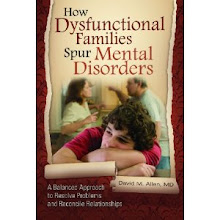
Recipe for producing frequent tantrums in children

Joseph Biederman is the Harvard Psychiatrist who has been pushing the diagnosis of "pediatric bipolar disorder." He also advocates the use of potentially toxic brand-named antipsychotic and mood stabilizing drugs for children who display symptoms of this alleged condition, because Lithium tends to not work in this population. That could be because these children are not bipolar to begin with. According to the New York Times, drug companies paid Dr. Biederman at least $1.6 million in consulting fees from 2000 to 2007, but for years he did not report much of this income to university officials, according to information given Congressional investigators.

Biederman argues against the use of any duration criteria for manic or depressive episodes in these so-called bipolar children. In the current DSM, hypomania - a mild form of mania - must be present constantly for at least four days, and a full-blown manic episode has to last seven. Although these time lengths are obviously arbitrary, they were put in the DSM so psychiatrists would not label normal mood reactivity as being due to bipolar disorder.

Biederman argues that mood swings in bipolar children can last just a few minutes and rapidly alternate. He further argues that pediatric bipolar disorder is unlike adult mania and is manifested by the key symptoms of temper tantrums and “explosive irritability.” There is no credible scientific evidence that such behavior is related to bipolar disorder. He just MADE THIS UP.

The folks writing the DSM-V are somewhat concerned about the widespread adoption of this ridiculous idea by doctors who only dispense drugs and do no psychotherapy, so they decided they might come up with a whole new mental disorder, discussed in an earlier post, called "temper dysregulation disorder."

Actually, children do not have to have any biogenetic disorder in order to display frequent temper tantrums. We used to call such behavior acting out.

There is a well-known recipe that parents can use to produce this behavior in nearly any child. Just follow the following steps:

1. Start with one parent who constantly tells a child to do or not to do something, but always caves in so the child always disobeys and always does whatever he or she wants to do.

2. Add in the other parent yelling and screaming at the child about this, but still allowing the child to do whatever he or she wants to do.

3. Stir up the mix by having the parents criticize one another’s parenting in front of the child and blame one another for the child’s behavior.

To make a child with borderline personality disorder, follow these additional steps:

1. Add parents who start blaming the child in addition to each other for all of the family problems, but still let the child always get his or her way.

2. Have the whole family invalidate what the child says and does as much as possible.

3. Have parents vascillate between hostile overinvolvement and hostile underinvolvement.

Optional: If a severe case is desired: add in neglect and/or physical and/or sexual abuse of the child.

One has to keep in mind that if parents who usually act this way somehow listen to advice and stop it, the child’s behavior will get worse before it gets better. Furthermore, if the parents occasionally lapse back in to old habits, the child’s misbehavior will continue on even longer before it stops.

This is due to something behaviorists call a variable intermittent reinforcement schedule. The child will keep testing the parents to see if they will revert to prior practices.