Pages

Showing posts with label family dynamics. Show all posts

Thursday, February 23, 2023

Family Dysfunction and BPD Behavior: A Chicken And Egg Situation


A new article in a nursing journal discusses the experience of Swedish families of people with members who have borderline personality disorder (BPD), and who have access to something they call “Brief Admission” to the hospital because of recent self-injurious behavior (SIB). In their study, 12 patients, whose age range is not specified in the article, have picked out one of their family-of-origin relatives or spouses for the researchers to interview. The relative is then interviewed by phone by two of the authors and asked to describe their experiences as the parents or spouse of someone with disorder. The two authors basically coordinate with each other so they are basically covering the same types of questions.

The authors mention almost in passing that the interviewers had to remind the relatives repeatedly not to focus their discussion on the patient, but rather talk about their own experiences. Not only that, but they also make the claim that “the burden experienced by families of someone diagnosed with BPD involves greater suffering than those with other mental disorders."

Now of course, if a loved one is acting in ways like SIB that reminds everyone that suicide is an issue, they are going to worry more about that person than they may have before. But how are we to know whether the obsession with the patient that is described by the family members over and over again was not what triggered the self-injurious behavior in the first place? After all, some people with BPD hide the self injury from their families (or at least the families are ignoring the evidence for it), while these research subjects obviously did not.

What distinguishes one from the other? Well, in my clinical experience, there are two reasons for this. When SIB is hidden, it’s sole purpose is to stop the panic attacks that occur when a patient feels helpless to alleviate a family problem. When it is not, the behavior does that and also feeds into the parent’s preoccupation with the patient’s mental health.

Of course, the parents will all claim that it was the patient’s behavior that created their preoccupation. This is the basic reasoning espoused by two support groups for parents of offspring that have BPD (TARA4BPD and NEA-BPD). They say such parents are sick and tired of being blamed by the psychiatric profession for their child’s condition. 

As my readers know, I agree that blaming parents is counterproductive because it sidetracks any and all attempts at actually solving problems that are shared by all members of the family and which were caused by events that took place over at least three generations.

So how do we know which came first: the parents’ preoccupation with the patient, or the patient’s self injurious behavior? A true chicken-and-egg type question. My readers already know my answer: the parents’ anxious and guilty preoccupation comes first, which then leads to their child developing the role of spoiler designed to somewhat control both the guilt and anger they see in their parents. The family members then all continue to simultaneously feed into and make worse one another’s problem behavior, especially over the long run.

The parents’ overblown preoccupation, albeit after the SIB has started, can be seen in comments the authors make throughout the study, starting with the above-mentioned statement comparing it to the parents of people with other psychiatric disorders. 

Other examples: the family members’ fear about the children makes “it difficult for them to prioritize their own well being.” The family members have “a hard time allowing themselves to have fun” – due to their feelings of “guilt and shame,” – not fear for their child’s life. “Constantly prioritizing their loved one and ignoring their own well being meant that many of the families suffered from their own mental illness and fatigue diagnoses…” “In this study, feelings of helplessness and anger and a constant need to monitoring their loved ones...”

It seems doubtful that the interviewers asked certain questions about the parent’s pre-occupation having perhaps pre-existed before their child’s SIB began. At least in their article, there is no mention by the authors about the possibility that this was the case, despite their making the following points: “…children can see if someone is unwell and can withdraw and try to make themselves invisible” (that’s only one of many other possible “helpful” responses). “When a parent suffers from mental illness, the children can become carriers of their anxiety.” “Children of parents with mental illness can take a great responsibility for their ill parents.” “…the families and their loved ones’ lived experiences are considered to be linked and interaction with each other.”

The other big problem with this study was that this was a highly biased set of subjects. As mentioned, the SIB of the subjects was known to their families. Also, recall that the patients had to pick a relative for the authors to interview, and the relative had to agree to it. Parents that were sexually or physically abusive would probably not be suggested by the patients, who often go to great lengths to hide the family’s secrets because of dire consequences. 

They know what will happen if they spill the beans. In the family, such revelations are responded to with denial, or alternatively, with an accusation that the patient was at fault for, say, being molested because of being seductive. Usually, everyone in the family including the victim just pretends it never happened – as illustrated by mothers who had been sexually abused by their father letting that man baby sit their own small children when rest of the family suggests it.

And even if the subjects picked the abusive parent, and the abusive parent agreed to be interviewed, it would be highly unlikely that such abuse would be divulged. After all, if it were indulged, the interviewers might have to turn them in!


Thursday, November 10, 2022

Tuesday, October 25, 2022

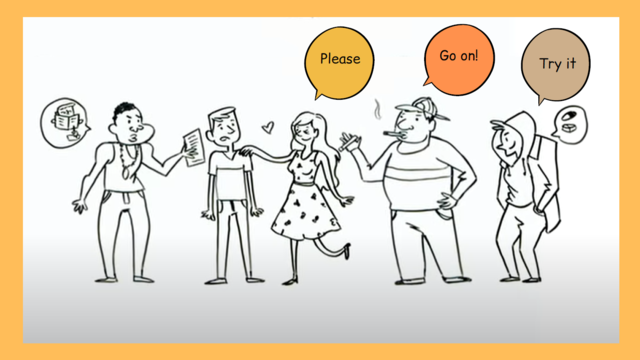
Who Influences Teens More: Peers or Family?


Harvard psychologist Howard Gardner states in his book Changing Minds that by about age 10 a child’s peers rather than parents assume primary importance in the child’s decisions about what to do, especially in the United States. They are, he says, inclined to imitate those peers. This has become almost conventional wisdom in a lot of psychology schools. 

Well of course peers do have a significant influence on kids, especially teenagers, but the question of who has more influence on them is quite a bit more complicated. The most obvious complication is that in the United States of recent years, there are a lot of different peer groups from which to pick. So what determines if a kid wants to be, say, a Goth or a jock? Even back when I went to high school back in the mid sixties in Southern California, there were surfers, greasers, jocks, “brains,” “soches,” guys in rock bands who wanted to grow long hair like the Beatles but were told by the boy’s vice principal to cut it, theater people, churchy people, and a lot of kids who didn’t fit any of classifications or straddled two or three of them.

With which peers adolescents choose to associate is not an accident of fate or necessarily the inclination of the developing child’s true-self tendencies. If their parents were pretty good about letting them learn to lead their own lives and develop their own opinions, then which peers they hung out with was most likely a result of their own developing self-actualization. But in more dysfunctional families, the kids’ behavior, as I have repeatedly discussed in this blog, is designed to stabilize unstable parents and maintain family homeostasis. If this is the case, the parents’ seeming needs steer kids in certain directions regarding their peers. For example, it may determine which kids turn into bullies and which turn into the bully’s victims.

This sort of question has been relevant in psychiatry also. In the past, parents would allow their acting-out teens to be placed in psychiatric hospitals, where shrewd but unethical hospital administrators and psychiatrists blamed the adolescent’s emotional problems and misbehavior – or even their suicide attempts - on cultural phenomena such as heavy metal music. This way, the parents would not feel that they were being scrutinized or blamed, and would gladly pay up.  Some hospitalized kids were kept there for months until their insurance ran out and then summarily discharged. Peer pressure was another scapegoat offered up by hospitals to these parents.

Gardner also mentions how American children even by pre-adolescence have “evolved strong preferences” that may not align with those of their kin and/or ethnic group, and can often state their opinions strongly and stand their ground in disputes. Again, I can’t argue that this doesn’t happen, but IMO this is way over-generalized. They may do that with certain opinions and planned activities, but not dare to question others. Opinions and plans are hardly an all-or-nothing phenomenon when it comes to potentially challenging family homeostasis. If an opinion is expressed and in response Mom sticks her head in the oven while other family members massively invalidate the person expressing the opinion, children standing their ground is almost never the result. And families are all completely different from one another when it comes to which shared internal conflicts are present over certain things, how severe those conflicts may be, or how many of them exist.

Tuesday, October 4, 2022

Book Review: Building a Life Worth Living: A Memoir by Marsha Linehan


The predominant and most widely-used school of thought in use for the psychotherapy of borderline personality disorder (BPD) is called dialectical behavior therapy (DBT). Marsha Linehan, a psychologist at the University of Washington, was the person who came up with the theory and treatment ideas. The treatment paradigm has been shown in studies to be somewhat effective in reducing some symptoms of the disorder, but mostly ineffective in helping patients solve their problems with love and work.

She believes that a combination of a genetic propensity to be over-reactive combines with a so-called “invalidating environment” to produce the disorder. Studies  that attempt  to identify genetic propensities tend to have a major flaws in distinguishing normal neural plasticity in response to the environment from purely genetic effects, although the combination of a baby that tends towards being reactive and a parent with attachment issues would be problematic – an example of gene-environment interaction rather than just genetics.

The invalidating environment is clearly that in the patient’s family of origin, although this is seldom spelled out in the DBT literature.

Interestingly, in 2011. Linehan, in a story in the New York Times, “…admits that when she was younger, she "attacked herself habitually, burning her wrists with cigarettes, slashing her arms, her legs, her midsection, using any sharp object she could get her hands on." She added, “I felt totally empty, like the Tin Man."  Self injurious behavior and feeling empty are two of the hallmark symptoms of BPD.  Did she have the disorder?  According to the article at least, BPD is a diagnosis "that she would have given her young self."

So I was intrigued when she recently published her memoir. I was particularly interested in hearing about her family of origin and hints of any shared psychodynamic conflicts they may have had, a phenomenon that she appears to be clueless about with her patients. I had wondered why, if she came from such a family, she rarely wrote about how to address invalidating family members, as opposed to merely teaching patients “radical acceptance” of their parents’ ongoing behavior so they react much less.

So if she herself had BPD, and if an invalidating environment is one of two main causes of the disorder as she theorizes, I've long wondered how come she does not address this very much in her treatment plan. She says she sometimes does family therapy, but mentions it only briefly and without any details both in her memoir and her primary book about DBT.

While I cannot be certain of anything about her family based just on what she chooses to reveal in her memoir, the family’s conflicts over gender roles – particularly career aspirations for women – and religion just seem to jump off the page of her memoir. So the following forms the basis for my speculations.

She herself draws the parallel between her mother’s experiences growing up and her own conflicts with her mother. The mother’s parents were described as having lost their fortune and died young. The mother then took a job to support her two younger brothers but later moved in with a maternal aunt, who drilled into her head that she was to be a social butterfly and attract a successful businessman for a mate. Which she did. Yet she never seemed particularly enamored with her husband.

In particular, her aunt told her she had to lose weight to be more attractive. She did that. She never again had a paying job, but was extremely active doing charity work and also painting. Her art was admired and was hung up prominently in their house, but Marsha only found out that she was the artist much later. I guess traditional women could work as long as they didn’t get paid and thereby threaten their husband’s traditional image. Mom did all this work despite having six young children.

The author writes that marriage and children were most important for mother as they generally were for her generation where she grew up. But were they really, or was she just following her family’s rules?

When Marsha was a teen Mom tried compulsively to get Marsha to do the same thing her aunt made her do - unsuccessfully. Marsh was compared negatively with her younger sister who followed the supposed family philosophy re marriage and work. In particular, Mom constantly nagged Marsha about losing weight. Marsha was the only child in the family with a weight problem, so perhaps that wasn’t “genetic.” Marsha writes that the thing she wanted to do more than anything was to gain her Mom’s approval, but somehow she couldn’t manage to do this one simple thing - that her Mother had been able to do - in order to get it.

Marsha writes clearly that she knew that Mom’s relationship with her great aunt was the reason her Mom was so critical of her, but she seems to not understand exactly what made her family act out this issue in the first place nor exactly how it might be transmitted from a previous generation to her. Again, her solution in DBT seems to be “radical acceptance” – you just use mindfulness to accept this reality without trying to change anything, and to stay calm.

If she were my patient, I would start to explore the possibility that she actually was doing what her mother seemed to need her to do - in effect acting out her mother’s repressed ambition, so clear in her non-family activities – so mother could experience her success vicariously. And then trying without success to put up with her Mom constantly invalidating it. Meanwhile, sister Aline was acting out the other side of conflict and appeared to be Mom’s favorite. Mom even told Aline to stay away from Marsha. Aline late apologized to Marsha for this but only after Mom had passed away.

When it comes to religion, Marsha’s description of her behavior seems even more conflicted. She was a practicing Roman Catholic throughout her life, and says that her mother “gave” that to her. However, in the book she frequently criticizes the church for such things as its rampant sexism and for the belief of the Pope’s infallibility. She disputes the circular argument heard by many fellow parishioners that God is real because it says so in the Bible. She later started to mix Catholic ideas about God with Zen Buddhist ideas about the ultimate oneness of everything in the universe in ways which are basically incomprehensible.

Further evidence of conflicts over beliefs and how they may have played into her issues regarding marriage: she couldn’t marry the guy who she most loved because he wanted to enter the priesthood. Even though he didn’t and eventually married. She wouldn’t marry her next boyfriend because he was an atheist. Going from one extreme to another and ending up in the same place - single - is a hallmark of an intrapsychic conflict.

Mixed messages from parents conflicted over the role of being parents is in my theory the hallmark of families with BPD members, and this one seems to qualify. Her mother having six children and no apparent career might be evidence for such a conflict. Dr. Linehan was hospitalized with self cutting and suicide threats for over two years just weeks before finishing high school. 

Thursday, September 8, 2022

Problematic Parenting or Problematic Genes?


In an article in the Atlantic magazine, author and data scientist Seth Stephens-Davidowitz opines that in determining how parents affect their children in the long run, almost none of the decisions they make matter nearly as much as they think they do. He of course emphasizes their DNA and uses twin studies in discussing the nature-nurture debate, something I have covered extensively in my blogs.

He trots out the kind of story you often hear in these debates of two twin who were raised separately from the age of four weeks. They reunited at age 39 and found that they were each six feet tall and weighed 180 pounds; bit their nails and had tension headaches; owned a dog named Toy when they were kids; went on family vacations at the same beach in Florida; had worked part-time in law enforcement; and liked Miller Lite beer and Salem cigarettes. There was one notable difference: Jim Lewis named his firstborn James Alan, while Jim Springer named his James Allan. 

These are some very superficial similarities. Many involve things like their physical appearance, which is of course dictated by their genes. Tastes in food, assuming that they do not involve a false self, are also somewhat determined by genes.  The author also seems to assume this what these twins named their children was somehow coded in their DNA. I wonder how many hundreds of other twin pairs like this gave their children completely different names. Or where one bit their nails and the other did not.

A study suggests that such things as teaching kids cognitively-demanding games, such as chess, doesn’t make them smarter in the long term. A meta-analysis of bilingualism found that it has only small effects on a child’s cognitive performance.

The author does emphasize the importance of “the village” or neighborhood in which a child grows up in determining things like schooling and career opportunities, because they provide role models as well as money. Of course the village is divided into cliques with differing values, and to which people one chooses to associate may involve the influence of one's parents, but no matter. When it comes to parenting, he tells us the data shows that moms and dads should put more thought into the neighbors they surround their children with—and lighten up about everything else.

It’s hard to argue with these ideas, and a lot of parents do indeed need to lighten up and let their kids learn about themselves and the world. The problem here is that the author is completely ignoring a most important issue: interpersonal relationships and the rules by which people operate in their social context. In particular social roles, both functional and dysfunctional, and one’s freedom to self actualize versus having to behave in ways that stabilize family functioning. 

Children learn predictive models that determine who they drawn to and how to respond to them in various situations. Most of that becomes subconscious and automatic. Personality disorders and family dysfunction come from those. And the author doesn’t even mention adverse childhood experiences. My readers will know what I’m talking about here.

That’s a pretty big omission.


Monday, February 28, 2022

Hidden Altruism in Repetitive Family Interactions


In a recent Dear Abby advice column from 10/26/21,  a mother who had been an addict when her daughter was young complains about the guilt trips the daughter always seems to lay on her. Abby’s interpretation as to the possible motives for the daughter’s behavior is the seemingly common-sense one that most people – and most psychotherapists for that matter - would come up with: that the daughter was acting out of selfish needs.


Being the contrarian that I am, I discovered that selfishness is often actually a cover for altruistic self-sacrifice, and that the daughter is giving mom what mom seems to need from her. The mother’s obsessive guilt and her repeatedly and nearly constantly trying to fix her daughter might very well be the reason the daughter is doing this.


Now of course, from just a paragraph description in a letter I can’t be certain of my interpretation in this particular case, and there might be several other issues operating simultaneously that might be making this situation far more complicated than my formulation would suggest. The daughters’ brothers being perceived as the favorites, which is mentioned in the letter, might be one of them. The mother may have gender issues which might conceivably be involved.  And we don’t know anything about Mom’s former behavior, let alone her family dynamics


But if we could get the truth out of these people – always an iffy proposition -  I’d be willing to bet that I am at the very least on the right track. I have put in italics the part of the letter that I think gives it away. My hypothesis would be my starting point as her therapist in trying to understand what exactly is going on, and why.


ABBY: I'm the mother of a 36-year-old daughter. She claims I treat her younger brothers better than I treat her. I am a recovering addict -- clean for 20-plus years. I was in active addiction for nine years when she was a teenager, and she has never let that go. She constantly tells me how "unfair" I am, that I never make time for her and that I don't validate her feelings. I have apologized many times and tried to show her I don't treat her siblings differently. I schedule "us" time, but this is an ongoing battle, and I'm at a loss about how to fix it. How do I show her there's no difference in the way I treat any of them? How do I reassure her that her feelings are validated? This has caused me many tearful nights. -- WANTING SERENITY BACK


In reply Abby says she thinks this mother “created an emptiness in her daughter “that the mom may not be able to fill,” and that the daughter is “punishing” the mom for her former behavior. I submit that the daughter is actually giving Mom what Mom's endless guilt seems to be begging for: More and more guilt! Mom’s obsessive apologies would then trigger this pattern again and again, leading to the daughter heaping on more and more guilt leading to more apologies and so on in a vicious circle.


Each member of the duo thinks the other one needs this interaction while discounting their own contribution to the pattern. They have to cover up their own role in order to continue playing it effectively, both for the stabilization of a parent. Mom’s history of substance abuse and neglecting children would, under this scenario, be a role she was playing for her parents.


Thursday, January 6, 2022

Book Review: the Deepest Well by Nadine Burke Harris


Every mental health professional should know that adverse childhood experiences (especially with parents who are abusive, neglectful, are perpetrators or victims of domestic violence, have multiple partners, or have substance abuse issues) are a major risk factor for developing almost every psychiatric disorder imaginable. Yet therapists and psychiatrists often ignore this issue in favor of theories about some sort of genetically-caused, pre-existing brain disorder.

In her amazing and surprisingly entertaining book, pediatrician Nadine Burke Harris (now surgeon general of California) outlines in vivid detail how ACE’s are toxic stressors that impact our bodies biologically and put us at higher risk for a variety of physical, not just psychological illnesses over the course of our entire lifetime. She points out that this does not only effect those who live poor neighborhoods, but can happen anywhere,

She covers the issue of epigenetics (how the environment turns genes off and on) as well as differentiating the effects of ongoing as opposed to time-limited stress. She zeroes in on the amygdala (the part of the brain that is responsible for fight or flight reactions) and how it can inhibit cognitive functioning, and on the sometimes toxic effect of stress hormones like cortisol.

In her observations as a crusader in the medical field, she came to realize that the reason physicians were often unaware of how this was taking place resulted from the fact that they never asked about it. As I have often said, it’s a case of don’t ask, don’t tell. Which is also the reason that psychodynamic and CBT therapists aren’t aware of the role of ongoing family interactions in their patients’ symptoms.

Also discussed in detail is how, in public discussions and meetings, parents can be resistant to various plans to confront ACE’s (due to what the author calls “hateration”) for fear that doctors would be stigmatizing their children as being brain damaged.  I think a bigger fear in the public is stigmatizing parents. As I often write about, you cannot call any type of parenting a problem these days anywhere without being attacked.

Last but not least, she talks about the intergenerational issues involved in chronic family stress. Here, the author seems to be on the right track, but I’m not clear if she, too, is unaware of the role of ongoing repetitive dysfunctional family interactions with their extended family members among both adults and children - particularly the role of grandparents in, unintentionally or intentionally, reinforcing problematic parenting practices and marital issues. 

For example, she cites the case of a woman who put up with verbal abuse from her husband and who stayed because she blamed herself and told herself she had to put up with it for the sake of the kids. Were her parents alive? If so, did they know what was going on? What did they have to say about it? If they didn’t know, why hadn’t she told them? Was she afraid they’d tell her it was her fault and she needed to stick it out for the sake of the kids? It sounds like this might possibly have been a case of don’t ask, don’t tell.

The closest she comes to discussing extended family is when she gives an example of how the aunt of a child who was a patient of hers seem to undo a lot of the therapeutic work that she had done with the child and the child’s mother.

It is true that certain early fear tracks in the amygdala are formed during the interactions of mothers with their babies, as she correctly points out. It is also true that these tracks are highly resistant to the usual process of neural plasticity that might fix issues caused by trauma. Scientists often seem to assume that the tracts are permanently damaged. However, perhaps it is true that the tracts remain strong because they are constantly being triggered and reinforced by the attachment figures throughout life.

If indeed the author is not aware of all of the forces at play here, she is hardly alone. So even with this possible and understandable omission, I cannot recommend this book highly enough. 

Tuesday, February 23, 2021

Book Review: The Shattered Oak by Sherry Genga


This involving book, based on a true story but with some facts altered, is written as a first person account (although it is not the author's story) from a woman involved in a severely physically and emotionally abusive marriage. The author takes the reader on a fascinating tour inside her mind and thought processes.

The book strongly implies that she made no effort to leave for many years, and says that her parents refused to help her do so, under the rationalization that they were too afraid of her husband. She finally does leave and files for divorce. The narrative does not discuss the husband’s behavior during the divorce, but it appears that it went fairly uneventfully and without any stalking by her ex. She received the house and custody of their three daughters in the settlement, and her ex seems to have made alimony payments regularly.

Three years later she has a “nervous breakdown,” and describes in vivid terms her overwhelming sense of doom due to her depression. She makes three serious suicide attempts, and describes her ambivalence over abandoning her children and leaving her eldest daughter to take care of the other two, while all the while also feeling tremendous guilt over her daughter having had to take care of her in a parent-child role reversal.

She finally gets committed to a horrible mental hospital and given ECT against her will. Although she does not say she was diagnosed with major depressive disorder, her disturbing descriptions of her thoughts and feelings while in the depressed state are impressive, and give the reader a sense of what it might be like to have been in her shoes. It later turns out that she did not have a typical major depressive disorder, but one caused by a medical disorder, Cushing’s disease, which leads to very high level of the stress hormone cortisol, a steroid. A major depressive syndrome is seen in 50%–70% of the cases of Cushing’s syndrome. 

She opines that the high levels of cortisol may have come from high levels of stress, which, she implies, seems to have increased rather than decreased after she got out of the marriage. As it turns out, however, that was not the case at all. Her disorder was caused by a tumor of the pituitary gland.

It does not mean that anyone is “blaming” her for the severe abuse she suffered, but it is extremely important in the mental health field's attempts to prevent others from following in her footsteps, to pose the question of why she stayed with her husband for so long, and why she felt more stressed out after the divorce than during the time she was with her husband. There is no way we can know the answers to this question for certain just from the descriptions in this book, but there are several tantalizing clues.

The usual excuses offered up to justify the behavior of women who repeatedly return to an abusive relationship often do not hold water, but especially so in this case. As per her own description, she was in far more danger of being killed by him over the long run if she stayed than if she left. While they were together, he constantly threatened to kill her and even fired gunshots at her, narrowly missing her head on purpose. There were literally bullet holes in the walls.

She also knew very well that he was violent before they were married, because there were episodes of it back then.

And why would she be more stressed out after she left if, as it seems, her ex was not stalking her? The narrator admits that she still loves her husband even after the divorce despite all the pain he put her through. She offers a very interesting hypothesis about why he abused her: he came from a highly abusive family himself, and was taking his anger out at them on her. The question she keeps asking herself is how she could have helped this man to become less bitter. Presumably, how else. What she had been doing clearly did not work. Her question is consistent with my hypothesis about  this case

Readers of this blog can probably guess what that hypothesis is: the odds are pretty good that she was sacrificing herself so that her husband, whom she loved, could continue to channel his destabilizing anger away from his own parents, and that her doing something like this might have also been her role in her own family of origin. You know, the family that refused to help her leave her husband. At the end of the book we find reasons that this hypothesis would certainly necessitate further exploration. 

She was treated like a servant by her own parents growing up, especially compared to her two siblings, who could seem to do no wrong in her parents' eyes. Her older brother finally tells her that she was the result of an affair that her mother had had with a neighbor, and she was not her father’s biological daughter. Might the father have taken his anger at her mother out on her, with her mother going along with the program in order to keep the family together? You be the judge.

I wonder what her parents' upbringing might have been like.


Tuesday, May 12, 2020

Psychotherapy with BPD: Another Conundrum


For therapists such as myself who also write about borderline personality disorder (BPD) for the general public, there are several ironies that make it a damned-if-you-do, damned-if-you-don’t proposition. In my post of 2/27 of this year, I discussed the issue of how describing what the parents are doing with their children can make those parents feel even more guilty than they already were, when guilt is what has been driving their problematic behavior in the first place. Therefore, they can get even worse rather than taking any new knowledge they may have gained as a way to reduce their problem behavior.

A similar issue takes place when adult children who have BPD read my discussions of family dynamics. For the role of spoiler that they are playing, part of what drives it is often their parents’ insatiable and unceasing efforts to “fix” what’s wrong with them. Because to all outward appearances their parents seem to want or need to continue to do so, their adult children must remain “broken.” That is, in need of fixing. The people with BPD also think this about their narcissistic romantic partners, who are also constantly trying to fix them - while seeming to feel that they are God’s gift to them. The more the partners try to do the fixing, the more they reinforce their mate’s spoiling behavior.

So guess what happens when an individual with BPD comes to see a therapist? The therapist’s whole purpose for existing is to “fix” what’s wrong with their patients! How can therapists not end up inadvertently enabling their patient’s spoiler role? It’s sort of like coming to see someone whose goal is to “make you independent.” How can someone really be independent if another person is making them do something?

In therapy, the way around this is for the therapist to validate the ample evidence their patients offer (even while sometimes pretending that this is far from the case) that they are smart and capable, and that “their” problem is not a personal defect, but trying to figure out an enigma. They are trying to come up with a way to solve an almost-impossible-to-solve problem: the conflicted, ambivalent dynamics of their family members.

Doing something equivalent to this therapy countermove when writing for the public is a rather devilishly complicated proposition. Even spelling out what I am saying here with disclaimers doesn’t always work because it’s easy for someone coming from a borderline-ogenic family to see that as a ruse to lull them into a false sense of security. 

I had one reader write to me to tell me that something I wrote, rather than being empowering, made her feel so helpless she made a suicide attempt. She didn’t say that what I wrote was wrong, it should be noted, and I would wonder if she already had a history of making suicide attempts. But still, I understand her request that I be more careful about what I write.

Another reason I might make persons with BPD feel helpless is that, if family members were to read my stuff and figure out what they are up to, then the people with BPD might no longer be able to successfully pull off the spoiler role. They would become less powerful because I gave away their "secrets."

Nonetheless, facing the truth is the only thing that can set free everyone involved in family dysfunction. Dysfunctional roles only stabilize families (homeostatsis) over the short run. In the long run, they prevent resolution of ongoing issues.

So there is hope, especially if there are more therapists who understand family dynamics. I continue to hope for potential patients to create a high demand for therapists to start helping them identify interpersonal triggers and find ways to avoid the typical negative consequences of change - rather than just focusing on what is going on inside their patient’s head.

Friday, April 24, 2020

Drug Abuse “Intervention:” Why it Works


In Jonah’s Berger’s excellent new book, The Catalyst: How to Change Anyone’s Mind, he discusses effective ways to get people to look at things in new ways. Even die hard ideologues can sometimes be reached using many of his methods. He also talks about why persuasive arguments and presenting new information in an effort by one person to get another person to reconsider entrenched positions usually does not work. 

In the chapter called “corroborating evidence,” he uses a successful “intervention” with a drug abuser to illustrate how, in influencing others, having multiple people give information is often much more powerful than just one person’s speaking , especially when the multiple sources are all operating at or near the same time. 

In the Intervention technique in substance abuse treatment, the actual intervention is having an outside therapist come in and coach the family members to write out a speech about how much they care about the user and how his or her behavior is hurting everyone. They are instructed to avoid telling him what to do. Nonetheless, the therapist has a rehab facility lined up in hopes that the object of the intervention will agree to do something about his “problem.”

They each say how sad they are because of the problem and how much they miss him and want the drug abuser “back.” They also give the addict the message, “If you want to be an addict, we can’t stop you. But if you want to get high, you aren’t going to do it here.” 

With families, Berger points out, several members have often -  over time and individually – “asked, begged, yelled, screamed, and threatened. All to no avail.” But then he goes on to say things that consist of the usual wisdom about these sorts of things, such as “They (addicts) don’t believe they have a problem.” They are “in denial.” They may not remember wrapping a car around a lamp post” because they “blacked out.” If an addict doesn’t think he has a reason to quit, “is one person really going to change their mind?”


That sounds reasonable, but is it really? Doesn’t the addict find out what happened to the car after he comes to? Isn’t losing a good job and resorting to crime to finance an addiction considered by the drug abuser to be problems? As I often say, he would have to have the IQ of a kumquat – or maybe a rutabaga, I’m not really sure – to not “know” he had a problem. So what’s really going on here?


Berger attributes the relatively high success rates of organized family “interventions” to the number of people giving a similar message. He's partly correct. But he also seems subliminally aware that there is something else going on here. He states, “In order to get addicts to change, their entire ecosystem has to be altered. Without realizing it, friends and family members may be unintentionally enabling the problems. So for change to stick, the whole system has to change…”


Was the particular family the author described enabling the abuser, “Phil”? Why as a matter of fact, quite so. In the author’s description, the family didn’t seem to think of him as an addict for extended periods, especially at first, because he had a job and didn’t steal to support his habit. He did start to steal a bit later. They sent him to rehab 19 different times even though each of them was unsuccessful. They repeatedly let him move back home. They resorted to having him sign a contract promising to turn over a new leaf, but all that did was to “train him to be a better liar.”


Hearing this, it might seem fairly clear why Phil may have thought his family was actually invested in him continuing to be an addict, because they made it so damn easy! Unlike most of us, they know that family members are not that stupid even if they seem to be “in denial.” Of course, I have to put the usual caution here: since I haven’t personally evaluated this family I can’t say what follows with certainty, although IMO what I am about to describe is extremely likely.


Another hint that the above formulation may be on the mark is a statement by the book author that "family was everything to Phil." The author thinks that Phil realizing he was tearing the others to shreds was the motive for quitting. But again, how could Phil possibly think that this hadn't been the case all along? Because he thought the family needed him to be an addict!

In dysfunctional families with shared conflicts over certain behavior, say for example puritanical attitudes towards work and intoxication, several members are usually involved in either enabling or refusing to notice the problems of the addict. The addict is actually taking the cue to deny that he has a problem from the family. When one member occasionally seems to object about addict-like behavior, another family member may give the addict the opposite message. In such a situation, this can become a game without end even more easily than when just two people are stuck in this game. So no wonder the addict ignores the asking, begging, yelling, screaming, and threatening from any one family member.


However, when the whole family comes together to give the same message – that they all will no longer deny that the addiction has become a problem — and all clearly state that all of their enabling behavior in toto is going to cease, their wanting him to stop becomes far more believable. So it isn’t just multiple sources of info as Berger assumes, but the fact that they are all indirectly acknowledging their own contributions to the addict’s continuing addiction.


Of course, the addict may still be skeptical. If Phil leaves yet another rehab program without success, and his parents still let him return home, nothing will stick. In this case, that fortunately did not happen.


Wednesday, April 1, 2020

Family Dynamics and the Brain: Implications for Psychotherapy


IMO, the most important contribution of neurobiology to psychotherapy is our understanding, albeit quite partial and preliminary, of the mechanisms by which we are programmed to respond to attachment figures. This understanding is sort of what is meant by sociobiology, if I may use a politically incorrect term. 

I found early on in treating personality disorders in therapy that I was no match for a patient’s parents in triggering or reinforcing their problematic (or even their positive) behavior patterns in the long term. I could coach them on how to be assertive with difficult family members ‘til the cows came home, and this might even work for a time, but after a while the old patterns of self-defeating behavior almost invariably re-emerged unless something was done about this.


Even so-called “oppositional” behavior follows this path: oppositional children think and later automatically respond to their family as if the family wants or needs them to be a black sheep for various reasons.

Therapy outcome studies seldom follow patients with self-destructive or self-defeating behavior patterns for more than a year after therapy ends, but the few studies I’ve seen that do are consistent with this clinical experience. So I had to figure out a way to help patients to make changes in their long term repetitive dysfunctional interactions with attachment figures.

When mothers and their babies interact, huge numbers of synaptic connections in the brain are made every second (see https://developingchild.harvard.edu/science/key-concepts/serve-and-return/). These large numbers are “pruned” significantly during adolescence. We don’t know exactly how or why certain synapses are retained, but I suspect it is those that keep us aligned with the social behavior of our kin group and tribe. There is preliminary evidence that the pruning is dependent, much like the strength of many brain neural connections, on how often a particular neural pathway is stimulated.

Another factor involved is something called the myelination of neurons in existing neural pathways. This is the process of coating the body of each neuron with a fatty coating called myelin, which protects the neuron and helps it conduct signals more efficiently. This process does not become complete until an individual reaches late adolescence.

With these two processes, we lose some flexibility in the brain, but the proficiency of signal transmission improves. Since we are talking in particular about those that form during interactions in infancy, it is reasonable to suspect that these interactions continue to do this. In particular, behaviors that occur in response to social cues may become more automatic in order to preserve higher thinking ability for novel situations.

In addition to this, fear tracks formed early in life in particular are not as plastic as are other tracks in the brain. They never really go away, although they can be overridden by newly formed neural pathways. (Lott, D. A. [2003]. Unlearning fear: calcium channel blockers and the process of extinction. Psychiatric Times, May, 9-12).

According to Neuroscientist David Eagleman on his PBS show, The Brain, about 80% of our behavior is done automatically in response to environmental cues (especially social cues, I might add) without any conscious deliberation. In a sense they are subconscious.

This does not mean that we lack the capacity to decide to think about and break the social rules we are usually bound by. We certainly can – this is where the family systems theorists have been wrong. But when we do, we are often faced with massive invalidation by our families, which is extremely powerful in delivering the message, “You’re wrong, change back.” When we distance ourselves from our social alliances, our level of the attachment hormone oxytocin dips and we start to feel unsafe.

The negative feelings generated by this invalidation is probably the biological price we pay if we don’t: the highly disturbing feeling of groundlessness described so eloquently by Irvin Yalom. This is nature’s way of telling us to behave ourselves for the good of our kin group. This has survival value for the group.

The implications for therapy are clear. In order to prevent problematic automatic behavior patterns that have been and that are continually reinforced through this powerful process, neither insight into which behaviors are performed automatically, nor which automatic belief systems keep us on the straight and narrow for our kin group, is usually enough. These patterns need to be interrupted at their source in order to help patients extinguish bad habits of thinking (or, more often, not thinking) and behavior. 

Wednesday, March 27, 2019

Guest Post: Borderline Family Dynamics Up Close


Today's guest post is by Lin. The writer recounts her own experience growing up in a family with issues that lead to Borderline Personality Disorder 


I was born into a highly dysfunctional family, consisting of my parents, my very domineering and generally narcissistic grandmother, and my alcoholic uncle. My parents both had physical and mental health issues and, in hindsight, I can clearly see that my mother had untreated Borderline Personality Disorder.

After my mother had 7 miscarriages and one stillbirth, they had been told that they couldn't have children. Therefore, they had planned their future without children. When I came along it was a shock; they both overjoyed to have me and also shaken that they suddenly had a new responsibility that they never thought they would have. Because I was an at risk pregnancy, I was born 8 weeks early by cesarean and, due to my mother's unstable mental health, she was unable to see me for 6 weeks. Instead I was kept in hospital while they stabilized me and I only had contact with the staff and, on his occasional visits, with my father.

From the outset I was the perfect baby. I seldom cried or asked for attention and was usually compliant. I talked and walked at an early age and was reading by the time I was 3. My earliest memory is of being that age and in my pushchair. I had a pacifier in my mouth and saw my mother walking towards my father and myself.

I remember the fear and shame of her possibly seeing me using it and I quickly hid it under a blanket. I already had learned not to upset her and felt that I was bad. I learned to hide what I did and felt.

My mother sexually abused me from the earliest age I can remember until I was 16 years old. I am sure my father was aware of it because he had a separate bed in the same room that my mother and I shared. She made me pray to God afterwards and ask for forgiveness for making her do it. She told me if I told anyone she would leave me. The abuse was the only form of physical touch I had—she never hugged me or told me she loved me or was affectionate in any way. Instead, she would buy me anything I wanted. Toys every Sunday, sugary foods in a large quantity every Thursday. I just had to ask and I would get it. All the while the abuse continued every night. I learned sexual abuse meant my mother would stay with me and I learned to equate material possessions and food with love.

I was told we were family and didn't need strangers. Strangers were the enemy. This meant I was not allowed to have friends. I was never allowed out without a parent; I was dropped off at school and picked up every lunchtime and at the end of the day in order to minimize my interaction with others. My father did have a sister but my mother forbade him from seeing her. During the times my mother was in hospital, he would take me to visit her always, saying "Don't tell anyone."

My father would often do bizarre things, such as once telling me we were going to play a game with my mother and pretend that he had been mugged on the way home from work. I thought this was a great game and having secrets with my father made me feel close to him. I learned to lie for attention.

My mother would either be very weak or overbearingly strong—sometimes both at the same time. She ruled me with a rod of iron—I always had to be perfect or I would be told I was nothing to her and then physically beaten. At the same time she appeared incredibly weak. I remember a 4 year old child once swore at her and she cried like a baby. I despised her weakness and sensed she did too, so I learned to make her angry instead at these times so we would both feel better. I learned how to manipulate her as she had manipulated me.

My mother would have frequent psychotic episodes [She was diagnosed with episodes of psychotic depression]. Either me or my father would force anti-psychotics into her mouth. She would hear voices stating we were trying to kill her and fight back. The first time I witnessed that was late at night when I was 6 years old. I ran to the corner of the bedroom in terror while my father held her down as she lashed out at him. Once she was calm my father told me I could join her in bed again. I shook my head, terrified to go near her. My father turned out the lights and went to bed himself, leaving me sitting in the corner of our bedroom all night, alone. I learned that I could be abandoned without comfort from those closest to me at any time.

By the time I was 12 I had learned to give back what they gave to me. They had taught me well. I became better at constant manipulation and control than they were. My father developed congestive heart failure and became physically weak. I would fight with him constantly to make him fight back and be strong again. My mother's mental health was worsening and she blamed my father’s lack of care now that he was ill. I learned to agree with her about how bad he was and thus make her feel stronger.

My father eventually took his own life on my 13th birthday, leaving me alone with my mother. My mother became totally dependent on me. The same spoiling behaviors I had learned would continue for the next 5 years. I would attempt to strengthen her when she was weak and weaken her when she was strong. I did not understand why I was doing this, behaving in a purely instinctual way in order to provide what we both needed. Even though we fought constantly, I was still being sexually abused by her and given whatever material things I wanted. During psychotic episodes, my mother would sob and state that her baby had been replaced at birth by a changeling of the Devil. As a Devil's spawn, I was going to murder her just as I had murdered my father. I believed I was evil and hated myself.

By the time I was 18, I had been in psychotherapy for several years. It had been arranged for me after I had told other children at school that my father had died a year before he actually had. I hated him for not stopping my mother and wanted him dead—the worst punishment I could think of. I became more aware of my motivations and becoming aware that I had a choice as to how I reacted. I moved away from home, only visiting my mother sporadically. She never ever forgave me for choosing strangers over her. Our relationship continued to be very difficult, with me despising her weakness and trying to make her strong, and her despising my new found strength and trying to make me weak. I cut her off entirely when I was 20 and she took her own life a month later. I still struggle with the guilt and self-blame for both my parents suicides.

This is all that I learned and why I have Borderline Personality Disorder.