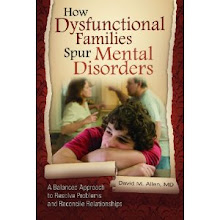
In my post of April 17, 2010, The Language of Love, I discussed the idea from my book, Deciphering Motivation in Psychotherapy, that there are hidden aspects of language created by its inherent ambiguity. Any sentence in any language can have at least two different meanings.
Linguists refer to the way language is used to affect the behavior of other people as the pragmatics of language. In today's post I will give three examples of how language also reflects a basic split in human nature between what is called the persona or false self and what really transpires in the human mind.
We all keep many of our thoughts to ourselves in various contexts, because we must always negotiate the social order of which we are a part. In each situation, we must all decide: Do we say and do things because we really want to say and do those things? Or do we say and do what the groups to which we belong want, need, and/or expect us to do or say?
The false self is that image we project to the people around us, which may or may not be an honest reflection of what we really feel and believe. For example, we may be furious with someone yet act with nothing but sweetness and light around them - because we fear how they may react if we expressed our anger.
In no other situation is this phenomenon more pronounced that in our relationships with our families of origin. We are all biological inclined, although not predestined, to act out roles or scripts which help our families to function. However, sometimes, for reasons I will not elaborate on here, the family becomes confused or ambivalent about what they expect from us, putting us in a bit of a bind.
A simple yet deadly example of this occurred in the case of a woman of East Indian descent who was born and grew up in the US shortly after her parents emigrated here. As she got older, because of her English language skills and familiarity with American culture, her parents expected her to be the front person whenever they had to deal with the larger culture. She became quite Americanized, but in reality had one foot in each culture. She made the mistake of falling in love with an Anglo American. Her parents expected her to marry the man that they had, by their tradition of arranged marriages, picked out for her. She ended up committing suicide because she saw no way out of this dilemma.
If indeed we are willing to sacrifice our own personal inclinations in order to play our part in our family’s functioning, how do we explain all of the people who seem to be acting in direct opposition to what the family says they want? Could it be that people are oppositional only because that’s what they think their family needs them to be?
I say yes. With many patients who complain about other family members’ behavior, I find that there are some heavy duty mixed signals going on. They may, for example, leave money around knowing that their children will steal it.
Some parents make demands of their children over and over but never stop their children from disobeying. In fact, they may smile as they tell stories about how their children (and by children I also mean adult offspring) are so terrible. They may seem to have a compulsive need to keep repeating the same demands of them over and over, as if their children did not hear them the first 500 times they made the demands.
That brings us to the first common example of ambiguous language: the oppositional teenager who yells back, “Why do I have to listen to this?!?” when repeatedly lectured about what to do. Since kids like this rarely obey the instructions, a seemingly more appropriate response would be, “I heard you the first time, and I’m not going to do that.” After all, most people would reason, the kid does not have to listen to the lectures – all he or she would have to do to stop the demands would be to do what he or she was told to do!
Well, maybe and maybe not. Teens who go ahead and finally do what they are told are often then told that they are not doing whatever they were told correctly. They feel that no matter what they do, they will never be able to please their parents. I believe the correct translation of “Why do I have to listen to this?” in such a situation is actually, “Why do you have this compulsive need to keep telling me over and over again what to do? I will be oppositional so you can continue to indulge yourself!”
A somewhat similar statement came from a rather sexually promiscuous woman who told me, in the context of describing this behavior, “I am always afraid of disappointing my father.” The average person who heard this might come to the conclusion that this woman was deluding herself. Surely the father must be disappointed in her behavior, so how can she say that she is afraid of disappointing him?
Well, once again, maybe not. If it is true that the woman is not deluding herself, then the correct understanding of her statement in context would have to be, “My father would be disappointed if I were not promiscuous." Maybe the father was secretly angry at women who withheld sex, while usually pretending to adhere to his family’s belief that sexually open women are all sluts.
My third and last example came from a mother who screamed at her adult daughter with a disapproving look and tone of voice, “I just can’t believe you talk to your boss that way!” I believed that the look and tone of voice actually reflected the mother’s false self, not her real feelings. In fact, I saw evidence that her mother actually admired the daughter’s assertiveness! If we look at just her words apart from tone and body language, we can see that her statement actually contains no value judgment at all. It merely expresses surprise about the daughter’s behavior.
The tone and body language accompanying a statement are often reflective of a false self, while the words themselves can reveal clues to a person’s true feelings.
Showing posts with label dual reference. Show all posts
Showing posts with label dual reference. Show all posts
Sunday, June 20, 2010


Saturday, April 17, 2010
The Language of Love
At the beginning of J. R. R. Tolkien's The Hobbit, a normally unadventurous fellow named Bilbo is standing in front of his home when a rather mysterious looking old man happens by. Bilbo wishes a good morning to the stranger. To Bilbo's surprise, the outsider does not return the greeting in the expected fashion. Instead, the newcomer questions the meaning of Bilbo's statement.
He inquires whether Bilbo intends to wish him a good morning or to state that it is a good morning whether or not either of them wants it to be. Or does" good morning" mean that it is he, Bilbo, who feels good that morning or that it is a morning on which to be good? Bilbo, a bit perplexed, answers that he means all of those things at once.
Perhaps the old man had reason to suspect that the hobbit was not feeling so friendly as the cheery" good morning" might indicate. The old man was Gandalf the wizard. Unbeknownst to Bilbo, he was familiar with Bilbo and was also well acquainted with the tribe of hobbits to which Bilbo belonged. He knew about their mistrust of strangers and their dislike of the new and the unknown. He also knew that hobbits tended to be polite at times when they did not really wish to be.
Knowing all of this, it would be difficult indeed for anyone to take Bilbo's friendly salutation at face value. As a matter of fact, the wizard was right on target when he questioned the meaning behind the statement. Bilbo was uncomfortable with the presence of a stranger and did not trust him at all. He was probably concerned that the old man's presence might indicate that the morning was not going to be good at all.
In my second book, Deciphering Motivation in Psychotherapy, I look at hidden aspects of language, and in particular its inherent ambiguity. Any sentence in any language can have at least two different meanings. Even a simple "I love you" can be interpreted on multiple levels, as I will soon illustrate. But first, some background information about how any sentence always has a dual reference.
The first of the two meanings is the literal meaning of the words used, while the second is the what the sentence means in the context of the relationship of the two people having the conversation. In order to understand this second level, one also has to understand that words can also be actions that do things that go well beyond talk. Linguists refer to this phenomenon as "speech acts."
For instance, if I go up to someone and say, "I hear you are having a party Saturday night," I am not only relaying information about what I heard someone say, I may also be actively fishing for an invitation. If I fish for an invitation in this manner, I am also indirectly acknowledging the fact that within this particular relationship, I do not have the right to simply ask the person directly to invite me to the party. I am most likely also not entitled to ask why I had not been invited in the first place. The way I fish for an invitation says a lot about the relationship I have with the person I am speaking with. Linguists refer to this level of communication as the pragmatics of language.
When it comes to language among members of a family system, sometimes family members must keep their intentions ambiguous. Language seems especially well constructed to allow individuals to keep their private thoughts and plans ambiguous. Ambiguity is especially handy if a person's intentions may or may not be at odds with the rules by which the family operates. In dysfunctional families, family members are often conflicted or confused about certain family rules. They may feel, for example, that they are in a "damned if you do - damned if you don't" situation. If so, they can make use of the inherent ambiguity of language to keep their intentions unclear.
Now back to "I love you." A man in couple's therapy loudly complained about his wife's jealously and insecurity whenever he so much as spoke to another woman. "Why do you raise such a big fuss?" he asked his wife, with obvious frustration. She replied, "I do it because I love you."
As much of language does, "I love you" can have two completely opposite or antithetical meanings. It can mean something selfish or something altruistic. Of course, it can also mean both simultaneously.
Most people who hear the wife's "explanation" in the example above will assume, because of her apparent insecurity, that the selfish version applies. In other words, they roughly translate the statement into, "Because I am insecure and dependent and need you so badly, I cannot stand the thought of anyone else having you even innocently, so I make a fuss even if it drives you nuts."
The meaning people often do not pick up on is the altruistic meaning. Roughly translated, the sentence might mean, "You're the one who is insecure. It really gives your ego a boost when I act so hopelessly dependent on you. If I did not act that way, you would be crushed! I'm willing to make myself look like the insecure one because I love you so much; I am willing to do that for you."
Do wives ever do this? My opinion: they do it all the time. And so do husbands, parents, siblings, and children.
Why would the wife need to be ambiguous about what she means by "I love you"? If the husband really knew that she was only acting insecurely for his benefit and did not really feel that way, her behavior would no longer boost his ego when she threw a fit. It might even deflate it even more. Therefore, she has to be deceptive in order to have her intended effect on him.
Unfortunately, this issue may make the pragmatics of the simple "I love you" even more complex. Suppose the couple is psychologically sophisticated and the husband starts to wonder if maybe the wife is laying the insecurity on too thick and that it might be put on only for his benefit. If his wife is correct about his being the insecure one, his ego would start to deflate.
If this were to happen, the wife might then start to act in ways that lead the husband to yet a different, third interpretation of the wife's original explanation: "She is rationalizing her behavior as being for my benefit to cover up the fact that she is really selfish."
If the wife succesfully made him think that, she would then be able to continue to provide the altruistic service. Linguistically, she would be acting out yet a fourth interpretation: "My behavior really is for your benefit. However, since you suspect it and I am trying to keep it a secret, I will let you think that interpretation #3 is correct. That way, you will not know that I am in fact acting this way for your benefit."
Are people really clever enough to come up with crazy and complicated schemes like this? As they used to say on the old TV show, Laugh In, you bet your sweet bippy they are. I see it all the time from patients in therapy. These motives are not, however, something people readily admit to. As therapists, however, we have ways of getting it out of them!
He inquires whether Bilbo intends to wish him a good morning or to state that it is a good morning whether or not either of them wants it to be. Or does" good morning" mean that it is he, Bilbo, who feels good that morning or that it is a morning on which to be good? Bilbo, a bit perplexed, answers that he means all of those things at once.
Perhaps the old man had reason to suspect that the hobbit was not feeling so friendly as the cheery" good morning" might indicate. The old man was Gandalf the wizard. Unbeknownst to Bilbo, he was familiar with Bilbo and was also well acquainted with the tribe of hobbits to which Bilbo belonged. He knew about their mistrust of strangers and their dislike of the new and the unknown. He also knew that hobbits tended to be polite at times when they did not really wish to be.
Knowing all of this, it would be difficult indeed for anyone to take Bilbo's friendly salutation at face value. As a matter of fact, the wizard was right on target when he questioned the meaning behind the statement. Bilbo was uncomfortable with the presence of a stranger and did not trust him at all. He was probably concerned that the old man's presence might indicate that the morning was not going to be good at all.
In my second book, Deciphering Motivation in Psychotherapy, I look at hidden aspects of language, and in particular its inherent ambiguity. Any sentence in any language can have at least two different meanings. Even a simple "I love you" can be interpreted on multiple levels, as I will soon illustrate. But first, some background information about how any sentence always has a dual reference.
The first of the two meanings is the literal meaning of the words used, while the second is the what the sentence means in the context of the relationship of the two people having the conversation. In order to understand this second level, one also has to understand that words can also be actions that do things that go well beyond talk. Linguists refer to this phenomenon as "speech acts."
For instance, if I go up to someone and say, "I hear you are having a party Saturday night," I am not only relaying information about what I heard someone say, I may also be actively fishing for an invitation. If I fish for an invitation in this manner, I am also indirectly acknowledging the fact that within this particular relationship, I do not have the right to simply ask the person directly to invite me to the party. I am most likely also not entitled to ask why I had not been invited in the first place. The way I fish for an invitation says a lot about the relationship I have with the person I am speaking with. Linguists refer to this level of communication as the pragmatics of language.
When it comes to language among members of a family system, sometimes family members must keep their intentions ambiguous. Language seems especially well constructed to allow individuals to keep their private thoughts and plans ambiguous. Ambiguity is especially handy if a person's intentions may or may not be at odds with the rules by which the family operates. In dysfunctional families, family members are often conflicted or confused about certain family rules. They may feel, for example, that they are in a "damned if you do - damned if you don't" situation. If so, they can make use of the inherent ambiguity of language to keep their intentions unclear.
Now back to "I love you." A man in couple's therapy loudly complained about his wife's jealously and insecurity whenever he so much as spoke to another woman. "Why do you raise such a big fuss?" he asked his wife, with obvious frustration. She replied, "I do it because I love you."
As much of language does, "I love you" can have two completely opposite or antithetical meanings. It can mean something selfish or something altruistic. Of course, it can also mean both simultaneously.
Most people who hear the wife's "explanation" in the example above will assume, because of her apparent insecurity, that the selfish version applies. In other words, they roughly translate the statement into, "Because I am insecure and dependent and need you so badly, I cannot stand the thought of anyone else having you even innocently, so I make a fuss even if it drives you nuts."
The meaning people often do not pick up on is the altruistic meaning. Roughly translated, the sentence might mean, "You're the one who is insecure. It really gives your ego a boost when I act so hopelessly dependent on you. If I did not act that way, you would be crushed! I'm willing to make myself look like the insecure one because I love you so much; I am willing to do that for you."
Do wives ever do this? My opinion: they do it all the time. And so do husbands, parents, siblings, and children.
Why would the wife need to be ambiguous about what she means by "I love you"? If the husband really knew that she was only acting insecurely for his benefit and did not really feel that way, her behavior would no longer boost his ego when she threw a fit. It might even deflate it even more. Therefore, she has to be deceptive in order to have her intended effect on him.
Unfortunately, this issue may make the pragmatics of the simple "I love you" even more complex. Suppose the couple is psychologically sophisticated and the husband starts to wonder if maybe the wife is laying the insecurity on too thick and that it might be put on only for his benefit. If his wife is correct about his being the insecure one, his ego would start to deflate.
If this were to happen, the wife might then start to act in ways that lead the husband to yet a different, third interpretation of the wife's original explanation: "She is rationalizing her behavior as being for my benefit to cover up the fact that she is really selfish."
If the wife succesfully made him think that, she would then be able to continue to provide the altruistic service. Linguistically, she would be acting out yet a fourth interpretation: "My behavior really is for your benefit. However, since you suspect it and I am trying to keep it a secret, I will let you think that interpretation #3 is correct. That way, you will not know that I am in fact acting this way for your benefit."
Are people really clever enough to come up with crazy and complicated schemes like this? As they used to say on the old TV show, Laugh In, you bet your sweet bippy they are. I see it all the time from patients in therapy. These motives are not, however, something people readily admit to. As therapists, however, we have ways of getting it out of them!
Subscribe to:
Posts (Atom)