Pages

Tuesday, September 18, 2012

Psychotherapy Outcome Research and Treatment for Borderline Personality Disorder, Part I


The purveyors of Cognitive-behavioral psychotherapy (CBT), one of the large number of “schools” of thought in the fields of psychology and psychiatry, like to tout their randomized controlled outcome studies (RCT’s) as proof that theirs is the most “evidenced based” type of psychotherapy. When it comes to the psychotherapy of borderline personality disorder (BPD), which provides a microcosm for almost every type imaginable of behavioral/relationship issues that are confronted by psychotherapists, two of the most studied paradigms are actually related more to what many psychologists consider to be the opposite type of psychotherapy: humanistic/psychodynamic psychotherapy.  Those models are called transference-focused psychotherapy, TFP, and mentalization-based treatment, MBT.  

A third “empirically validated treatment” called schema-focused therapy (SFT), while based initially on some CBT concepts, takes quite a detour from those and employs techniques adapted from a number of alternate psychotherapy schools.

Actually, the one type of RCT-studied therapy for BPD that is most associated with CBT, dialectical behavior therapy (DBT), also borrows considerably from other schools of thought.  Not only that, but it really has been shown to be effective only for a couple of BPD symptoms, most notably self-injurious behavior (SIB) such as self-cutting.

John F. Clarkin is a highly respect psychotherapy researcher who has perhaps the most experience of anyone in the field.  He recently published an article in the Journal of Personality Disorders (Vol, 26 (1), Feb. 2012, pp. 43-62) entitled, “An Integrated Approach to Psychotherapy Techniques for Patients with Personality Disorder.  In it, he makes what I consider several extremely important and crucial points in the debate about the various treatment ideologies.

John Clarkin, Ph.D.


First, he points out, the empirically "validated" models often focus only on symptoms and not on the more important and enduring aspects of personality. In fact, in longitudinal studies of affected individuals, the personality disorder criteria and symptoms change over time, often all by themselves, while their interpersonal dysfunction does not change very much at all.  This implies that that, while symptom reduction is important, it is the interpersonal issues that should be the major long term focus in therapy. The heart of the matter in personality disorders is the patient’s conception of self and others.  The ultimate goal of treatment should be interpersonal functioning that allow for pleasure, interdependence, and intimacy in relationships.

Second, the literature on outcome studies is based on average scores on symptom-based outcome measures. This covers up the obvious fact that in any treatment, some patients change and some do not.  This is further complicated by the issues of “comorbidity.”  Patients with BPD, for instance, often meet criteria for one or more additional personality disorders, not to mention additional psychiatric disorders. And even within the definition of a single personality disorder, many different combinations of traits are possible to arrive at the diagnosis. Much more so than in any other field of medicine, patients with personality disorders are highly unique. Therefore, no one treatment can or will work for everyone.

Third, as Clarkin states, “A close examination of the treatment manuals…suggests that each manual contains some strategies that are unique and essential to the treatment, and some that are common (sometimes with different jargon) with other approaches."

A fourth important point he makes is that all of these therapies consist of multiple interventions, and the studies do not show which ones are important and which ones are not, or even more importantly, which ones may even be counterproductive: “…most probably contain low doses of effective practices, ancillary but important aspects that make delivery of the treatment more palatable, superstitious behaviors (those we think that matter but do not), and factors that impede or fail to optimize therapeutic change.”

A fifth point he makes that I would like to mention is that it is the delivery of the techniques that is often more important than the techniques themselves.  Techniques can be done skillfully, “…or in an abrasive, authoritarian, or uninterested aloof way.  There is plenty of research data that suggests that the skill of the therapist can be, in many instances, far more important to good results that an individual techniques."  Clarkin adds, “The therapist is not a technique-dispensing machine. Many of the techniques are applied common sense, and could be read out of a book."

Last, let us not forget that the receptivity of the patient is another major factor in whether or not therapy is successful.  If patient factors are not taken into account, the effectiveness of any technique “approaches zero.”  Furthermore, despite the rejection of the concept of transference by CBT therapists, “Some patients with severe needs for attachment with no relationships outsider of treatment may become intensely attached to and preoccupied with the therapist in ways that are detrimental to growth.”

In short, it makes a lot more sense to integrate the various techniques across treatment strategies from the treatment manuals in a way that tailors them to the particular patient in front of the therapist.  Throughout treatment, individual decisions must be made, which takes a skillfull therapist indeed. 

Of the four treatment paradigms that have been subjected to RCT’s, in my opinion schema focused therapy does the best job. Of course, the concepts of "mental schemas" and “mentalization” share much in common. (I will not be defining them in this post).  

My own model, unified therapy, has not been subjected to an outcome study. I applied for an “exploratory” grant to get some initial (pilot) data and was of course turned down by the National Institute of Mental Health. That may or may not have something to do with the fact that the only family-systems-oriented reviewer on my NIMH review committee was replaced at the last minute by DBT founder Marsha Linehan. Someone on the panel accused me of not being “mindful” enough.  I wonder who that might have been?
  
But maybe I’m just being paranoid. As Nassir Ghaemi says, the NIMH's "...limited funding is sparingly distributed: the highly conservative, non-risk-taking nature of NIH peer review is well-known." The study most likely to be accepted by the NIMH is one that has either already been done, or whose outcome is not really in doubt.

To be fair, doing meaningful psychotherapy outcome studies is diabolically difficult. In my book, How Dysfunctional Families Spur Mental Disorders, I went into great detail about a lot of the reasons for this. I’ll summarize what I said in part II of this post.

Tuesday, September 11, 2012

Random Psychiatry Jokes

Today's post comes courtesy of my Facebook Page - some random jokes about psychiatrists, therapists, patients, drug companies, alternative medicine, academics, and parents that I've been collecting and or making up.

WARNING!  

If you are a member of the habitually offended community, please do not read this.  I don't want you to have a stroke! 

To paraphrase fellow blogger The Last Psychiatrist, "If you have the urge to e-mail me complaining that my good-natured ribbing of human foibles indicates a total lack of empathy or cruel, unrelenting hostility towards patients and others, please don't, your brain is broken."  


And so it begins:


A recent journal article reviewing drug treatments for symptoms of borderline personality disorder was obviously pushing for the use of antipsychotics and anti-epileptic drugs over antidepressants. It concluded "“Antidepressants failed to show efficacy in treating BPD symptoms dimensions OTHER THAN AFFECTIVE DYSREGULATION.” That's like saying that an antibiotic "failed to show efficacy for pneumonia dimensions other than killing bacteria."

"If homeopathy is real, then dumping Osama bin Laden’s corpse in the ocean has just cured the world of terrorism." ~ Shiloh Madsen, on Google+"...what makes them defense [mechanisms] is not that they protect you from pain-- they don't, clearly. They suck at doing this, look around.

The purpose of defense mechanisms is to stop you from changing." ~ The Last Psychiatrist

"Zoloft and Paxil and Buspar and Xanax...
Depakote, Klonopin, Ambien, Prozac...
Ativan calms me when I see the bills
These are a few of my favorite pills." 
         ~ song from the Broadway musical, Next to Normal

"Become a psychotherapist. That way you get paid to chat with people who are more interesting than you are."  ~ Moviedoc

Jerry Scott and Jim Borgman of "Zits" fame have proposed a new psychiatric disorder of adolescence for the upcoming DSM-5, PDRD: Parental Direction Retention Disorder. That's for teens that can't seem to remember stuff their parents tell them to do.

Then there was the psychiatry resident who was not convinced by the faculty that there is no point in trying to talk a psychotic patient out of a delusion using reason and evidence. So he sees this patient who thinks he's Jesus Christ, and goes up to him.
 "Does Jesus Christ bleed?" he asks the patient.
 "No, of course not," the patient replies.
 "Aha, now I've got him!" the resident thinks. 
He pulls out a pin and pricks the patient on the finger. The patient then looks intently at his hand.
 "Well, I'll be darned," he finally says. "Jesus Christ does bleed."

Behaviorists are psychologists who believe that all human behavior is shaped by environmental rewards and punishments, and that the only valid psychological data comes from observing behavior, and never through introspection or speculation about internal mental processes. So two of these behaviorists just made love. One says to the other: “That was great for you. How was it for me?”

Bill Scheft, a longtime Letterman writer, offers this summary of his mother’s parenting philosophy: “You’ll get unconditional love when you do something to deserve it.”

"What's the point of duration criteria for manic episodes? Nobody takes a history anyway." ~ Moviedoc

I think I'll start a new dating service for people with personality disorders. It will run ads like: "Narcissists! Are you looking for that perfect borderline woman who'll be willing to at first feed your grandiosity but later completely destroy it with her help-rejecting complaining? Well look no further! Take our new, free online SCID-II personality test to help us find your perfect match!"

Overheard from a parent desperate to have an exceptional kid: "All the other kids are making sand pies, but only my kid is eating them!"

"Before you diagnose yourself with depression or low self-esteem, first make sure that you are not, in fact, just surrounded by assholes.” -William Gibson

"I only watch TV News for the commercials to keep up with all the new pharmaceuticals I'll need for all the new diseases." ~ John Fugelsang

If we have "Adult ADHD," I guess we should also have "Adult Oppositional Defiant Disorder." There could be two at least two main subtypes, the "Asshole" subtype and the "Angry Young Man" subtype.

Dennis the Menace diagnosed with bipolar disorder! News at 11.

"[psychiatric] Drugs are all about keeping bratty children in check. Or what we used to call 'parenting.'" ~ Bill Maher

The United States may be the only country in the world where parents obey their children.

 "A new study published in The Journal of Pediatric Medicine found that a shocking 98 percent of all infants suffer from bipolar disorder. "The majority of our subjects, regardless of size, sex, or race, exhibited extreme mood swings, often crying one minute and then giggling playfully the next," the study's author Dr. Steven Gregory told reporters." ~ The Onion

The pharmaceutical companies have come up with a new drug that "biological" psychiatrists will be very excited about. It will no longer matter how screwed up patients' lives are or how dysfunctional their families are. If they take this pill, they just won't care any more. The brand name of the drug is going to be Phuquitol.


Classic answers to questions from doctors taking a psychiatric history:
Therapist: "Are you narcissistic?" Patient: "Heck no, I'm too good for that."
Th:  Are you ambivalent?   Pt: "Well, yes and no."
Th: "Are you sexually active?"  Pt: " Nah, I just lie there."
Th: "Are you homophobic?"  Pt:  "No. Some of my best friends are lesbians, but wouldn't want my sister to marry one."


Carl Rogers, one of the founders of modern psychotherapy, believed that empathy, listening, unconditional acceptance, and minimal intervention would allow clients to become increasingly comfortable with aspects of themselves that may be threatening, shameful, scary, anxiety-causing, etc., which would then facilitate growth and eventual change.  Some people think this can be a bit naïve, as evidenced by the following transcript from a therapy session:
Client:  “I am so depressed, I just don’t feel like is worth living.”
Dr. Rogers: “I hear you saying that you are in pain and that you are not sure how you will ever feel better.”
Client: “I really feel I would be better off dead.”
Dr. Rogers: “You really are at your wits ends about what to do.”
[The client stands and moves to the window of the office and opens it up]
Dr. Rogers: “You are showing me how much pain you are in, how desperate you are.”
[The client then jumps out the window to his death]
Dr. Rogers: “Splat.”


Tuesday, September 4, 2012

Pills Are Not for Pre-Schoolers by Marilyn Wedge: The Crucial Questions That Most of Today’s Child Psychiatrists Never Ask


The theme of this blog, as well as of my last book, How Dysfunctional Families Spur Mental Disorders, is that family systems issues have been disappearing from psychiatry in favor of a disease model for everything by a combination of greedy pharmaceutical and managed care insurance companies, naïve and corrupt experts, twisted science, and desperate parents who want to believe that their children have a brain disease to avoid an overwhelming sense of guilt.

I’ve also written about some of the family systems ideas that are being neglected. But the question many readers may still have is: What do systems-oriented family therapists actually do? In an excellent new book, Pills Are Not for Pre-Schoolers: a Drug Free Approach to Troubled Kids, author and therapist Marilyn Wedge shows, with a series of excellent case examples, what can be done.  She demonstrates brilliantly how kids who might be labeled with serious mental illnesses (that they do not actually have) are, in fact, responding to trouble at home.

Marilyn Wedge


Some of the key points that she illustrates are:
  • If a child acts violently angry, the purpose of this behavior is to deflect the anger that one parent is experiencing against the other. Violence is, therefore, usually a sign of parental discord. 

  • Kids hear and understand much more than we think. 
  • A child will do anything to make his or her parents stop arguing.

  • Kids act out parental feelings that the parent can’t express. 

  • Young adults that refuse to grow up and move out are doing so in order to covertly give their parents who are not getting along a reason to stay together. 

  • A parent’s obsession with a child is often a substitute for intimacy in the parents’ marriage.         

  • The pain of one family member always affects all other family members.  

  • Sibling squabbles can reflect parental discord.


She explains how family and home problems become far less likely to be addressed once a child is called bipolar or ADHD. (Magazines – and some advice columnists - are at present labeling any sharp change in mood as a symptom of bipolar disorder).

Of course, even parents who are very much against the use of psychiatric medications are often very sensitive to the question of whether or not they are somehow to blame for the problems of their child.  So if a mental health professional does not know how to handle this sort of parental guilt, and furthermore does not even know what questions to ask to find out if there is any family discord, they are not going to hear about family problem - as I pointed out in a previous post, Don't Ask, Don't Tell.

Wedge shows clearly how this trap can be avoided.

A lot of child psychiatrists these days are so focused on “symptoms” that they miss the forest for the trees. They do not even try to find out what is going on behind the scenes, and they seem to have lost all understanding of what constitutes normal child reactions to family stress.  A clear case of "Don't Ask, Don't Tell."

Wedge discusses some very simple and very crucial questions mental health professionals need to ask both “problem” children and their parents that can often lead to a torrent of new information.
It is often necessary to interview children without parents in the room and vice versa.  Simple but potentially fruitful questions for children include:

  • Who are you worried about more, your mother or your father? 

  • What makes you scared at night? 

  • What would things be like at home if you did not have this problem?

Questions to ask various family members, alone in combination:

  • What was happening in the life of the family when the symptom began? 

  • What is the SECOND biggest problem in this family? 

  • Where and when does the problem NOT occur?  What is happening when the symptom is NOT?

The author goes on to illustrate several family psychotherapy techniques for inducing behavior change in family behavior, in clear and easily-understood language. Most of  these techniques come from a subschool of family systems therapy called strategic family therapy, whose originators include Jay Haley, his wife Chloe Madanes, and Mara Selvini Palazzoli.

My only quibbles with the book are minor.  She may promise a little bit more than systems therapists can deliver. Like many family systems therapists before her, the family members who populate her case examples all seem to be either highly motivated to follow her instructions, or if not, can easily be handled using with a few well-timed paradoxical therapy interventions.  She says she often cures a problem within seven sessions. While this can be the case, often it is not.  

Old habits are hard to break.  The TV show Supernanny clearly shows how almost all of the family members she sees revert to old behavior once the Supernanny leaves.  She leaves and comes back on purpose to deal with this phenomenon.

While the behavior of the children in her examples may be extreme, most of them come from families that have many strengths. I often see a much more disturbed set of patients: parents (I do not treat children and teens) who have almost no personal or family resources on which they can draw, and/or have significant personality problems themselves. The author also clearly states that none of the children in her case examples were abused or neglected.  I do not know how much experience she has with these other types of populations, but clearly they are far more difficult to treat, and there are a lot of them out there.

All in all, however, I highly recommend this book for those parents who actually want to solve their children’s problems, not just cover them up with drugs.

Tuesday, August 28, 2012

Do the Opposite of Your Parents, but Get the Same Results


"Letters, we get letters
We get lots and lots of letters"


On my post of October 5, 2011, I tried my hand at writing a newspaper advice column.  As I occasionally get interesting queries in comments on my blogs or as e-mails, I figured it was time to try once again.  I'm sure I will get absolutely no invitations from any newspaper to write a regular column just like the last time, but what the hay?

A reader asked a very important question after reading my Psychology Today blog post, a version of which has also appeared on this blog, Does One Need to Forgive Abusive Parents to Heal?  With the writer's  permission, her question and my answer will be reproduced shortly.


The exchange mentions what I consider to be an extremely important issue – something I have also briefly discussed in previous posts:  the phenomenon of parents who were themselves abused as children making such an extreme effort to be and act nothing like their own parents that they go to the opposite extreme. They over-indulge and over-protect their children to the point where the children are smothered.  

The children are then induced to refuse to grow up and become independent, because they believe that their parents have a pathological need to control, manipulate, and/or take care of them.  They may appear to be incapable of doing many things for themselves which they are, in point of fact, quite capable of doing.  They just will not do so for the reason I just quoted.  It is a lot easier to fake incompetence than it is to fake competence.

This is an illustration and an example of a principle I discussed in my very first book, A Family Systems Approach to Individual Psychotherapy, that I call the Principle of Opposite Behaviors.   I will explain that in more detail after I present the letter and my response:

Thank you for your article. There is one point that you have not mentioned in your article and that is - beyond the forgiveness, how does a victim of childhood abuse go on in life?

I am in my mid thirties and I was physically, emotionally and verbally abused by both my parents. Strangely enough, they were also loving, kind and encouraged me and my sister to do our best. On the one hand I was taught I could achieve anything I wanted and on the other hand I felt like I was barely human and did not deserve to take up any space. I grew up to be relatively successful but I continue to be plagued by severe self doubts, lack of self confidence and self sabotage. I thought about suicide several times in my teens and twenties. In my late twenties I met the man who became my husband and he has helped restore me to being what I could have been if I came from a healthy home. However, I continue to find life difficult and struggle to be happy. 

My parents, especially my father, have changed completely since I left home in my late teens. They are now the kind of parents one can only dream about, and have supported and encouraged me in every way possible throughout my adulthood to date. They have helped me financially, emotionally and physically. They have said they regret the way they treated me and want to make amends. Whenever I do meet them now, we have a great time together.

The trouble is that I recently gave birth to a child. And when I hear their advice about taking good care of him and not letting him be sad, I can't help but remember how badly they treated me when I was a small child. Where was the consideration and empathy then?

My point and my question are as follows. If one reconciles with previously abusive parents who are now repentant, how should one act when one continues to suffer the effects of childhood trauma on a daily basis?

Should I talk to my parents and tell them how their actions have damaged me and continue to hurt me? Should I call out their hypocrisy regarding their advice about raising my kid?

How do I go on?

Hi Wondering,

That's a good question, but I am afraid I cannot really give specific psychiatric advice to you without seeing you and finding out a whole lot more about your situation.

I can say that it sounds, just from what you wrote and not knowing more, that you are well on the way to recovery. Having children and not repeating family patterns that have been passed from one generation to the next is, however, always a challenge.

Someone like you will probably benefit enormously and fairly quickly from seeing a knowledgeable therapist. So what kind of therapist?

If someone like you is still sort of torturing themselves with negative thoughts, there are in most cases two possibilities:

1. The person is still getting double messages from one's family of origin about something - say, about being a good parent - and the person is trying to satisfy both ends of a double bind. In my hypothetical case, the parents might feel even worse about themselves if their child manages to raise children well.

In that case, I'd recommend looking for the kind of therapist that I described near the end of my previous post, Finding a Good Psychotherapist.

2. The person has obsessive tendencies and cannot seem to stop replaying old "tapes" of internalized dialog from when they were a child, despite the fact that the family of origin has stopped reinforcing (that is, feeding into) them.

In this case, a good CBT therapist (which is much easier to find than the other type), can help teach you ways to ignore the "tapes" even if they keep playing. Particularly, something called Acceptance and Commitment Therapy" (ACT), can teach you that you don't have to believe everything that you think.

I do want to make one more point about your post. Of course, you do not want to MAKE your child sad, but it is a HUGE parenting mistake to try to protect your child from all sadness. Doing this will lead the child to act as if he or she is grossly impaired in their ability to tolerate any adversity. They will have great difficulty with autonomy, up to the point where they may become completely crippled.

Parents who were abused themselves have a tendency to try to go to this opposite extreme, and end up creating almost the exact same problem for their child that they had! I call this the principle of opposites. Certain patterns of behavior, and what seem to be patterns at the complete opposite extreme, end up creating a nearly identical problem.

Anyway, I hope that's helpful. I wish you the best in your efforts to differentiate yourself from your family of origin.

The paragraph about parenting mistakes just above is the one that refers to the principle of opposite behaviors: The use of extreme or polarized behavior (a list of behavioral polarities can be found on my post of 8/24/10, Polar Exploration) can produce the same end result as behavior at the exact opposite extreme.

In this case, abusing children can impair a child's independence, but so can overprotecting them.  Opposite behaviors leading to the same end result (or what I call the net effect of the behavior).  


I gave another example of two opposite behaviors leading to an identical outcome in my post of 8/20/10, Final Destination: the Net Effect of Behavior.

The principle of opposite behaviors is one reason why different generations of members of a particular family may seem to alternate between opposites on a genogram.  A generation of alcoholics can produce a generation of teetotalers which in turn produces a generation of alcoholics, or a generation of nose-to-the-grindstone working types can generate children who are more hedonistic and irresponsible, who in turn generate children who are workaholics.  This is one of the mechanisms by which dysfunctional behavior is transmitted from one generation to another. 

Tuesday, August 21, 2012

I'll Enable You If You'll Enable Me


Some enchanted evening
You may see a stranger, you may see a stranger
Across a crowded room
And somehow you know,
You know even then
That somewhere you'll see her
Again and again.

                   ~ Oscar Hammerstein II, from South Pacific

In Elizabeth Nelson's guest post on my blog, When Conflict Brings You Together… And Then Drives You Apart, she described how couples are often attracted to one another on the basis of having similar or analogous conflicts in their respective families of origin, the very nature of which eventually becomes an irritant in the marriage and drives the couple apart.  A very common occurrence indeed.

This brings up two related questions.  First, how to the members of these couples find one another?  Second, what is really going on here?

I must confess, when it comes to the first question, I'm not completely sure.  In some cases, it is fairly obvious.  A couple from families where alcohol is an issue is highly likely to have met one another in a bar. However, I met my wife-to-be in a singles bar, and neither we nor any other member of our families is an alcoholic, so that cannot be the whole answer.

The uncanny process by which mutually conflicted couples find themselves almost seems to be due to some sort of radar.  They can be at opposite ends of a room full of hundreds of people and yet gravitate right towards one another in the blink of eye, soon leaving the party together to go off and do some partying of their own.  I don't know how they do it.  Maybe they have some subtle signaling behavior, sort of like the way a gay person recognizes that another person is also gay.  Gaydar, as it is called today.


But however they do it, find each other they do.

Now as to the second question.

The answer to this question lies in the concept of enabling, or what family systems therapists refer to as a marital quid pro quo.  I use what I consider a more descriptive phrase, mutual role function support.

Most people are familiar with the concept of enabling from Alcoholics Anonymous and Alanon.  An enabler is someone who helps the alcoholic procure alcohol and negotiate the various problems created by the alcoholic's behavior.  This allows or enables the alcoholic to continue in his or her drunkenly ways.

What is usually not said explicitly in 12 Step Groups, but which is intrinsic to the entire "Let Go and Let God" concept of Alanon, is that the alcoholic is also an enabler as well as being one who is enabled.  The alcoholic's behavior enables the enabler to continue unremittingly in the role of the enabler.  In other words, an enabler needs an alcoholic as much as an alcoholic needs an enabler.  Each one has covertly contracted (the quid pro quo) with the other to behave in ways that allow them both to continue in their non-productive and misery-producing behavior.

But why?  Surely the couple is unhappy being stuck in this miserable dance.  If they deny it, I would be seriously skeptical.

This sort of "enabling" is not limited to families in which alcoholism is an issue, but occurs in all families that become dysfunctional due to unacknowledged but mutual ambivalence over the same exact issues (the psychoanalysts would say they both have the same intrapsychic conflict, while the behaviorists would say that they both share the same approach/avoidance conflict).

I think the answer to the why question lies in the concept of dysfunctional family roles, some of which I pointed out in my posts, Dysfunctional Family Roles, Part I and Part II. Each member of the couple has developed the problematic role they are playing in response to the perceived needs of each's own family of origin.  The roles are noxious, or what analysts call ego dystonic, so the people playing them enlist other people to give them much needed assistance in carrying out their distasteful "duties."

Interestingly, when one of the members of this sort of couple tries to back out of their enabling behavior, the other member of the couple feels betrayed.  They feel this way even though they may have been nagging the other person incessantly to drop the role they themselves had previously enabled.

A good example of this occurred in the case of a woman who, when she married her fiance, agreed to many things about which she was covertly unhappy.  She agreed to live in a house in the same neighborhood as his parents, use furniture donated to the couple by his family, and join his family's church rather than one of her own denomination.  She also dressed in a somewhat frumpy manner, because he seemed somewhat insecure about having an attractive wife, which she definitely would have been had she not dressed that way.

When she complained and even threatened divorce, her husband would talk on an on about how the couple's children would be adversely affected were they to get a divorce and start dating other people.  That, not surprisingly, was something the woman had heard frequently and quite vocally from her own mother.

Well, finally she decided to get a divorce anyway because she could not take this any longer.  For a while, the husband pouted, and tried hard to make her feel guilty about how the divorce was negatively impacting the children.

Within a couple of months, however, he sold their house and the parents' furniture, changed churches, and started dating another woman who dressed quite attractively.  He completely stopped guilt tripping the woman about the children and the divorce. In fact, he openly flaunted his new relationship in front of the kids when they were with him!

Despite the fact that her ex was no longer driving her crazy and had knocked off the guilt trips she had loudly complained about, she felt completely betrayed.  Why?

Simple. Because she had been making sacrifices for him that she thought he really wanted, and as it turned out, he did not really want them at all. The sacrifices were all for naught.


Tuesday, August 14, 2012

The Righteous Mind


In a fascinating and highly recommended book, The Righteous Mind, author Jonathan Haidt argues for a very unusual idea that is very compatible with my own viewpoint about human psychological functioning.  He provides strong evidence for the proposition that human reasoning did not evolve so we could understand the truth about the universe, but for a variety of other purposes.


One of these other reasons is that humans are both selfish and groupish. In evolutionary theory, we often think that each individual organism strives to maximize the chances of passing down its own genes to its offspring, and to a certain extent that is true. But as I have argued frequently on this blog and in my books, we are also willing under certain circumstances to sacrifice our own needs for the sake of our own group. 

We may compete with one another inside our own social groups, but we also experience joy by being a member of something much larger than our individual selves.  The military has been aware of this forever. Do you really think all that marching and drilling is done for the sake of getting into physical shape?  

No! It’s done because synchronizing ourselves with other people is a joyful experience, and leads to an amazing sense of group cohesiveness.  Soldiers don't fight so much for a cause, as much as they fight for one another. (I wonder if the joy of being synchronized with others may be the reason we seemed to have evolved a particular liking for music, which otherwise seems to have no particular evolutionary or survival advantage). 

We are team players. Even if we live in a very heterogenous society as we do in the United States, we form our own teams.  How else to explain the passionate, live-with-or-die-with-the-team loyalty to our favorite football franchise?

In my post of 1/21/11, Of Hormones and Ethnic Conflict, I pointed out how the hormone oxytocin, which helps mothers bind with their offspring, promotes love and trust “… not toward the world in general, just toward a person’s in-group. Oxytocin turns out to be the hormone of the clan, not of universal brotherhood.”  Haidt mentions this as well.

Haidt argues that political and religious opinions function as badges of social membership, and are made sacred by groups.  As such, When a group of people make something sacred, the members of the cult lose the ability to think clearly about it." This explains why these kinds of opinions seem to be immune to all facts and reason.

Self interest is a actually a weak predictor of policy preferences. We do not so much ask,  “What’s in it for me?” but “What’s in it for my group?”

As it turns out, many of our beliefs are based not on facts or reason but upon either our groupishness or on our need to have a good reputation within the group.  For almost all of us, it is generally more important for us to look right than be right. We are like politicians looking for votes, not scientists looking for truth.

In fact, a lot of the arguments we use to defend our opinions are thought up after we have formed the opinion!  "Logic” is used in the service of justifying the opinion, as my colleague Gregg Henriques would say, rather than forming it. Haidt says our intuition and our position in society are like an elephant, while logic and reasoning are like the rider of an elephant.  The rider evolved to serve the elephant, not the other way around.  

It’s not that we cannot ever be swayed by logic, facts, and reasons – we certainly can.  But for the most part this will happen only if our groupishness is still being served.

We are of course both selfish and groupish, so our personal self-interest is hardly irrelevant.  But most of us are far more likely to cheat on our taxes if we don’t think anyone else will find out.  As Haidt points out, we are like both chimps and like “hivish” bees.


In evolutionary theory, group selection is the term that refers to environmental forces that tend to select for hivish behavior, while individual natural selection is the more traditional view that environments tend to favor those who are the most fit and adaptive from an individual perspective.  This is not a question of which type of selection is more important.  They both are. Haidt refers to this as multi-level selection.

It is usually the more individualistic and politically liberal members of our society (the WEIRD people: Western, educated, industrialized, rich, and democratic folks that comprise the vast majority of people who become subjects in psychology experiments) that complain that it is the conservatives who refuse to recognize established science (man-made climate change and evolution, for example), but liberals can be every bit as bad.

For quite some time, as Haidt points out, "[Many] Scientists have urged their students to evaluate ideas not for their truth but for their consistency with progressive ideals such as racial and gender equality. Nowhere was this betrayal of science more evident than in the attacks on [sociobiologist] Edward O. Wilson, who had the audacity to suggest that natural selection also influenced human behavior." 

In other words, the very concept of group selection was rejected by prominent scientists, including the otherwise reasonable Stephen J. Gould, for political reasons rather than scientific ones!  It was literally banished as heresy in the seventies. These scientists were afraid that the concept of group selection would be used for nefarious purposes by racists and ethnocentrists to justify attacks on those who don’t fit their own description as being desirables – much like the concept of eugenics was used by the Nazis.

As I mentioned earlier, once someone has established an opinion, he or she can always come up with a very coherent and logical argument for its validity.  But you can do the exact same thing to come up with logical and factual arguments to justify an opinion that is a polar opposite from the first one.

So what about finding scientific studies to justify your position?  Haidt points out: “There is no such thing as a study you must believe; it’s always possible to question the methods, find an alternative interpretation of the data, or if all else fails, question the honesty or ideology of the researchers... AND Google can always guide you to a study that’s right for you."

Tuesday, August 7, 2012

The Big Lie and Pharmaceutical Marketing

Joseph Goebbels

The “big lie” is a propaganda technique in which a falsehood is repeated so often and in so many different ways that people come to believe that it is true.  The term is generally credited to master Nazi propagandist Joseph Goebbels.  According to Wikipedia, he wrote the following paragraph in an article dated 12 January 1941, 16 years after Hitler's first use of the phrase "big lie," titled "Aus Churchills Lügenfabrik" and translated "From Churchill’s Lie Factory." It was published in Die Zeit ohne Beispiel.

The essential English leadership secret does not depend on particular intelligence. Rather, it depends on a remarkably stupid thick-headedness. The English follow the principle that when one lies, one should lie big, and stick to it. They keep up their lies, even at the risk of looking ridiculous.

The technique has become commonplace in all sorts of marketing and is particularly rampant in Pharmaceutical Company marketing.  It is part and parcel of the process of turning facts that have never been established into established facts, as I wrote about in my post of January 31, 2012.

I of course need to make the following disclaimer for any reader who is logic-challenged:  Just because someone uses a propaganda technique invented by the Nazis does not make them a Nazi. I am not calling anyone in the pharmaceutical industry a Nazi, so don’t write me a letter.

I have already done several posts on how drug companies have turned irritability, temper tantrums, affective reactivity and other very normal behaviors and emotions in children into symptoms of mania (or ADHD, or both).  In this post I will add one more, to show how often this nonsense is repeated over and over again in poorly designed and misleading journal articles, complete with plausible deniability, and then reported uncritically in the medical press.

One way to propagate a lie about the effectiveness of pharmaceuticals is through the publication of studies in which subjects fill out self-report tests or are subjected to symptom rating scales based on their immediate presentation at the time they are seen. The results of symptom ratings scales are tabulated uncritically and produced in a journal article-  as if the results of the tests prove something.  I discussed some of the issues involved in symptom rating scales in my previous posts, Counting Symptoms That Don't Count, and A Stupid Study and an Even Stupider Headline.

A journal article called Age Group Differences in Bipolar Mania by Safer, Zito, and Safer was published online in the journal Comprehensive Psychiatry on June 12, 2012.  As reflected in the title of the journal article, the psychiatric press dutifully but incorrectly wrote that the conclusion of the article was that symptoms of bipolar are different in children and adolescents with mania than they are in adults.   

The study seemed to say that aggression, irritability and motor activity were more prominent symptoms in pre-teens than teens.  Adolescents had more aggression and irritability than adults, while adults showed more grandiosity and hypersexuality.  Proof positive that the symptoms said to be more common in teens and pre-teens were actually symptoms of bipolar disorder?  

If you only read the news reports or superficially glossed over the abstract of the actual article, you might think so.

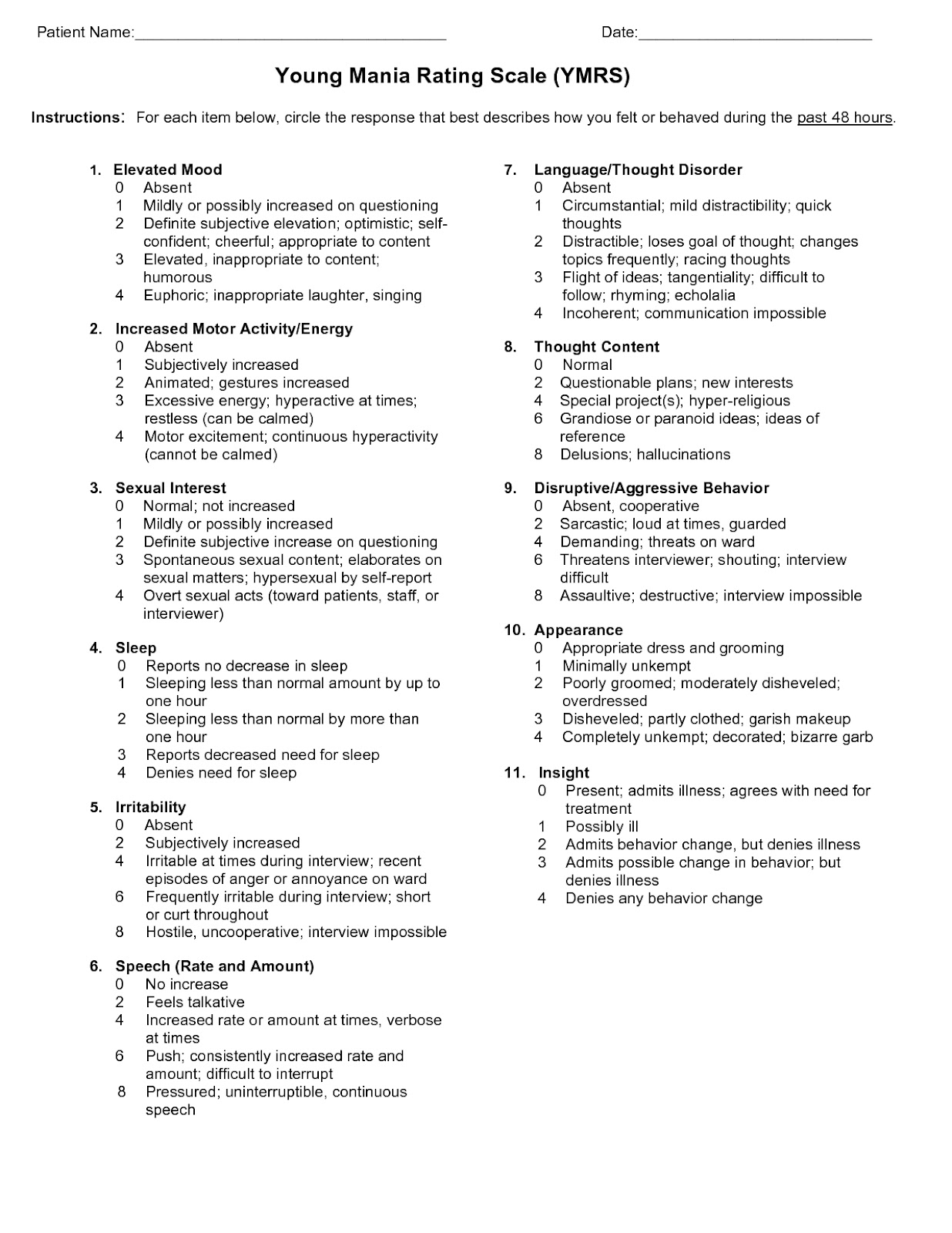
Yet in actuality this was yet another repetition of the same old big lie technique.  Looking at the abstract of the article more closely, the conclusion was a little different: that the results of a symptom rating instrument, the Young Rating Mania Scale (YMRS), showed this, not a complete and comprehensive diagnostic evaluation of the subjects in question: "In age-grouped YMRS item assessments of bipolar mania, anger dyscontrol was most prominent for youth, whereas disordered thought content was paramount for adults." 


Notice how the authors cannot be accused of lying, since this is in fact what their study actually showed.  The "take home message," however, is that this means that these symptoms are in fact valid symptoms of bipolar disorder in kids.


So let's take a closer look at the study and the YMRS.  The study was based on a review of the literature describing several other studies, and the other studies that were chosen for review were "... studies reporting age group differences in total YMRS scores that included individual baseline item scores."  So this study reviewed other studies that used what I will soon show is a highly suspect test. 


Symptom rating instruments like the YMRS are meant for two purposes: 


1. To be screen out patients who for sure do NOT have the diagnosis and make sure that anyone who might have the diagnosis is included for evaluation. In other words, the tests are designed to have a lot of false positives, that is, people who score positively on the test but do not in fact, have the disorder.


The authors of this review clearly know that the YMRS is a screening instrument:  "These outpatient studies required a minimum YMRS total baseline score of 20 for inclusion and achieved total baseline YMRS scores of 28 to 33 indicating at least moderate manic symptoms [20,22,23,25]. In these clinical trials sponsored by industry, trained raters did the YMRS item scoring at baseline. The subjects who met full research criteria for mania were subsequently randomized into placebo and medication treatment groups."


2.  To measure changes in symptoms over time in patients who have already been diagnosed correctly by other means. The other means that are used usually consist of research diagnostic clinical interviews, but we have no way of knowing how well the clinical interviews were done - particularly whether the duration and pervasiveness criteria of the symptoms were applied correctly, since this is frequently not done by drug company shills. 


But even using a symptom rating scale to measure changes in symptoms is frought with difficulty, particularly in the case of the YMRS, which completely ignores the issue of symptom pervasiveness and duration.


The problem with tests that ask patients to rate their own symptoms was described succinctly by one patient, who purportedly said about a psychiatrist who used a self report question as the entire basis for prescribing drugs, "The question is always the same. He asks me, ‘On a scale of 1 to 10, rate your mood.’ I answer, but you know, in 6 hours I might have a different answer.”   


Many of these rating scales uses what is called a Likert Scale.  Likert Scales generally ask a patient or a researcher to rate the severity of a given symptom on a 4 to 7 point scale.  A big issue with Likert Scales in self-report instruments is that when they ask whether a symptom is mild or severe is that they do not indicate the answer to the question, compared to what?  Compared to a patient with a clinical disorder, or compared to the symptoms as they have been experienced by the patients themselves?  When someone is very sad but has never been clinically depressed, he might rate the sadness as severe.  Having perhaps never seen another person with a severe clinical depression, he has no external reference point that would distinguish a normal mood from a highly abnormal mood.


Now for the YMRS. The YMRS asks a clinician to rate the patient's symptom based on what the patient looks like or says at the time of the interview. Let's look at item number 5 on the YMRS scale, irritibility.  The interviewer is asked to rate it on a 5 point scale based on observations during administration of the test.  0 = absent, 1 = subjectively increased, 2 = irritable at times dring the interview, or recent episodes of anger or annoyance on the ward, 3 = frequently irritable during the interview: short, curt throughout, and 4 = hostile, uncooperative, interview impossible.


Notice that there is no requirement than an effort be made to find out why the patient presents with irritability during the interview.  It just assumes that it is due to the underlying mania.  But how long has it been going on?  Just today?  How do we know the patient is not acting irritable because he had been having a really bad day, or because the interviewer was perceived as condescending? We don't.  


Or take item #6, rate and amount of speech.  Manic patients have what we called pressured speech - they talk and talk and no one can get a word in edgewise.  This is present regardless of external circumstances.  If a patient exhibits very fast speech in the YMRS interview, on the other hand, the symptom could conceivably be present because the patient is in a big hurry to leave on that particular day, but characterologically likes to make sure the doctor gets a very precise answer with all its myriad details to any question.  


Without this additional information, the answers to the questions are meaningless!  In children, aggression and irritability have hundreds of potential causes besides their supposedly being symptoms of bipolar disorder.


But the mantra that they are indeed symptoms of bipolar disorder in children is once again subtly repeated.  Over and over and over again: the big lie technique in operation.