Pages

Monday, February 28, 2022

Hidden Altruism in Repetitive Family Interactions


In a recent Dear Abby advice column from 10/26/21,  a mother who had been an addict when her daughter was young complains about the guilt trips the daughter always seems to lay on her. Abby’s interpretation as to the possible motives for the daughter’s behavior is the seemingly common-sense one that most people – and most psychotherapists for that matter - would come up with: that the daughter was acting out of selfish needs.


Being the contrarian that I am, I discovered that selfishness is often actually a cover for altruistic self-sacrifice, and that the daughter is giving mom what mom seems to need from her. The mother’s obsessive guilt and her repeatedly and nearly constantly trying to fix her daughter might very well be the reason the daughter is doing this.


Now of course, from just a paragraph description in a letter I can’t be certain of my interpretation in this particular case, and there might be several other issues operating simultaneously that might be making this situation far more complicated than my formulation would suggest. The daughters’ brothers being perceived as the favorites, which is mentioned in the letter, might be one of them. The mother may have gender issues which might conceivably be involved.  And we don’t know anything about Mom’s former behavior, let alone her family dynamics


But if we could get the truth out of these people – always an iffy proposition -  I’d be willing to bet that I am at the very least on the right track. I have put in italics the part of the letter that I think gives it away. My hypothesis would be my starting point as her therapist in trying to understand what exactly is going on, and why.


ABBY: I'm the mother of a 36-year-old daughter. She claims I treat her younger brothers better than I treat her. I am a recovering addict -- clean for 20-plus years. I was in active addiction for nine years when she was a teenager, and she has never let that go. She constantly tells me how "unfair" I am, that I never make time for her and that I don't validate her feelings. I have apologized many times and tried to show her I don't treat her siblings differently. I schedule "us" time, but this is an ongoing battle, and I'm at a loss about how to fix it. How do I show her there's no difference in the way I treat any of them? How do I reassure her that her feelings are validated? This has caused me many tearful nights. -- WANTING SERENITY BACK


In reply Abby says she thinks this mother “created an emptiness in her daughter “that the mom may not be able to fill,” and that the daughter is “punishing” the mom for her former behavior. I submit that the daughter is actually giving Mom what Mom's endless guilt seems to be begging for: More and more guilt! Mom’s obsessive apologies would then trigger this pattern again and again, leading to the daughter heaping on more and more guilt leading to more apologies and so on in a vicious circle.


Each member of the duo thinks the other one needs this interaction while discounting their own contribution to the pattern. They have to cover up their own role in order to continue playing it effectively, both for the stabilization of a parent. Mom’s history of substance abuse and neglecting children would, under this scenario, be a role she was playing for her parents.


Tuesday, February 8, 2022

Review: Everybody Lies: Big Data, New Data and What the Internet Tells us About Who We Really Are by Seth Stephens-Davidowitz


One of the big problems in both psychiatric and psychological research that I have written about extensively is the tendency of researchers to think that their subjects are usually being truthful, especially when it come to things like family dysfunction, marital maladjustment and child abuse. 


Most people who know that people often are not truthful about these matters think it’s mostly a matter of personal shame and embarrassment, whereas I think that, while that is sometimes the case, the lies are more often about protecting the reputation of their families of origin.


We of course have very little truly objective research data in these fields because:

1. We can’t read minds.

2. People are good actors, leading to falsehoods in the observations of the researchers.

3. People not only lie to others, but lie to themselves as well. This is a part of the  willful  blindness characteristic of groupthink, which we need in order to maintain group cohesion with our kin and ethnic groups. Logic evolved not to reach the truth, but to justify group norms, as Gregg Henriques has pointed out.


The author of this book states, “People lie about how many drinks they had on the way home. They lie about how often they go to the gym, how much those new shoes cost, whether they read that last book. They call in sick when they’re not…They say they’re happy when they’re in the dumps. They say they like women when they really like men…People lie to their friends. They lie to their kids. They lie to parents. They lie to doctors…They lie to themselves. And they damn sure lie to surveys.”  


Stephens-Davidowitz’s book discusses one way we can get around this. We now have "big data" which can monitor not only the internet sites we visit but the questions we have in our own minds. People have little incentive to lie in the context of a Google search because no one they know will be aware of what they are doing when they do, say, a search for lesbian sex on Pornhub. The author refers to the internet as “digital truth serum.”


He talks about how this data helps us spot patterns of human thinking and behavior as well as predict how one variable will affect another. This data contains many surprises. For example, if you check into what follows most often when you type in “it’s normal to want to kill…” the most common inquiry is “my family.” 


Human sexual behavior, predictably, is a big area for surprises. Among the top searches on Pornhub by women is sex featuring violence against women, with such searches as “extreme brutal gangbang.” On Google, there are twice as many complaints by women than by men about a lack of sex in their relationship.


Some human activities that are thought by most people to be productive may actually backfire. When president Obama gave a speech about tolerance, searches for “kill Muslims” actually tripled during the speech.


One of my favorite facts was that after the release of particularly violent but popular movies (incorporating data from FBI hourly crime data, box office numbers, and a measure of violence in the particular movies), violent acts actually declined that weekend, rather than rise as conventional wisdom might suggest.


Now of course even with big data there are some questions which cannot be clarified, and the author gives us a wonderful discussion of some of the hazards in using it to draw conclusions.


Another of my frequently blogged about topics is the illogical assumptions made about studies in which one variable seems to correlate with another, like high schoolers who smoke pot getting poor grades. We all should know that correlation is not causation, but you’d never know that from looking at studies, in spite of all the hedging and disclaimers. 


I learned that there are actually names for some of the fallacies I've been writing about. “Reverse causation” is when variable A is correlated with variable B, leading to the idea that A causes B when in fact, B causes A. “Omitted variable bias” is when a third, ignored factor is something else that leads to increases in both A and B. Maybe kids from difficult homes have a tendency to both use drugs and get bad grades.


A big one in the genetics vs. environment debate is something called “dimensionality.” The human genome differs in literally millions of ways. If you test for a lot of different genes, some will correlate with the trait in question, but it’s just by chance. This is similar to flipping 500 coins and finding one that turns up heads 15 times in a row, and assuming the reason that it’s some sort of special coin. When such studies are repeated, the usual result is that the correlation disappears.


This book is funny and well written. I highly recommend it.


Thursday, January 6, 2022

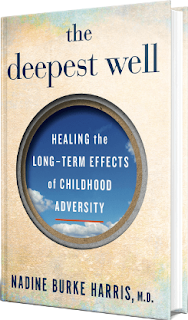
Book Review: the Deepest Well by Nadine Burke Harris


Every mental health professional should know that adverse childhood experiences (especially with parents who are abusive, neglectful, are perpetrators or victims of domestic violence, have multiple partners, or have substance abuse issues) are a major risk factor for developing almost every psychiatric disorder imaginable. Yet therapists and psychiatrists often ignore this issue in favor of theories about some sort of genetically-caused, pre-existing brain disorder.

In her amazing and surprisingly entertaining book, pediatrician Nadine Burke Harris (now surgeon general of California) outlines in vivid detail how ACE’s are toxic stressors that impact our bodies biologically and put us at higher risk for a variety of physical, not just psychological illnesses over the course of our entire lifetime. She points out that this does not only effect those who live poor neighborhoods, but can happen anywhere,

She covers the issue of epigenetics (how the environment turns genes off and on) as well as differentiating the effects of ongoing as opposed to time-limited stress. She zeroes in on the amygdala (the part of the brain that is responsible for fight or flight reactions) and how it can inhibit cognitive functioning, and on the sometimes toxic effect of stress hormones like cortisol.

In her observations as a crusader in the medical field, she came to realize that the reason physicians were often unaware of how this was taking place resulted from the fact that they never asked about it. As I have often said, it’s a case of don’t ask, don’t tell. Which is also the reason that psychodynamic and CBT therapists aren’t aware of the role of ongoing family interactions in their patients’ symptoms.

Also discussed in detail is how, in public discussions and meetings, parents can be resistant to various plans to confront ACE’s (due to what the author calls “hateration”) for fear that doctors would be stigmatizing their children as being brain damaged.  I think a bigger fear in the public is stigmatizing parents. As I often write about, you cannot call any type of parenting a problem these days anywhere without being attacked.

Last but not least, she talks about the intergenerational issues involved in chronic family stress. Here, the author seems to be on the right track, but I’m not clear if she, too, is unaware of the role of ongoing repetitive dysfunctional family interactions with their extended family members among both adults and children - particularly the role of grandparents in, unintentionally or intentionally, reinforcing problematic parenting practices and marital issues. 

For example, she cites the case of a woman who put up with verbal abuse from her husband and who stayed because she blamed herself and told herself she had to put up with it for the sake of the kids. Were her parents alive? If so, did they know what was going on? What did they have to say about it? If they didn’t know, why hadn’t she told them? Was she afraid they’d tell her it was her fault and she needed to stick it out for the sake of the kids? It sounds like this might possibly have been a case of don’t ask, don’t tell.

The closest she comes to discussing extended family is when she gives an example of how the aunt of a child who was a patient of hers seem to undo a lot of the therapeutic work that she had done with the child and the child’s mother.

It is true that certain early fear tracks in the amygdala are formed during the interactions of mothers with their babies, as she correctly points out. It is also true that these tracks are highly resistant to the usual process of neural plasticity that might fix issues caused by trauma. Scientists often seem to assume that the tracts are permanently damaged. However, perhaps it is true that the tracts remain strong because they are constantly being triggered and reinforced by the attachment figures throughout life.

If indeed the author is not aware of all of the forces at play here, she is hardly alone. So even with this possible and understandable omission, I cannot recommend this book highly enough. 

Monday, December 13, 2021

Psychotherapists Ignore Powerful Groupthink Forces


One thing that is a major theme in this blog is that many if not most therapists seem to think that most people’s problems are “all in their heads” and have nothing to do with the ongoing reinforcement of problematic behaviors through interaction with kin and ethnic group members. Groupthink is clearly one of the most powerful, if not the most powerful psychological force in everyday life. 


To see this clearly, think about what is going on in the USA today that is a constant focus in the press, talk shows, podcasts, and other media venues: the polarization of political life. Just look at the almost cult-like behavior on both sides, from the QAnon conspiracy theories on the right to the habitually offended community of social justice warriors on the left. Free speech, supposedly a cornerstone of the United States ethos, is attacked relentlessly by both sides without any irony or sense of awareness of the inherent contradictory nature of some of their viewpoints.


Yet so many therapists just ignore groupthink. The only exception is those who believe in family systems therapy, which was big in the 80's and 90's but has since fallen out of favor, particularly with psychologists. The problem with many family systems therapists, however, is the opposite: they seemed to have lost the individual. Although many people do not do it, they  are perfectly capable of employing critical thinking and coming up with their own thoughts, and behaving according to their idiosyncratic desires, if they are brave enough to do so. 


The current state of affairs would be amazing if it weren’t so sad. 


When I first started looking for clues about what was really going on in the lives of my patients when they were free associating in the psychoanalytic sense (back then, most psychiatrists still did psychotherapy and were analysts), I began to focus in on such things as logical fallacies. I, like most people, just thought those were common, somewhat accidental errors of thinking. I would start to express confusion about what the patient was actually meaning to say, and eventually happened upon information patients had not before volunteered. This lead me to start asking questions that my psychoanalytic supervisors never taught me to ask, like “what does your mother think about this?” – and I meant in the present, not when the patient was a kid.


What I didn’t know then was that the use of logical fallacies is one of the hallmarks of groupthink, so when I questioned them I was really finding a way to get at what they really thought, not what they were supposed to think. As my colleague Gregg Henriques points out, logic evolved not to get to the truth, but to justify group norms.


The more I got into it, the more I realized there were a whole lot of other “markers” that told me when I was hearing family groupthink and not the patients’ true thoughts and feelings. The following is a list of them, and there may certainly be other ones:


·       Logical fallacies

·       Defense mechanisms (as listed by psychoanalysts)

·       Irrational, self-scaring thoughts (as listed by cognitive therapists)>

·       Willful blindness (the refusal to even look at data which may challenge the group’s “wisdom”).

·       Plot holes (like when you are seeing  a movie and you get the feeling that such characters would never have said something like they did in the script, or that one of characters seems to know something they should have no way of knowing).

·       Ambiguous language (in which a sentence can mean two completely different or even opposite meanings, or a word has several different definitions and I couldn’t be certain which one the patient was using). This phenomenon is very familiar to people who work crossword puzzles.

·       Going off on tangents without returning to a main point or issue.

·       Circular reasoning

·       Spouting proverbs or maxims to justify behavior, such as “the grass is always greener…”  Often a marker for a family myth.

·       Mixed messages such as those exhibited by the infamous, so-called “help-rejecting complainer.”

It is interesting that when I bring up the ideas about group processes at professional meetings or in my books, no one actually disagrees or even argues with me. Instead, they just change the subject - or ignore the issue entirely.

Thursday, November 18, 2021

The Science of Spin: Big Pharma Propaganda Techniques


IMO, industry uses psychology to get people to change their behavior far more effectively and scientifically than psychotherapists. In an article in Environmental Health, (2021; 20: 33. https://www.ncbi.nlm.nih.gov/pmc/articles/PMC7996119/. Goldberg and Vandenberg describe 28 unique tactics used by industries to manufacture doubt or confusion about science when it serves their interests. These messages are then frequently amplified by perpetuators of doubt – journalists, bloggers, citizen scientists, and lay-people – who, on their own without direct funding, unwittingly disseminate and spread pro-industry spin. The Pharma industry tactics used to manufacture doubt are:


1

Attack Study Design

Emphasize study design flaws in negative studies that have only minimal effects on outcomes. Flaws include issues related to bias, confounding, or sample size

2

Gain Support from Reputable Individuals

Recruit experts or influential people in certain fields (politicians, industry, journals, doctors, scientists, health officials) to defend their biases in order to gain broader support

3

Misrepresent Data

Cherry-pick data, design studies to fail, or conduct meta-analyses to dilute the work of critics

4

Suppress Incriminating Information

Hide information that runs counter to their interests

5

Contribute Misleading Literature

Use literature published in journals or the media to deliberately misinform, or use peripheral topics as a distraction

6

Host Conferences or Seminars

Organize conferences for scientists or relevant stakeholders to provide a space for dissemination of only information in line with their economic interests.

7

Avoid/Abuse Peer-Review

Avoid the peer-review process to publish poor literature, publish without revealing funding sources, use the journal name to add weight to claims, or minimize need for peer-review among lay audiences

8

Employ Hyperbolic or Absolutist Language

Discuss scientific findings in absolutist terms or with hyperbole, using buzzwords to differentiate between “strong” and “poor” science (i.e. sound science, junk science, etc.),

9

Blame Other Causes

Find related, alternative causes for any negative effects that are reported or observed

10

Invoke Liberties/Censorship/

Overregulation

Invoke laws to emphasize equality and rights for expression of their preferred data or interpretations thereof, despite differences in evidence quality

11

Define How to Measure Outcome/Exposure

Attempt to set guidelines for ‘proper’ measurement of exposures or outcomes, while undermining guidelines not in line with what they want.

12

Take Advantage of Scientific Illiteracy (media/individuals)

Emphasize scientific obscurity to confuse lay audiences, or deliberately disseminate unscientific or false but easily digestible information

13

Pose as a Defender of Health or Truth

Represent their goals as health-conscious or dedicated to truth

14

Obscure involvement

Ghostwrite, create shell companies, use attorney client privilege to hide the true source of their data 

15

Develop a PR Strategy

Devise methods for specifically reaching public audiences to spread their messages

16

Appeal to Mass Media

Appealing to journalistic balance, developing relationships with media personnel, preparing information for media personnel, invoking the Fairness Doctrine

17

Take Advantage of Victim’s Lack of Money/Influence

Silence or abuse critical individuals by out-spending or exploiting a power imbalance

18

Normalize Negative Outcomes

Normalize the presence of negative effects of their products to reduce their apparent importance and make them seem inevitable

19

Impede Government Regulation

Overwhelm governmental regulatory agencies to slow or stop their function

20

Alter Product to Seem Healthier

Make modifications to harmful product to reduce public appreciation of their negative effects

21

Influence Government/Laws

Gain inappropriate proximity to regulatory bodies and encourage pro-company policies

22

Attack Opponents (scientifically/personally)

Conduct targeted attacks on opponents by undermining their professional or personal reputations

23

Appeal to Emotion

Manipulate an audiences’ emotions to draw support for their claims in the absence of facts

24

Inappropriately Question Causality

Argue that correlation does not equal causation despite the presence of strong evidence

25

Make Straw Man Arguments

Publicly refute an argument that was not even made by the opposition

26

Abuse Credentials

Use qualifications in one discipline to assume authority in another discipline

27

Abuse Data Access Requests

Requesting access to data in order to misrepresent and attack, employing Shelby Amendment, Freedom of Information Act, etc..

28

Claim Slippery Slope

Illogically or falsely claiming that there will be disastrous consequences if their ideology is not supported

Thursday, October 21, 2021

Review: the Netflix documentary Pray Away


This post is the second about media describing organizations that practice a hateful form of groupthink. The Netflix documentary Pray Away focuses on gay adult Christians who used to preach and embody gay conversion therapy ideals to other gay adults. They led various organizations with their destructive idea of family, faith, and freedom. (The film is not about gay “conversion” psychotherapy of minors, which is another, even more despicable manifestation of this movement). Many of such people have embraced the idea that homosexual urges are part of a psychological problem, a result of some trauma or of some negative relationship with a parent, rather than something natural.

Many of the people interviewed in this documentary fell hook, line and sinker into these teachings while hiding their own backstories of self hatred. They are given screen time to now confess to how all of it was a painful lie. 

The movie profiles several of those people who and acted as advocates to make people "ex-gay." John was a major public advocate for gay conversion who appeared in Newsweek with his “ex-lesbian” wife—and reveals here that it was all a charade. He couldn’t admit, even to himself, to his continuing attraction to other men.

Michael created Exodus, the first gay conversion organization in the late 1970's. The film showed an auditorium full of smiling young adherents to this group under a poster exclaiming, "Join the Movement!" 

Julie became a public speaker as a young woman, with her highly articulate stories about how she had successfully rid herself of her lesbian feelings, with seemingly logical arguments for her past efforts to do so. She did not stop doing this until confronted by certain misbehavior from her former cohorts, and eventually renounced them and married another woman.

Their institutionssimilar to the ones described in my previous post about the book Stolen, prey upon people's self-loathing, self-denigration, and desires to be accepted by their families and their churches. Prey away!

The irony here is that the parents who previously rejected these children is that, if in fact homosexuality is somehow a bad choice, and/or is a result of a bad relationship with parents, then the parents who rejected them on these grounds are admitting that they were crappy parents who raised a child who made bad decisions! But as we all know, the definition of the word “contradiction” is: something which such people pretend they don’t understand.


Tuesday, September 28, 2021

Book Review: Stolen by Elizabeth Gilpin


A startling and fascinating new book and an equally mesmerizing new Netflix documentary look at organizations which are designed to destroy people’s self actualization and their true selves in favor of a particularly monstrous form of groupthink. As the author of Stolen says, attendees were supposed to become like bees in a hive. Both of these groups twisted religion and psychotherapy to the point that they are almost unrecognizable.

One, the one described in the book, was even worse than the other, if that’s even possible, because it attacked and destroyed children: so called “schools” for “troubled” kids. At least the one described in the documentary was aimed at adults who were willing participants.

This post will be about the book, while the doc will be described in the next one. Stolen, was written by a woman who, when she was 15 years old, was a star high school athlete in two sports and an A student—but was nonetheless labeled as a disturbed troublemaker by her highly critical and often absent father and a hyper-religious mother who spent a lot of her time reading the Bible. Gilpin doesn’t describe any physical or sexual abuse in her home, but strongly implies that her parents, particularly her Dad, were verbally abusive and highly invalidating. Her Mom would support her privately but then always side with the Dad when the family was together.

She had started running away when she was only five, and later began partying with high school friends to avoid being home. She was also admittedly very angry and at times returned the father's verbal abuse, and she did dabble in alcohol and pot a few times. But the book doesn’t really describe in detail why she was so angry, although she did accuse her parents of never believing her. Oddly, the parents entirely discounted their own parenting as a factor in her behavior and never seem to wonder what made her like she was. At one point during her stay at the school, her father wrote a letter that said, “I’m glad that you’ve been able to accept that you’re ultimately to blame for your own anger.”

She was suddenly taken away by strangers in the middle of the night and sent to a “therapeutic” boarding school run by an organization called CEBU, which was anything but therapeutic. For the first three months, the teens were made to hike over and over again to a bunch of different campsites in the middle of the woods and were subject to physical abuse, such as being made to keep marching even after the group was attacked by a hive of bees and had multiple stings. They weren’t allowed to shower and were given crap to eat. They were monitored constantly and communication between the victims was highly restricted.

They were then transferred to a high school which had various exercises that were designed after something we Californians were aware of in the sixties and seventies called the Synanon Games, a twisted version of AA. More on Synanon at the end of the post.

During these games the teens were subject to vicious verbal attacks from the people running the school, and also forced to attack one another in the same way. For the high crime of having engaged in a sex act, for example, the girls were called sluts and whores who were desperately seeking attention (because they were starved of it at home perhaps?). With the boys, however, the prevailing attitude was “boys will be boys.” 

Gilpin was still a virgin at the time, but was immediately told she was a liar when she said that. She was accused of being a drug addict and an alcoholic despite her limited behavior in this regard. If a student denied being an addict, they were immediately accused of being “in denial.”

If she told the truth, it never seemed to be bad enough for the counselors, so she began to just make stuff up. Clearly she wasn’t the only one of the teens who felt they had to do that. If the teens rebelled, they were punished severely. Once when she threw up she was forced to eat her own vomit. They were threatened with being transferred to an even worse facility, masquerading as a hospital, if they did not fall in line.

Clearly the program was an exercise in degradation designed to stamp out any semblance of individuality. Gilpin said that the more self hating she seemed, the more she was praised for “doing good work.” In reality, both her parents and the school were victim blaming, scapegoating her for her own abuse at their hands. One of her friends there later committed suicide.

Interestingly, even after she “graduated,” she did not tell her parents exactly what took place at the school. At least she did not write about doing so. She described herself as letting her anger with them take over, doing nothing but shouting at them about how f’d up they were for sending her to such an awful place. IMO, in doing this, she was actually providing her parents with justification for their having sent her there in the first place. Protecting them to an extent, just as I suspect she was doing by not describing in more detail in the book the way they had been treating her that made her want to run away so badly.

Synanon was initially a drug rehabilitation program founded by Charles E. Dederich in 1958 in Santa Monica, California. By the early 1960s, Synanon became an alternative community - later labeled a cult - centered on group truth-telling sessions that came to be known as the Synanon Game, a form of attack therapy. 

Attack therapy involves highly confrontational interaction between the patient and a therapist, or between the patient and fellow patients during group therapy, in which the patient may be verbally abused, denounced, or humiliated by the therapist or other members of the group. Attack therapy "attempts to tear down the patient's defenses by extreme verbal or physical measures."

Synanon ultimately became the Church of Synanon in the 1970s. Synanon disbanded in 1991 due to members being convicted of criminal activities (including attempted murder) and retroactive loss of its tax-free status with the Internal Revenue Service due to financial misdeeds, destruction of evidence, and terrorism. It has been called one of the “most dangerous and violent cults America had ever seen." Mel Wasserman, influenced by his Synanon experience, founded the CEDU's schools which used the confrontation model of Synanon. 

The CEDU model was widely influential on the development of parent-choice, private-pay residential programs. People originally inspired by their CEDU experience developed or strongly influenced a significant number of the schools in the therapeutic boarding school industry.